Blogs
|
The UK is tentatively sticking its head out from under the recession, so they tell us. The figures show a miniscule growth in the economy during the last three months of 2009. But then, as my 18 year old son pointed out, those are not really reliable data, since we're looking at the period around Christmas, after all.Some news reports have spoken of slowing down of the increase in the unemployment levels. I haven't found any online articles to confirm this, yet. It is some comfort if it's true, but we are all looking for a decrease in the unemployment levels.So, most of us are some way from optimistic.This is reflected by the fact that TV advertising at the moment includes several items aimed at saving money. And, of course, all the major supermarkets are out there proving to us that they have our best interests at heart.Here is just a random selection of the things that have made a blip on my radar in the last week:Asda is offering blankets with sleeves to reduce heating bills. So you can snuggle up on the couch instead of turning up the heating. I'm not sure why you can't just wear a sweater or use a normal blanket. We do... always have done. My husband, my snuggly blanket and the rugby on a Saturday afternoon. Bliss.Tesco has changed their BOGOF (buy one, get one free) offer to BOGOL (buy one, get one later) in an attempt to reduce waste. Let's face it, if you only need one cabbage but take an extra one, because it's free, the second one is likely to go off before you come to use it. So now, instead of a free cabbage, you get a voucher entitling you to a free cabbage when you need it.Sainsbury is trying to encourage us to keep and use our leftovers, by handing out little plastic lunch box thingies at the cash points with every purchase.It puts me in mind of 'Make do and Mend'.I have to say that, as gestures go, Tesco's impresses me the most. But then, perhaps the others have other ideas that haven't made it onto my radar, yet.Let's hope that we have turned the corner and that things start to improve soon.
Karyn Romeis
.
Blog
.
<span class='date ' tip=''><i class='icon-time'></i> Aug 05, 2015 04:03am</span>
|
|
I overheard a conversation today between two members of the sales staff at a sporting goods shop. They were discussing someone who wore one of those ankle tag doodads and were expressing their surprise and disbelief. This person was apparently not 'the type'. Too old, too fit and too respectable looking, it seemed.I was a little surprised to realise that they were talking about me.Apparently, one of the sales assistants had briefly spotted - from under the fitting room door - the weight strapped around my left ankle, and leapt to conclusions. How odd that in a sporting goods store, their first thought would be ASBOs, rather than fitness! After all, I'm fairly sure that they sell these things there.Perhaps it's because I only wear one (in attempt to address the fact that my right leg is visibly more muscular and better toned than my left).I once encountered a woman on a train who was on her way back from having had her tag removed. She was very proud of this fact, and was showing her tan line to anyone who would listen. To my prejudiced eyes, she was every inch 'the type' and she got on the wrong side of me when she tried to light up a cigarette in the train carriage.I'm very glad that I'm not 'the type'. I'm also glad that I give the impression of physical fitness and respectability. I'm less pleased that I appear to be too old to make trouble! It gets my dander up ;o)I'm saddened for people who seem like 'the type', but who wouldn't dream of doing the sort of thing that would earn them an ankle tag. That must be quite a barrier to overcome in life.
Karyn Romeis
.
Blog
.
<span class='date ' tip=''><i class='icon-time'></i> Aug 05, 2015 04:03am</span>
|
|
It was on this day in 1990 that President FW de Klerk announced the decision to release Nelson Mandela from prison. His actual release date was 11 February 1990. So, once the decision had been announced, the wheels of bureaucracy moved comparatively quickly.During the next few years, the apartheid regime was systematically dismantled in South Africa and, in 1993, Mandela and de Klerk jointly received the Noble Peace Prize in recognition of the role they had played in this process.On 27 April 1994, the first fully democratic election took place in the country. For the first time, every adult in the country had the right to vote. 20 million South Africans exercised this right. Many of them standing patiently for hours due to the logistical delays in rural areas.Not a drop of blood was shed.It is poignant to realise that Nelson Mandela was voting for the very first time in the election that saw him become President.
Karyn Romeis
.
Blog
.
<span class='date ' tip=''><i class='icon-time'></i> Aug 05, 2015 04:03am</span>
|
|
Listening to a Training Magazine Network recording of Allison Rossett talking about what e-learning is and isn't, I came across this YouTube video. Good for a chortle.Have you considered First Life for your business meetings, yet? ;o)
Karyn Romeis
.
Blog
.
<span class='date ' tip=''><i class='icon-time'></i> Aug 05, 2015 04:03am</span>
|
|
The free London paper ran a front page article today on the relationship between Internet addiction and mental illness, as researched by Dr Catriona Morrison.If people are addicted, it can affect a person’s ability to perform at work or they may be failing to do chores so they can go online.’However, she admitted more work needed to be done to establish whether addiction or mental illness comes first.We all know that it is possible to become addicted to things that are otherwise pretty harmless, even healthy. But once things have reached addiction levels, it is a different matter entirely. I once saw a man selling his own children's toys on the pavement in order to get money for the next bottle. In the throes of addiction, people will contravene even their own codes of decency.The thing is, when you're addicted to something, the only option seems to be a complete break. An alcoholic will never have the control necessary to become an occasional social drinker.So what hope is there for an Internet addict? Cutting off all usage of the Internet would be akin to a voluntary imposition of illiteracy and near-hermitage.Is a puzzlement.
Karyn Romeis
.
Blog
.
<span class='date ' tip=''><i class='icon-time'></i> Aug 05, 2015 04:03am</span>
|
|
A South African airline called Kulula has apparently rebranded its aeroplanes, settling on an 'aeroplane for dummies' approach. This is the sort of thing that could so easily be a hoax, so I've done a bit of background searching and can't confirm or refute the story.I hope to goodness it's true. Who wouldn't? Just have a look at the article and the images. Isn't the whole thing delightfully tongue in cheek? It puts me in mind of a t-shirt I once saw on a young guy in our church. On the back, it bore the words 'Arse' and 'Elbow', with arrows pointing in the appropriate directions.I hope you are inspired and/or tickled by this as much as I was.
Karyn Romeis
.
Blog
.
<span class='date ' tip=''><i class='icon-time'></i> Aug 05, 2015 04:03am</span>
|
|
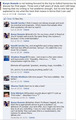
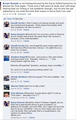
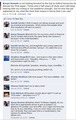
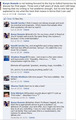
I confess, last night was my first conscious exposure to #lrnchat on Twitter. The theme was online learning myths. Jane Hart has captured the event nicely with this post.It is quite a challenge to capture a cogent thought in just 140 characters! Fortunately a myth can usually be expressed quite succinctly.Next week's theme is confessions of trainers and learners. That might be less conducive to brevity.It's worth noting that I came to know about #lrnchat via Jane's Facebook status. It was updating with her contributions to the conversation and Donald Clark and I began to respond to her updates on Facebook. Jane invited us to join the conversation on Twitter. I did, briefly, between the various things and people that clamour for my attention of an evening.This ties in with a question Wendy Wickham asked on Facebook about blogging: "Question for the long-time edubloggers - is it just me or are we all getting quieter? How frequently are you posting these days?"My response was: "I don't blog as much as I used to. The conversation appears to have moved elsewhere... like here [Facebook], for instance!"Harold Jarche's response included: "Maybe life-streaming is replacing blogging for some people, but it's still a key part of my online professional communications and learning."Stephen Downes (after pointing out that he wasn't getting any quieter, which is true) observed: "a lot of the 'connector posts' (I link to you, you link to me, we form a chain of conversation) have moved to Twitter and Facebook, etc. Still a lot of good blog posts out there, a lot of good commentary, but they aren't tightly linked the way they used to be."One thing I've noticed is that threads of the same conversation run through a variety of spaces. As happened with the whole lrnchat thing, I come across fragments of a conversation in one space and follow the trail to where the main body is taking place. Once there, I find and follow links to all manner of tendrils in a host of other places.Sometimes the links are to contributions I would not have related to the subject at hand (in fact it is unlikely that the original contributor would have done so, either, in some cases), until the connection was identified by another participant. In those situations, it's a little like looking at one of those optical illusion images and only being able to see one perspective, until someone says, "No look. That's her cheek there, and that's a feather in her hair. And she's kind of looking away from you..." Suddenly it all becomes clear and you have an "Ooooh, yeah - I see it now" moment.But the conversation is everywhere. In all the spaces at once. If I were to suddenly stop twittering or facebooking or reading blogs, I feel as if I would stand to lose a valuable strand. So, even though I have been quieter here than in the past, I feel no less engaged in the conversation.What is your observation?
Karyn Romeis
.
Blog
.
<span class='date ' tip=''><i class='icon-time'></i> Aug 05, 2015 04:03am</span>
|
|
Donald Clark shared via his Facebook status that "while 7 out of 10 teens use social networking websites like Facebook, only 1 in 12 teens use Twitter - Pew Internet and American Life Project - survey middle of last year 12-17 year olds."I located said report and found it interesting reading. You might, too, if your life includes teenagers.One caveat I found quite telling was that "the question wording for teens is quite different from how the question was posed to adults so the results are not strictly comparable."That said, it seems that only 8% of online American teens use Twitter, while the figure for adults is 19%. It should be noted, however, that the figure for adults varies hugely across different age bands, showing a steady decline from the 37% of 18-24 year olds to just 4% of those over the age 65. So it seems that between their 17th and 18th birthdays, American teenagers experience the sudden urge to make the shift to Twitter. I wonder why? The report suggests that it "may be partially due to our question wording capturing status updates on social networking sites."But enough of that, I wanted to focus on the 'only 8% of all teens' bit.My own teenagers are avid users of instant messaging and have been for several years, now. Their usage patterns would not be supported by Twitter.For example:They use a lot of emoticonsThey use extensive font formattingThey frequently use more than 140 characters per messageThey conduct huge numbers of 1:1 conversations simultaneously, sharing private thoughts they would never dream of sharing in a single, multi-user stream (connected in parallel, rather than in series?)They change their user names often, using these as a mini status to reflect their mood, their (frequently) changing romantic status or a significant event in their livesThey use web cams as part of their conversations (and some parents would be appalled to know some of the uses to which their teenagers put these cameras!)Of course, this is just a single snapshot, based on my observations of my own sons and their friends, and does not constitute research. But I throw my snapshot into the pool to be aggregated with the rest of the fragments.Graeme Duncan suggests (on Donald's FB page) "My hypothesis is kids use these media as communication tools but like it to be network building and relationship building. Twitter is a broadcast media not a two way communication channel whilst FB, MSN, etc etc are profile builders and also communication channels."I have to say that I use Twitter to engage in conversations with people. Many of my messages start with @someone-or-other. But Donald has a view on that, too, to wit: "Spot on Graeme - Twitter is boomeresque (new word!) in that it plays to our need to either receive or transmit, not share and engage in dialogue. Even on Facebook, we're the exception to the rule -far too many boomers simply post their own entries and don't respond - you two [that would be Graeme and me] are very much the exceptions."I'm trying to decide whether to forgive him for calling me a "boomer". I'm too young for that label, and he should know it ;o)
Karyn Romeis
.
Blog
.
<span class='date ' tip=''><i class='icon-time'></i> Aug 05, 2015 04:03am</span>
|
|
Have you heard this story? It's probably an urban legend, but it amply demonstrates a point:A new husband was adoringly watching his young wife cook the Sunday roast. He noticed that she cut a slice off the end of the roast and carefully placed it on top of the joint before popping it into the oven. He asked her why she did that. His wife looked at him in puzzlement and said, "That's how you cook a roast. That's what my Mom always does." The young man expressed surprise, explaining that he had never seen it done that way before (he carefully did not say that his own mother didn't do it that way). The wife gave it some thought and realised that she had no idea why her Mom did it that way, just that it was what she did.So she phoned her mother.The mother explained that that was how one cooked a roast. Her own mother had always done it that way. "But why?" asked her daughter. The mother realised she didn't know the answer to this question, just that this was how it was done.So she phoned her mother.The grandmother was puzzled for a moment. She had no recollection of doing any such thing and could see no reason why anyone would handle a roast in this way. But as they spoke, the middle aged woman and her elderly mother, the light dawned. "Oh!" explained the old lady, "I remember! I had five children, so I had to buy a big joint. The problem was that I had a rather small oven and a small roasting pan, and the joint was too long to fit, so I used to take a slice off the end and put it on top. But, goodness! As soon as I got a bigger oven, I stopped doing that."So there are times when we do things a certain way because 'this is the way its always been done', without stopping to question whether this is the best way.But there are some things my Granny knew.I still make tea the way my Granny taught me. As the eldest grandchild, it fell to me to make the morning tea when the family was all together in the holidays. I was well-schooled. You use fresh water every time - you don't just reboil the water that's in the kettle. You use a fairly large teapot, to give the tea space to move. You heat the teapot before using it. You put the tea into the pot before adding the water - you do NOT add the tea to the already poured water. And, when you pour the water into the teapot, it must be absolutely boiling - it must not have been allowed even a moment to go off the boil. Tea can be served with or without milk (note: NOT cream) and sugar or lemon. The one rule I break is that I use mugs instead of cups... only because I like a generous portion of tea. My ludicrously small kitchen does, however, include a few teacups, although I regret they are not paper-thin porcelain.People who take real pleasure in a cup of tea - usually those of advanced years - often remark that I make a 'nice cup of tea'. My Granny would be proud.I checked. There are reasons for each of those steps, and they still apply.My Gran also boiled eggs in a specific way... and I have only just learned why. She used to bring the water to boil in a saucepan, then she would add a generous amount of salt, and gently pop the (room temperature) egg(s) into the water. If she was boiling more than one egg, she would write numbers on the eggs with a pencil and place them into the water in numerical order, and remove them in the same order.I did what the two younger ladies in my first story failed to do. I thought about it and could see no reason to do it this way. I found my own way to boil eggs to my liking.I keep my eggs in the fridge, because we eat fewer of them nowadays than in my Gran's day, and so need to store them there to keep them fresh. Taking an egg from the fridge and putting it into boiling water is a sure-fire way of cracking the shell. Now the salt in the water is supposed to help congeal the white, so that it does little more than bulge out a bit from the crack. But I have found that all this can be avoided if you just pop the egg into cold water with salt, and then bring it to the boil. Once it has come to the boil, 3 minutes will give you a soft yolk and 5 a hard yolk. Job done.But wait. There's a thing my Gran used to do with boiled eggs when she was preparing finger snacks that involved the eggs being cut in half lengthwise, the yolks being removed and mixed with a few other ingredients and then piped back into the egg whites. Apparently (and this is the bit I only learned when speaking to my aunt during my recent trip back to South Africa), if you put the egg into already boiling water, the yolk stays in the middle of the egg! I have to confess that my yolks are seldom, if ever, in the middle of the egg, which has meant that my attempts to make my Gran's egg thingy have always looked somewhat amateurish.But now that I know... just you wait until the next time I am asked to prepare finger food for a church do! I shall produce a perfect batch of my Gran's egg snacks... and even though she's been gone for 23 years, I shall no doubt shed a sentimental little tear as I picture her approving smile at my efforts.Some things my Granny just knew.
Karyn Romeis
.
Blog
.
<span class='date ' tip=''><i class='icon-time'></i> Aug 05, 2015 04:02am</span>
|
|
Be informed that comment moderation is in place on this blog and I will not allow this post to be the springboard for the expression of anti-semetism, neo-nazism or holocaust denialism. Any such comments will not be published.This post has been very hard to write. This has been an uncomfortable learning experience for me, and I am assailed with uncertainty as to the reactions it will garner. I implore you not to misinterpret it.Last night I watched a documentary called Hitler's Private World (see part 1 here). It made me horribly uncomfortable. Not because it revealed what a monster he was. I already knew that bit, and was enormously comfortable with it. I was happy to think of Adolf Hitler as a terse, inconsiderate man. If I thought about his personal relationships at all, it was to assume that he was cold and distant. Unfeeling. A psychopath, even.I was not prepared to see him as warm and affectionate. I was not prepared to see him as someone who adored children. I was not prepared to see him as someone who cared about the environment. Someone who saw the potential for user-generated content.I was happy only to know that he was responsible for the mass slaughter of umpteen million so-called undesirables (Jews, Soviet PoWs, Gypsies/Romanies, Poles, left wing political prisoners, homosexuals, the disabled, Jehovah's Witnesses, Catholic clergy, eastern European intellectuals, etc.) and then to welsh out of facing up to the consequences of his appalling actions by taking his own life.Don't get me wrong... the documentary was not a pro-Hitler rant, and I am not about to join the ranks of those who think he was 'just misunderstood'.The documentary was made using home movie material overdubbed with dialogue as ascertained by automated lipreading technology. It showed Hitler flirting with Eva Braun, gossipping about the likes of Goering and Himmler, playing happily with children, affectionately commending young soldiers.It forced me to see additional dimensions to a man I prefer to think of in only one dimension... and it made me very squirm because, as the narrator pointed out, if this man had the capacity to care about the things I care about, to interact with people as I do, then perhaps he is not as different from me as I would prefer to think. On some subconscious level, I think I had ascribed him to a different species, but material such as was shown last night forces me to acknowledge that this is not the case.Here was a man who grieved to see trees being chopped down. A man who wanted every German family to have a cine camera to record history from their own perspective. A man who could not bring himself to eat the flesh of a living creature. A man who adored children... something which showed plainly on his face as he interacted with them. A man who patted the young members of the Hitler youth with what seemed to be genuine affection as he inspected their ranks. A man frustrated by the effects of Parkinson's disease.In some of the footage, perhaps with the help of the suggestive voice of the narrator, it was possible to see him psyching himself up, putting on the role of the orator at the hands of a (Jewish, as irony would have it) spin doctor.Where was the monster?Of course, his monstrous legacy remains and speaks for itself, but in his private life, he was disturbingly ordinary. I am struggling to find space in my mind for this new information.I encourage you to watch the footage yourself. I'd be interested to hear how you respond to it.
Karyn Romeis
.
Blog
.
<span class='date ' tip=''><i class='icon-time'></i> Aug 05, 2015 04:02am</span>
|