Blogs
|
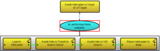
In my last post, I described 4 ways Discovery Machine models human behavior. The first way is by building models that reflect on generalized process models to build mission-specific goal sets. Below is an example of a process model: The top-level task of assisting a helicopter in visually identifying a target is decomposed into smaller, [...]
Anna Griffith
.
Blog
.
<span class='date ' tip=''><i class='icon-time'></i> Aug 04, 2015 02:58pm</span>
|
|
No matter who you are, people can come at you daily with their egos blasting. Some egos come from false pride—where they think more of themselves than they should and want more credit for things. Others come from self-doubt and fear—where they think less of themselves than they should and are protecting themselves. How do you deal with these people?
Try to keep focused on leading with a servant’s heart. It can be part of your daily habits, such as how you enter your day by reminding yourself of the difference you can make in the world. It’s a matter of making a habit of practicing a helpful attitude when you are interacting with people. The question you want to keep top of mind is, "How can I help?"
For instance, if someone comes to you and says, "I’m sick and tired that nobody seems to notice my contributions around here," you could say to that person, "What I am hearing from you is that you don’t think your work is appreciated. I think you are doing a wonderful job on …" and then be very specific as to what that person is doing right. After that, ask, "What can I do to help you get over this feeling of not being important enough? How can I help you through this?"
Or, if someone is coming from fear and saying, "I can’t believe it, I just got another project dumped on me and I don’t have time in my day to work on it," let that person know you understand by saying something such as, "Wow, I can hear that you’re really overwhelmed right now. Is there a way I can help you with this? Is there anyone I can talk to that might be able to partner with you?"
A phrase I like is lead with your ears. Really listen to the person you are interacting with and see if you can respond in a caring and heartfelt way. When you ask the question "How can I help?" you’ll be amazed at how quickly it can diffuse the frustration another person is feeling. It can make an immediate difference to upset or fearful people just to know their concerns are being heard. By leading with your servant’s heart, you will set an example others can use to get away from their egos, move forward, and make a positive difference in someone else’s day.
Ken Blanchard
.
Blog
.
<span class='date ' tip=''><i class='icon-time'></i> Aug 04, 2015 02:57pm</span>
|
|
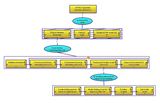
In a previous post, I described 4 ways Discovery Machine models human behavior. The second way is by building models that communicate with other humans and automated entities to complete goals. In this post, I will expand upon how our Navy crew member models handle incoming radio message communications. Attached to each of our crew [...]
Anna Griffith
.
Blog
.
<span class='date ' tip=''><i class='icon-time'></i> Aug 04, 2015 02:57pm</span>
|
|
Even in these hard times, some people still wonder whether or not leadership really matters. Jim Collins did a good job explaining why leadership matters. He wrote the bestselling book From Good to Great. In that book, Collins talks about how great leaders have two capabilities: One is resolve, or determination to accomplish a goal, and the other is humility. He describes how leaders with resolve and humility can build a good company into a great company. But one of the best ways to appreciate the value of good leadership is when you see how fast a poor leader can take a good organization down. Collins says it takes a lot of people to move a good organization into greatness, but it can take very little time for just one lousy leader to send a great organization downhill.
Leadership is very important. Leaders have a major role in setting the vision to move toward the organization’s goals, and then creating a motivating environment for people so those goals can be reached. But boy, leaders who don’t know what they’re doing, or have big egos, can take a good company and drive it straight into the ground. So don’t kid yourself. Leadership does matter.
Ken Blanchard
.
Blog
.
<span class='date ' tip=''><i class='icon-time'></i> Aug 04, 2015 02:57pm</span>
|
|
There are two guys in a bar… Do I have your attention? GOOD! because this is no joke, but rather a thought provoking look at the learning that occurs through a simple conversation. In this post, you are encouraged to watch a video about "two guys in a bar" who argue whether or not one [...]
Anna Griffith
.
Blog
.
<span class='date ' tip=''><i class='icon-time'></i> Aug 04, 2015 02:56pm</span>
|
|
Many people assume that conflict in the workplace is always bad. But I think there are times when conflict is good—because if everybody always has the same opinion about everything, somebody’s not needed around here!
I love to gather a team around me where people have different opinions and feel free to disagree with each other about things. Why? Because in this way, one plus one can equal about ten, if people share different points of view. One of my favorite phrases is "No one of us is as smart as all of us" and that especially rings true when you have people around you who aren’t afraid to give you their opinion on something. Everyone can work together for the greater good. So it’s healthy to encourage a little conflict or difference of opinion at work, as long as it’s constructive.
If some people on your team have personality conflicts and are just causing trouble and drama, that’s a different story. That’s a problem you may need to deal with as a leader. But generally speaking, if you encourage different opinions, you can learn what everyone is thinking and work out the best decision for the team as a whole. You don’t want a bunch of "yes" people around you or it may lead you down the wrong road.
My father, who was an admiral in the navy, used to tell me, "Ken, if you don’t hear complaining from your people, watch out because it means there’s going to be a mutiny!" If you aren’t hearing about concerns and conflicts, it may be because your people have cut you off from the channels of communication. You need to know about those things and encourage that kind of sharing. Let your people know that they can have a different opinion and still survive around you, because you are open to hearing their ideas. It will benefit your team and, ultimately, your entire organization.
Ken Blanchard
.
Blog
.
<span class='date ' tip=''><i class='icon-time'></i> Aug 04, 2015 02:56pm</span>
|
|
In a previous post, I described 4 ways Discovery Machine models human behavior. The third way is by building models that multi-task to efficiently complete goals. Because we wanted our behavior models to represent human performance, we began by researching how people handle completing competing goals. A chapter on attention and multi-tasking in Modeling Human [...]
Anna Griffith
.
Blog
.
<span class='date ' tip=''><i class='icon-time'></i> Aug 04, 2015 02:56pm</span>
|
|
The firing of Joe Paterno as coach of Penn State has dominated the news this week. A legendary coach with the most wins in the history of major college football, Joe was dismissed for not doing more to stop the alleged sexual abuse of children by former assistant coach Jerry Sandusky.
The news came as a shock, because in many ways Joe was considered an outstanding human being. Not only had he coached at Penn State for 61 years, he’d also donated more than $3 million to the university and helped raise more than $13 million for its library.
I feel badly about the Paterno firing for two reasons. First, I’m deeply saddened about the impact of the alleged sexual abuse on the victims and their families. Second, I’m saddened for the students at Penn State, who argued that the board of trustees should have allowed Joe at least one more game or let him finish the season. From their point of view, Joe had broken no laws. When he’d learned about the sexual abuse, he’d reported it to the athletic director and to the vice president.
As I thought about it this week, the case of Joe Paterno is a classic example of why it’s so important to do the Ethics Check when making key decisions. In our book The Power of Ethical Management: Integrity Pays! You Don’t Have To Cheat To Win, Norman Vincent Peale and I describe the Ethics Check, which poses a series of questions around three areas: legality, fairness, and self-esteem. The next time you’re faced with a dilemma, ask yourself these questions:
1. Is it legal? Will you be violating either civil law or organizational policy?
In today’s society, people tend to focus on this first aspect of the Ethics Check—the legal question. They think if they can get lawyers to okay the decision, they’re doing the right thing. But just because an action is legal does not make it ethical. To assure that you’re doing the right thing, it’s a good idea to review the second two aspects of the Ethics Check.
2. Is it balanced? Is it fair to all concerned in the short term as well as the long term? Does it promote win-win relationships?
If Coach Paterno had really thought through the fairness question—if he had fully considered the trauma to the victims and their families—he might have realized that he needed to do more. He’s already made statements that he probably should have done more. The fairness question goes beyond the legal question and looks at the effect your decision will have on others.
3. How will it make you feel about yourself? Will it make you proud? Would you feel good if your decision was published in the newspapers? Would you feel good if your kids and grandkids knew about it?
Unethical behavior erodes self-esteem. That’s why you feel troubled when you make a decision that goes against your own innate sense of what’s right. As the legendary UCLA basketball coach John Wooden said, "There is no pillow as soft as a clear conscience." Thinking through how you’d feel if your actions were published in the newspaper or if your kids found out about them can help you decide the right thing to do. I’m sure that if Paterno knew how this incident would dominate his reputation at the end of his career, he certainly would have done more.
This simple but powerful Ethics Check can help anyone—from world leaders to boards of directors to private citizens—make decisions that stand the test of time and result in the greatest good. When you look at all three aspects of the Ethics Check, you can see that in making their tough decision, the board of trustees at Penn State did the right thing.
Ken Blanchard
.
Blog
.
<span class='date ' tip=''><i class='icon-time'></i> Aug 04, 2015 02:56pm</span>
|
|
For years I have said that profit is the applause you get for taking care of your customers and creating a motivating environment for your people. My son Scott worked on a project with one of our founding partners, Drea Zigarmi, who heads up our research team, to learn the relationship between leadership, employee passion, customer devotion, and what they call "organizational vitality," which has to do with profit, performance, reputation and other observable and memorable indicators of organizational success.
When Scott and Drea looked at leadership, they looked at two aspects of leadership: Strategic leadership, which is all about vision and direction—where your organization is going. When I talk about servant leadership, I say that strategic leadership is the "leadership" part of servant leadership, because leadership is about going somewhere and if people don’t know where you are going, your leadership doesn’t really matter. The second aspect of leadership is operational leadership, which is when you say, "Okay, now we know where we are going—how do we make it happen?" In talking about servant leadership, I say that’s where you turn the traditional hierarchical pyramid upside down and that’s the "servant" part of servant leadership.
Scott and Drea found that strategic leadership—which is really important because it starts the whole process—only had an indirect relationship with organizational vitality and success. The biggest impact came from operational leadership. I think that’s because when operational leadership is done well, the hierarchy is turned upside down, leaders are working for their people and empowering and encouraging them to accomplish the vision and the goals that have been set. What happens when you empower and involve your people? They get passionate about what they’re doing because they know you care about them and you think they are important. And what do passionate employees do? They go out of their way to serve your customers. What happens then? Your customers get blown away by the legendary customer service and become raving fans—devoted customers who start telling stories to their friends about you and your people. Then that comes back and remotivates your people.
Scott and Drea’s research found that this interaction between passionate employees and devoted customers impacts organizational vitality more than anything else. That relationship really drives the bottom line—and that part is driven mainly by operational leadership. I don’t want to diminish the importance of strategic leadership, because that’s what starts the process. But as a leader, once you set that vision and those goals, don’t turn your back and run away. Stay around as a servant leader and support, encourage, and build your people up. Because they’ll be passionate, they’ll blow away your customers with their service, and—I’ll use a phrase we used back in the day—your cash register will go "Ca-ching! Ca-ching! Ca-ching!"
Ken Blanchard
.
Blog
.
<span class='date ' tip=''><i class='icon-time'></i> Aug 04, 2015 02:55pm</span>
|
|
There has been a great deal of interest in Autonomous Systems in the research community. This interest stems from the increased use of unmanned systems such as unmanned air vehicles (UAVs), unmanned ground vehicles (UGV) and unmanned underwater vehicles (UUVs). The number of unmanned vehicles has grown dramatically in recent years. In 2008 the U.S. […]
Anna Griffith
.
Blog
.
<span class='date ' tip=''><i class='icon-time'></i> Aug 04, 2015 02:54pm</span>
|