eBooks, Guides, Templates and White Papers
 Loading...
|
Coaching and leadership are about people. People are unique and to compound the situation they behave differently under varied circumstances.
So is it not an overstatement to suggest that there is a framework that can be applied to achieving greater success with people and through them?
I will answer with my standard mini-exercise.
Assume you are a recruiter. You are asked to identify a Field Commander for a hot war zone as well as a Guidance Counsellor for an all-girls high school.
Did your mind automatically paint different pictures as to who will fill the roles?
Intuitively, you recognize the differences but what are the factors that brought you to that conclusion? Also, what if the roles were not so far apart, could you intuitively distinguish among candidates?
That is role and the value of a reliable framework.
For decades, as a member of member of the Extended DISC™ network, I have been using an approach that I call DISCerning Communication to drive healthy interpersonal relations among a cross-section of groups. When people experience others communicating with them in a manner that is comfortable for them the opportunities for positive cooperation increases exponentially. Someone referred to it as communicating from inside the head of the other person.
Course after course, webinar after webinar, article after article I receive encouragement to present DISCerning Communication principles in a concise publication to a wider audience.
This is your invitation to join the mission and make a positive difference in how we communicate and relate to others.
|
|
Simulation Studios Free eBook Series
Business Simulations: Getting Started
Business simulations are confusing and overwhelming.
Hopefully, this guide will help.
Created By:
Bill Hall, President of Learning and Strategy
888-908-SIMS(7467) | Linkedin.com/in/wphall
|
|
Coaching is NOT managing. This is often the biggest misconception we have with clients. They assume weekly staff meetings or one on one appointments with employees can be classified as coaching. WRONG!
A true coach drives performance for individual employees as well as employee teams, while a manager is often content with sustaining the status quo.
Coaching can be further described as the ability of the leader to inspire and
motivate employees to improve knowledge, increase skill levels, and alter behavior to be more positive.
In order to create a coaching culture, it must be understood that coaching is about driving performance and should not be mistaken with traditional management techniques.
|
|
What is time management?
A useful definition of time management might be, The ability to use one’s time effectively and efficiently.
Now that’s sounds simple, right? If only accomplishing our goals was truly simple, all of us would likely be in better places both personally and professionally. However, the reality of our lives tends to create demands on our time that get in the way of effective and efficient uses of time.
A fact that is inescapable about time is that it is finite. We simply cannot "manage" more time out of our day or lives. A day comes and goes, and no matter how much we’d like things to be different, each day lasts only 24 hours.
Therefore, in a very real sense, we can never "manage" time the way we manage other factors that influence our success at home or at work. We have to think about time differently if our goal is to be more effective and more efficient.
|
|
With so many Learning Management System vendors out there - and with so much happening with learning technology - choosing a learning environment that will work for your organization, now and in the future, can be a challenge. This is especially true as the LMS has moved well beyond course management, and even yesterday’s "LMS+", and must provide a true learning environment. This guide is designed to help you get past the competing claims, the long lists of feature-by-feature comparisons, and focus on the most essential factors to keep in mind as you make your evaluation.
With nearly two decades experience providing organizations around the globe with the world’s leading Learning Management System, we’ve learned a lot about what matters most in an LMS. And that’s an LMS that:
Goes beyond course management, and even overall learning management, and provides a full learning environment
Has learners at the center
Is easy to update with content and programs
Holds a proven track record of learning innovation
Expands its portfolio with innovative partnerships
Is dedicated to your ongoing success
Whether you’re evaluating an LMS for the first time, or re-evaluating your current approach, this guide’s for you.
|
|
You’ve Got This! Tips for Better Virtual Facilitation, by Cynthia Clay, is packed with tips and insights to help you transform your virtual classroom delivery to engaging, interactive learning that makes multi-tasking impossible.
From the introduction by Cynthia Clay:
This ebook contains a selection of articles on how to bring your best facilitation skills to the challenge of leading interactive, engaging online training as well as facilitating productive, effective virtual meetings.
No matter what web conference platform you use, you’ll find the mindset and the tactical tools described here will help you get better results in your next web event.
|
|
Exploding the Myths of Why Salespeople Succeed or Fail
The Hard Question!
Are you comfortable taking your present salespeople-with their current level of performance and skills-into an ever increasing competitive marketplace?
Will doing what you’ve been doing get you where you want to go?
The Hard Reality!
If your salesforce is somewhat normal, 20 percent are high performers.
Are you content to leave this as it is? Or, are you searching for ways to improve?
|
|
It’s no secret, companies with positive cultures thrive while those with negative ones can wither. But how do you build a positive organizational culture? And once you build it, how do you maintain it? This eBook will help you assess where your company is, assist you in understanding why you’re there, and then show you how to build a culture that will energize your organization, engage your employees, and ultimately delight your customers.
|
|
|
|
The Consumerization of Learning Guide
The purpose of this e-book is to help organizations, learning and development (L&D) professionals, human resources (HR) departments, and business leaders navigate today’s constantly changing work environment through the concept and idea of consumerizing the learning experience at work.
Inside, you’ll find information about:
• What the consumerization of learning is and why it is happening
• How consumerization is impacting the learning landscape
• A comprehensive guide to help leaders, L&D and HR staff, and organizations meet workplace challenges and succeed in a tough, but opportunity-rich, environment
|
|
Mustering the courage to present confidently in front of others is hard enough, but when it comes to actually engaging an audience and managing their participation, nervous and novice presenters either usually freak out, forget to add interaction, or both. And there’s another, lesser-known but equally important issue: Audiences can struggle with interactions in presentations, too, feeling uncomfortable participating and not knowing what is expected of them. Why must engaging with your audience be so difficult?
|
|
Employees spend the equivalent of one work day per week searching for information they need to perform their roles and the majority of training they receive is forgotten within one hour. Improved Access, Assessment, and Analytics can substantially improve employees' mastery of the skills and knowledge that drive the performance of your business. The following best practices can help you translate training to performance and financial impacts.
|
|
Learner motivation is a critical success factor in designing e-learning that makes a difference. In an individualized learning setting, like asynchronous web-based training programs, active learner engagement is necessary for learning to occur. So while it is important for the instructional designer to get the content "right," it is even more vital (and usually more challenging) to design interactivity to draw in the learner to commit to the authentic behavior needed for learning to occur.
This e-book presents some straightforward and effective design strategies to create learner motivation in e-learning.
|
|
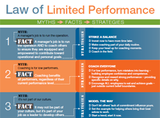
Here are 5 myths that limit individual performers, managers and their teams.
Click below to download the free infographic that reveals the truths and strategies that can dramatically expand your performance.
Myth #1: A manager's job is to run the operation.
Myth #2: Coaching is for Low Performers
Myth #3: It's not a part of our culture.
Myth #4: Coaching is confrontational
Myth #5: The person has reached their potential
person has reached their pote
|
|
The forgetting curve demonstrates the decline of memory retention in time…How information is lost over a period when there is no attempt to retain it.
For strategies to overcome the "Curve" in the context of the human learning process, click below to download this complimentary white paper. And don’t miss joining us in the live webinar or recording.
|
|
"How long does eLearning take to develop?" is a question we are frequently asked. With heavy workloads, people who create eLearning want to have a simple method of predicting the time it will take to create a course. But is there a simple method we can use to answer the question?
Please click below to download this eBook.
|
|
Write like a leader who gets results
Highly competitive companies are changing the way they write. You can, too!
Learn three ways you, as a leader, risk your credibility when you write:
Failure to understand your readers
Evasion or falseness
Too many topics in one email
Download these first 3 book chapters to boost your leadership brand.
|
|
Industry research shows that effective sales coaching can dramatically improve the performance of a sales team - in some cases driving up revenues by 20% or more.
The reason for such potential improvements is the significant "multiplier effect" sales organizations can achieve through sales coaching: one trained manager can coach multiple sales professionals and improve their overall performance. With such potential benefits it is no wonder that many sales organizations recommend that their frontline sales managers spend 25% - 45% of their time sales coaching.
The High Impact Sales Coaching Guide provides expert advice on essential sales coaching skills to help sales managers effectively empower their teams to reach their highest potential.
|
|
How do we make sense of the huge barrage of information that we encounter on a daily basis? We need to let go of the need to know everything. We need to train our learners and leaders to resist the tendency to dump content. We need to help learners focus on usefulness and context of the content. We need to design and deliver training and elearning programs to reflect this principle.
Workshop Tip60
|
|
Talking with the C-suite, having a seat at the table, being a trusted advisor…whatever you call it, this form of success only comes from credibility fostered by a reputation of consistently giving good advice. This white paper will help you develop what it takes to propel yourself and your department into the confidence of senior leaders, reliably and consistently.
|
|
Training Top 10 Hall of Fame members, through this whitepaper, seek to make their decisions easier and well-informed by clarifying issues, exploring the roles of social media in training, and discussing the advantages and disadvantages of the many types of social media available. Throughout this paper, realworld- examples are discussed, along with insights from thought leaders in the training industry.
|
|
This white paper explores the strategies Training Top 10 Hall of Fame organizations use to engage their employees at all levels throughout the company, in good economies and bad. Case studies explore their approaches to onboarding, engaging middle managers, aligning engagement to business objectives, developing relevant learning modules, and building an improvementdriven culture.
|
|
Outcomes-based learning is proactive. It engages learners, building on pre-existing knowledge, skills, and experiences, and fills in the gaps. It promises measurable results. After training, an outcomes-based approach tracks how many times learners use their new skills in their daily work.
|
|
This whitepaper explores the strategies Training Top 10 Hall of Fame organizations have used to transform their L&D function into a strategic business asset. Case studies explore the evolution of their brands in terms of leadership, business alignment, cultural transformation, change management, and ongoing challenges.
|