eBooks, Guides, Templates and White Papers
|
The Big Why
We are at a critical juncture.
At this very moment, the world is experiencing a monumental shift in the way everyone works and learns. A Fourth Industrial Revolution1 is ushering in cyber-physical systems involving entirely new capabilities for people and machines. We’re seeing the impact in retail, construction, manufacturing and healthcare. No industry is immune.
These sweeping advancements in technology will require augmenting current skills and developing new ones to meet the demands of the future. Not just proficiency skills, but social and managerial skills that will have tremendous impact on how everyone, and every "thing," works together. The next 10 years will be completely different from the last 50. Yet the majority of organizations aren’t keeping pace, offering stagnant content and stale learning experiences.
Click below to download the white paper.
|
|
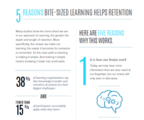
Many studies show the more direct we are in our approach to learning, the greater the depth and length of retention. More specifically, the clearer we make our learning, the easier it becomes for someone to remember. So, the clear path to learning is making it simple. And making it simple means breaking it down into small parts.
Click below to download this white paper.
|
|
Adobe Captivate 2017 is power-packed with a brand-new, easy-to-use workflow for creating responsive eLearning courses. This new workflow will allow you to easily create responsive projects, using fluid boxes instead of breakpoints, which makes it possible for you to design content for a single screen, and it works right on any device — any size or orientation. This white paper takes a step-by-step approach through a workflow to create a responsive project using Fluid Boxes.
Click below to download this white paper.
|
|
In this whitepaper, you'll learn:
What learning culture "fit" means for training, development, and growth
What issues arise when a company operates under the wrong learning culture
How to measure the success and strength of your learning culture
|
|
Even in today’s digital-first world, there are still some people who wax poetic about reading a ‘real’ print book. They emphasize that it feels good to hold a physical book in their hands. Manually turning pages is a satisfying practice.
When was the last time anyone said something similar about their training materials?
People often ask ‘how can you demonstrate that digital materials are effective?’ But do they have a method for demonstrating print is effective?
In this paper, you will learn trends in training content delivery, the benefits to digital beyond simple cost savings, and how digital helps content owners and trainers become more effective.
|
|
At the end of a really effective corporate MOOC the stadium cheers, the leadership high-fives, and you get to do your touchdown dance in the endzone, yeah baby!
But what if you’re in the huddle trying to figure out how to run that MOOC, the one that will win the learning game for your learners and your organization?
This playbook will walk you through the basic components of choosing a program to run as a MOOC and how to execute it effectively for the utmost impact on your learners and on your organization’s priorities.
|
|
Congratulations on your new position! Being a manager is an exciting, rewarding, and challenging experience. While you're excited about your new role, you're also probably nervous.
It's normal to be nervous. After all, you have a lot on your plate as a manager. On top of your own work, you might also be responsible for providing feedback, delegating tasks, managing former co-workers or friends, cultivating employee engagement, and motivating employees.
Relationship management is the primary focus of your new role. Developing your emotional intelligence and working on skills like empathy, organizational awareness, emotional self-control, leadership, and strategic thinking are crucial to becoming a successful manager.
Many of these responsibilities might be new for you. So how should you get ready for this position? Cultivating the right mindset is a great place to start. You can also think through possible challenging scenarios and put some solutions down on paper. The New Manager Playbook is full of actionable advice like this to help you start thinking like a manager.
In this eBook, you'll find:
How to cultivate the right mindset for your new position
Essential skills of a successful manager
The most common challenges new managers face and how to overcome them
Strategies to combat doubts or concerns about yourself
Prompts to help find solutions in challenging situations
|
|
Why involve your SMEs and leaders?
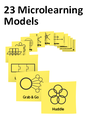
In doing our work of implementing Microlearning, we often have to design creative ways to help our clients easily understand the process. One of the best approaches is to involve SMEs, stakeholders and leaders. Encourage them to visualize and brainstorm decision-making points. When they are involved, they provide valuable guidance and experience the process as well. They feel and visualize the ideas.
The 23 models and post-it notes brainstorming makes the process both educational and well thought out. When team members meet to discuss plans, problems and solutions, they can refer to the 23 models as a possible source of solutions.
Click below to download this white paper.
|
|
Here are 10 Big Impact Areas for Microlearning.
Click below to download the white paper.
|
|
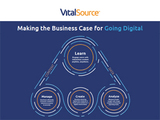
In today’s technologically charged business world, organizations must quickly adapt to emerging technologies or risk being left behind. Technology is necessary to remain competitive and at the forefront of change. As more training programs become virtual and learning moves beyond the event itself, a transformation to digital content delivery is essential to support today’s workforce.
|