Blogs
|
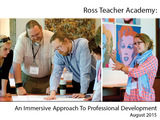
Ross Teacher Academy: An Immersive Approach To Professional Development
by Ross Teacher Academy Staff
For more information on Ross Teacher Academy, you can visit their site.
The Ross Teacher Academy offers professional development in a wide range of topics and fields related to the Ross Learning System, from pedagogical best practices, to school culture, to grade- and domain-specific strategies and content.
Both two-day courses and four-day workshops are available, taught by experienced Ross faculty and administrators. Some courses are taught in partnership with Ross mentors and scholars. Ross Teacher Academy offerings target a range of educators, including teachers, department chairs, team leaders, school leaders, and informal educators. Though courses follow a broadly outlined curriculum, they are customized and tailored to fit the needs of those in attendance to ensure that participants acquire the training and level of understanding necessary to implement concepts and practices in their own schools and share what they have learned with their colleagues.
Current course offerings are listed below. Custom-designed courses are also available; please contact us with your suggestions or requests.
Four-Day Courses
Early Childhood Education for the Global Era
Educating Future Generations About Climate Change and Sustainability
Global Education Toolkit: Making Real-Time Sense of Critical World Issues and Events
Innovation Lab @Ross: Innovative, Integrated Science and Mathematics
Interdisciplinary Teaching and Learning
Mindful Practices: Integrating Wellness Throughout the Curriculum
Two-Day Workshops
Creating Core Values and an Empathetic School Culture
Developing Critical and Creative Thinking Through Media Studies
Documenting Student Learning
Early Childhood Education for the Global Era*
Global Education Toolkit: Field Academy
Global Education Toolkit: Senior Project
Interdisciplinary Teaching and Learning
Teaching Through Multiple Intelligences*
Teaching with Art and Artifact
* Offered in Spanish and English
Upcoming Ross Teacher Academy Courses
AUGUST 4-7 2015
$1800
4 DAYS / 5 NIGHTS
Arrive Sunday after 2:00pm
Depart Friday by 11:00am
AUGUST 10-13 2015
$1800
4 DAYS / 5 NIGHTS
Arrive Sunday after 2:00pm
Depart Friday by 11:00am
AUGUST 17-18 2015
$950
2 DAYS / 2 NIGHTS
Arrive day before after 2:00pm
Depart last day by 11:00am
AUGUST 19-20 2015
$950
2 DAYS / 2 NIGHTS
Arrive day before after 2:00pm
Depart last day by 11:00am
ACCOMMODATIONS
Private room with ensuite bath, $225 per night
Private room with shared bath, $190 per night
Double accomodation possible with prior notice—splits cost of room. Meals at the Ross Café and all workshop materials are included.
About The Ross Model
At the core of Ross School and the Ross Model is a unique and comprehensive Spiral Curriculum that fosters such 21st century skills as intercultural understanding, multidisciplinary problem solving, collaboration, and independent pursuit of personal passions. Students work directly with emerging media, information, and communication technologies, learning how to use these technologies creatively and how to respond critically to the way media influences culture. Students are instilled with the intellectual curiosity and creative energy that help them to become lifelong learners. More importantly, they develop a multifaceted worldview that enables them to understand current dilemmas in a broad historical context and to anticipate the challenges they will encounter in the new global era.
One of the greatest dilemmas of education today is how to engage all children while maintaining rigorous standards. Traditionally, schools that attempt to reach all children do so by diluting excellence, while schools that promote rigor tend to focus only on teaching high-performing students. Students with diverse learning needs who come from a variety of socioeconomic, cultural, and linguistic backgrounds all thrive in the Ross environment because of the school’s intercultural commitment and its appreciation for multiple intelligences and diverse ways of learning.
Accommodations
Housing
Ross Teacher Academy is located on the beautiful Ross Upper School campus in East Hampton, New York, about two hours east of New York City. Accommodations are spacious, beautiful, and luxurious Hamptons-style homes with large bedrooms, private bathrooms, a living room, kitchen, and study rooms. Homes are air-conditioned, and most have swimming pools available. Laundry facilities are available in the houses as well. Houses are lightly stocked with basics: coffee, tea, water, and toiletries. Sheets and towels provided.
Ross Café
Breakfast, lunch, and dinner will be served at the exemplary Ross Café. Meals are nutritious and flavorful, and are prepared using fresh, regional, organic ingredients. Meals include vegetarian options, and accommodations for other dietary requirements are available as well.
Facilities
Professional tennis courts, a weight room, and playing fields appeal to athletes, while extensive libraries, stunning architecture, and ubiquitous artwork nurture the aesthetic senses. Innovation Lab has specialized, state-of-the-art laboratories. All buildings are air-conditioned, providing a welcome respite from the warmth of summer.
Transportation
Shuttle service can be provided upon request.
Details
Overview
Courses
The Ross Model
Accommodations
Contact For More Information
For more information, contact Meg Regan mregan@ross.org 631-907-5300
The post Ross Teacher Academy: An Immersive Approach To Professional Development appeared first on TeachThought.
TeachThought Blog
.
Blog
.
<span class='date ' tip=''><i class='icon-time'></i> Aug 05, 2015 08:47am</span>
|
|
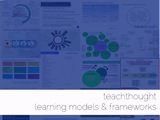
TeachThought Library: 10 Learning Models & Frameworks
by TeachThought Staff
For professional development around these ideas, contact us.
As with any publication, blogs and websites are only as thoughtful as their design.
If you can’t find what you’re looking for, no matter how "good" the content is, it’s useless. And sometimes you don’t even know what you’re looking for, and don’t know what you don’t know.
This is part of the limitation of a blog, and the allure of social media sites like facebook and pinterest. Each approach, though, has its challenges-and this is something that will always be a growth opportunity for those that seek to share their ideas. This isn’t new-always has been for content publisher since long before digital media emerged, and likely will be until AI is perfected-and by then it won’t matter because we’ll all be plugged into the Matrix and exit entirely in the digital vapor. Or not.
For now, we’ll keep trying new ideas, which is where this collection comes in.
The Utility Of Learning Models
One of the things that sets TeachThought apart from other education publishers is our focus on and development of learning models and frameworks-new ways of teaching and learning and schooling that others can use. In addition to sharing other people’s work-Grant Wiggins, for example-this is part of our effort to illuminate what’s possible in teaching and learning
Models like these embed certain (new?) ideas in certain contexts. Self-directed learning, the Maker Movement, mobile learning, education technology integration and more are all relatively new, and have a variety of perspectives that can be taken in examining them and what they enable or change. By clarifying what something is or implies, as an educator you can draw your own conclusions as to what might be in whatever learning environment you work in.
This is where the models and frameworks come in-visuals that clarify possibility, sequence, characteristics, and more. To make them more accessible for you, we’ve decided to create libraries of content, starting with an early collection of the learning models and frameworks we’ve created. The first of many such libraries appears below. We’ll work to make these more useful to you as we figure out how you use these visuals, how this library works on different devices, and what you need most as an educator. For example, from our "Inside-Out School" Model:
"As a follow-up to our 9 Characteristics of 21st Century Learning we developed in 2009, we have developed an updated framework, The Inside-Out Learning Model. The goal of the model is simple enough-not pure academic proficiency, but instead authentic self-knowledge, diverse local and global interdependence, adaptive critical thinking, and adaptive media literacy.
By design this model emphasizes the role of play, diverse digital and physical media, and a designed interdependence between communities and schools. The attempted personalization of learning occurs through new actuators and new notions of local and global citizenship. An Inside-Out School returns the learners, learning, and "accountability" away from academia and back to communities. No longer do schools teach. Rather, they act as curators of resources and learning tools, and promote the shift of the "burden" of leanring back to a more balanced perspective of stakeholders and participants.
Here, families, business leaders, humanities-based organizations, neighbors, mentors, higher-education institutions, all converging to witness, revere, respond to, and support the learning of its own community members. The micro-effect here is increased intellectual intimacy, while the macro-effect is healthier communities and citizenship that extends beyond mere participation, to ideas of thinking, scale, legacy, and growth."
This presents a new thinking for what a school is and might be. How it’s used for you as a district official, teacher, principal, parent, or related organization varies, but if you can’t find it, you can’t use it.
TeachThought Learning Models & Frameworks
The post TeachThought Library: 10 Learning Models & Frameworks appeared first on TeachThought.
TeachThought Blog
.
Blog
.
<span class='date ' tip=''><i class='icon-time'></i> Aug 05, 2015 08:47am</span>
|
|
30 Examples Of Disruption In The Classroom
by Terry Heick
This post is actually intended to supplement the "Cycle of Learning Innovation" we recently published, which means this is less about analysis and context and more about the examples. First, some quick clarification so that we have a common language.
In short, by "disruption," we are referring to something that causes the kind of impact that leads to change. To push it further, one definition of disruption might be a bottom-up cause that substantially affects the ecology it is a part of (e.g., perception, market advantages, resource needs, usage patterns, etc.), forcing redistribution (e.g., market, demographic spread, revenue, credibility, knowledge) of something else we collectively value.
Or put even more simply, "a bottom-up cause that substantially affects the ecology it is a part of, forcing reconfiguration of that system, and recreation and redistribution of currencies within that system."
The Innovator’s Dilemma
This leads to the "innovator’s dilemma," described recently in The Economist as "the difficult choice an established company faces when it has to choose between holding onto an existing market by doing the same thing a bit better, or capturing new markets by embracing new technologies and adopting new business models." The article goes on to point out some examples of this kind of dilemma, and how certain businesses responded.
"IBM dealt with this dilemma by launching a new business unit to make PCs, while continuing to make mainframe computers. Netflix took a more radical move, switching away from its old business model (sending out rental DVDs by post) to a new one (streaming on-demand video to its customers). Disruptive innovations usually find their first customers at the bottom of the market: as unproved, often unpolished, products, they cannot command a high price. Incumbents are often complacent, slow to recognize the threat that their inferior competitors pose. But as successive refinements improve them to the point that they start to steal customers, they may end up reshaping entire industries: classified ads (Craigslist), long distance calls (Skype), record stores (iTunes), research libraries (Google), local stores (eBay), taxis (Uber) and newspapers (Twitter)."
What are some examples of disruptions in the classroom, then? Not necessarily initially innovations, but factors (value neutral-neither good nor bad in and of themselves) that can lead to innovation? I’ve listed some examples of disruption in education below, and ranked them (though obviously the ranking is entirely subjective and only useful as a crude reference point to start your own thinking). For the #1 disruption in education, I’ve actually summarized the disruptor and its effect as an example, though for the rest, I only include the disruption itself for most of the rest.
30 Examples Of Disruption In The Classroom
The ubiquity of Google search and its impact on curriculum knowledge demands
Common Core standards (this one’s not sexy, but few factors impact public education in the United States in 2015 more than this index of academic content)
Planned obsolescence of mobile technology
1:1 as a standard rather than a luxury
Rising cost of universities
Change in cultural perception of identity-gender, technology, science, faith, sexuality, etc.
Change in credibility of a high school diploma or college degree
Increasingly formal use of social media by education institutions
Maker Movement
General insecurity or misunderstanding about how to meaningfully integrate technology in the classroom
Relative "normalizing" of computer coding
Falling cost of mobile devices, which impacts what’s affordable, who shows up to school with what on their own, school budgets, etc.
The increasing potential to "start a business" that is entirely social and digital (which impacts the idea of a "job," for example)
Adaptive learning platforms and learning algorithms
Rapid change in the demands for media forms (e.g., text to infographics to eCards to podcasts)
Ease of publishing (e.g., blogs, social media, podcasting) to promote conversation and thinking around what’s possible in education
The general success of Google as a platform model (Classroom, Music, YouTube, Search, Chromebooks, Chrome OS, etc.)
Narrowed (overly-narrow?) metrics of "school success" which causes parents to question how learning effectiveness is measured (see also #20).
The relative shrinking marketshare of iPads, as well as some very visible failure of iPad rollouts
Education documentaries on Netflix (such as "Waiting for Superman"), which brings the "Ed reform" conversation to a broader audience
3D Printing (this one should be higher-likely will be in five years-but we’re just not there yet)
New demands for digital citizenship
District-level BYOD programs
The adoption of blended learning approaches through learning management systems
Highly variable quality of "learning apps," which causes some app developers to "backwards plan" from the what a teacher or school will find credible; it also which causes some teachers to change their definition of what "effective" means, while others respond by calling for standards on measuring that effectiveness.
Robotics in the classroom
Social credibility of alternative school models (Walden, Montessori, Homeschooling, etc.)
MOOCs, nanodegrees, etc.
Relative crudeness of most school and district IT performance (Wi-Fi, bandwidth, district filters, repairs, regulations, workflow, etc.) which can reduce the demand for innovative technology by teachers already hesitant to adopt meaningful education technology
The difference between the success of a school and the success of its most needful students
30 Examples Of Disruption In The Classroom; image attribution flickeringbrad
The post 30 Examples Of Disruption In The Classroom appeared first on TeachThought.
TeachThought Blog
.
Blog
.
<span class='date ' tip=''><i class='icon-time'></i> Aug 05, 2015 08:47am</span>
|
|
So We’re Trying This T-Shirt Thing
by TeachThought Staff
In an effort to promote the visibility of progressive teaching and learning, we usually create content. Essays, models, frameworks, lists, etc.
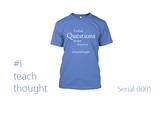
To supplement that approach so that you might spread the good word in your building, district, or organization, we thought we’d try t-shirts (which can find our first release here).
We’re starting small with a limited batch of 20 shirts and a simple phrase. We’ve got a lot of exciting ideas, but we wanted to start modestly to gauge reaction, and do so with a concept (in this case, Why questions are more important than answers) that is central to what we stand for as an organization, and what resonates with you as a teacher.
We may earn $45 for every couple of dozen of shirts we sell. Not a good investment of the several hours all this has taken. But the upshot? If you like the shirts, we can have more fun with this idea and begin some campaigns that help raise funds for your school or classroom, student projects, etc. If not, no worries. We have other plans in development as well.
For now, we start simple. The initial run will be gone by July 15th, so you have until then to grab yours.
The Fine Print
Note, we’re not a manufacturer, and though we may sell a handful of items like shirts or mugs, we’re not getting into sales and merchandising as a company. This is happening through teespring, a great company if you have an idea you’d like to see executed. Food for thought. If the shirts lack quality, we want to know so we can work with them to make it better. Sizing, returns, billing, and other issues are handled through them, as this is a teespring-based campaign.
To order, go to teespring and click "Reserve It Now."
The post So We’re Trying This T-Shirt Thing appeared first on TeachThought.
TeachThought Blog
.
Blog
.
<span class='date ' tip=''><i class='icon-time'></i> Aug 05, 2015 08:46am</span>
|
|
2015 Lost Mountain Next Gen Symposium July 11 In Mozambique
by TeachThought Staff
From a press release
-Maputo, Mozambique, Monday, July 6
Gorongosa National Park, Mozambique, Thursday, July 16, 2015
Since July 11, 2015, Gorongosa National Park has hosted 33 African and North American students, adventurers, scientists and conservation leaders for the first ever Lost Mountain Next Gen Symposium.
"There has already been a lot of excitement and information," says Salvador Nanvonamuquitxo, a graduate student at Universidad Lurio, Mocuba, Mozambique. "From meeting new people to learning so much about different cultures— we all have a love of the environment as our common denominator."
The twelve-day symposium seeks to launch a wave of "disruptive" conservation - a model for building community-driven conservation in some of the world’s most remote and biologically diverse places. The Symposium students are developing the next phase of community engagement, development, and conservation for Mount Namuli, a 7,936-foot granite monolith and the largest of a group of isolated peaks that tower over the ancient valleys of northern Mozambique.
Mount Namuli and Mount Gorongosa are both part of the greater Eastern Afromontagne region and they are now further linked through this Symposium. Students are drawing deep knowledge and experience from Gorongosa National Park’s team of scientists, rangers, educators and conservationists while learning new skill sets to contribute to the future plan for integrated conservation on Mount Namuli.
Mount Namuli is one of the world’s least explored and most threatened habitats. Here, plants and animals have evolved as if on dispersed oceanic islands, so that individual mountains have become refuges to their own unique species, many of which are yet to be discovered or described by science.
"To create a model where people and ecosystems can thrive together on Mount Namuli, we’ve learned we need two things,"Grant Bemis, graduate from Eckard College living in Minneapolis, USA says. "Strong leaders and a strong understanding of best practices in conservation of biodiversity. We’re getting both of these things here at the Symposium."
Since the beginning of The 2015 Lost Mountain Next Gen Symposium, participants have been immersed in a wide variety of activities. Students have participated in a transformative leadership workshop led by Seid Aman, the Ethiopian director of imagine1day, have begun a 5-day intensive training in the Open Standards for the Practice of Conservation framework, and are integrating environmental stewardship practices through the first-ever delivery of the Leave No Trace platform in Mozambique.
These classroom activities have been punctuated by visits to Gorongosa National Park for a game drive, a lab tour of the E.O. Wilson Center for Biodiversity, and a visit to the neighboring community of Vinho to better understand how Gorongosa partners with communities in the buffer zone around the Park.
Students will draw from all of these disciplines and experiences to design a plan for Mount Namuli, which will then be vetted with Namuli community members and implemented in August.
"The Symposium has greatly enhanced my theoretical knowledge from university with practical skills and understanding,"explains Maria Muchanga Davissone, a graduate student at Eduardo Mondlane University in Maputo, Mozambique. "At schools here in Mozambique, we study a lot about the environment, but we don’t see the environment as very few students have the opportunity and resources to go to the field. Field visits are so important because when you’re here, you see the wilderness, and more importantly, you feel the world around you."
"For example," Maria continues, "Yesterday in Gorongosa National Park, we saw an abundance of yellow fever trees.Usually these kinds of trees aren’t as plentiful, but since the elephant population is so low, they aren’t controlling them like they normally would. I’ve read about the impact of elephant poaching in books - but to see it in real life really brought it home."
It is this combination of theoretical and practical skills across a number of disciplines as well as the long-term impact of students’ work on Mount Namuli that makes The 2015 Lost Mountain Next Gen Symposium unique.
"As we move through the curriculum of the Symposium, the goal is to have students see that a holistic approach to conservation will create long term impact," explains Majka Burhardt, Director of The Lost Mountain. "This approach is one that includes leadership, a clear understanding of planning, implementing and evaluating ecological projects, as well as best practices for minimizing personal and societal environmental impact. By investing in the whole person, we are building up balanced leaders who will make a significant impact in our world."
—
www.thelostmountain.org
Interviews, Imagery, and More Information: Leigh Boyle, Community Leader, Lost Mountain
+1-604-910-4903 | team@additiveadventure.com
ABOUT THE LOST MOUNTAIN
The Lost Mountain Initiative is an international venture to foster a future where people and ecosystems thrive together on Mount Namuli, Mozambique. The Initiative began with a 2014 field expedition combining rock-climbing, cliffside scientific research, integrated conservation planning, and media. Mount Namuli, a 7,936-foot granite monolith, is the largest of a group of isolated peaks that tower over the ancient valleys of northern Mozambique. It is one of the world’s least explored and most threatened habitats. Here, plants and animals have evolved as if on dispersed oceanic islands, so that individual mountains have become refuge to their own unique species of life, many of which have yet to be discovered or described by science. Biologists and conservationists from around the world have identified Mount Namuli as a global hotspot: a place of critical biodiversity and an opportunity to model a new vision for wildlife preservation that integrates the wishes and needs of local people.
The Lost Mountain Consortium is directed by US-based Additive Adventure and Mozambique-based LUPA. The Lost Mountain is supported in part from a grant from the Critical Ecosystem Partnership Fund—a joint initiative of l’Agence Française de Développement, Conservation International, the European Union, the Global Environment Facility, the Government of Japan, the MacArthur Foundation and the World Bank. The LostMountain Next Gen Initiative’s presenting partner is Positive Tracks, a national, youth-centric nonprofit that helps Generation Next get active and give back using the power of sport and adventure. With key support from Ethiopian Airlines, Osprey Packs and Goal Zero and supporting sponsors Clif Bar, Patagonia, Kickstarter, Petzl, Scarpa, Julbo and 1% for the Planet.
The post 2015 Lost Mountain Next Gen Symposium July 11 In Mozambique appeared first on TeachThought.
TeachThought Blog
.
Blog
.
<span class='date ' tip=''><i class='icon-time'></i> Aug 05, 2015 08:46am</span>
|
|
A Lesson Using Twitter Must Have A Social Component
by Michael Catelli
New technology is never universally accepted and can face a slow implementation.
Just look at the fears of the of the 15th century monk Johannes Trithemius who penned a scathing book about the horrors of the printing press and how it would devalue all books. Trithemius must have gravely lamented when he allowed his book to be published on a printing press so more people could read it. Twitter has not created as large of an impact as the printing press, but it is still worthy of implementation. To avoid turning into Trithemius, there are easy ways teachers can start brining Twitter into classroom use.
Classrooms around the world are beginning to not just see Twitter as a learning tool, but use it that way. (There are reasons twitter works in education.) Teachers have Twitter accounts to help provide their students with classroom updates. Many teachers are encouraging students to follow reputable news sites to help them stay on top of current events. Some projects even have students write out tweets as historic or literacy figures, such Abraham Lincoln tweeting about the Civil War. While these are important first steps, educators need to do more to truly shift their students’ learning.
When educators, and society in general, begin implementing new technology the uses tend to replace things that were already done and are typically not transformational. This is how most of education uses Twitter. Having students construct 140 character tweets in the perspective of Abe Lincoln is realistically not pushing their learning far beyond summary of events. There is certainly student engagement, which is always essential, when they have to tweet for homework, but there also needs to be higher order learning. Perhaps the goal of a lesson is for students to summarize, than that activity works, but teachers should be weary of trying to change technology to fit it into their lessons when it should be the other way.
A lot of online homework portals promise that students will do more homework if teachers use their website because it looks like Facebook, which kids love. The way to incorporate new technology, Twitter included, is to fit educational goals into the aspects of the technology that is engaging for students. Kids don’t log into Facebook to do homework, so making a homework site Facebook clone provides nothing. By tapping into the engaging components of new technology educators have a great potential for more meaningful lessons. (For a few ideas, see 25 ways to use twitter in the classroom.)
There are a lot of components that make Twitter engaging, but the main point is the social networking aspect. A lesson using Twitter must have a social component. Without that need for dialogue or socializing thinking, using social media of any kind can’t be effective. When a student writes tweets for homework they are not tweeting, they simply have their sentences limited. Connecting and sharing with others in a trend while using hashtags is engaging or live tweeting an event with others is engaging. With that in mind here are three ways teachers can use Twitter right now to change their classroom and teaching.
3 Ways To Bring Twitter Into A Classroom
1. Live-Tweet A Learning Experience
A Reading, for example. Student can tweet at their teacher in class or for homework and give their immediate reactions as they are reading a fiction or nonfiction work. Students and teachers can see the class’ response when a character makes a poor choice in a story. Think of how natural a class discussion would be if the teacher knew every student in the class had a strong reaction to a specific part of a reading. Students could analyze why classmates reacted differently to the same event, all while the teacher watches in real time to see if students comprehend what they are reading.
2. Hashtag Thematic & Content-Specific Images & See What Trends
The teacher can provide or students can find images from an event or about a topic and then use a class hashtag or tweet at their teacher as they hashtag themes in those images. Imagine a class looking through Dorthea Lange’s iconic Great Depression images, what would trend? Students can see what hashtags were used the most to determine the class trends and discuss what in the images made these ideas come across for so many students.
3. Have An Ongoing Class Twitter Chat Around An Essential Question
Or activity, lesson, project, or idea. Even an "asynchronous" debate. There are certainly other tools that exist for online discussions, but Twitter Chats are unique. They are fast paced and those involved micromanage multiple conversations at a time. Even more powerful is how the moderator can be involved just like a regular participant. Students can moderate the chat by coming up with their own questions ahead of time and the teacher can be involved in discussions to help push student thinking.
One can only imagine that Trithemius would scoff at Twitter and the possibility of using it to teach. Luckily for society he was wrong about the printing press and the times changed around him. Education should not fear new technology, specifically Twitter, because they are often the best ways to engage our students.
A Lesson Using Twitter Must Have A Social Component; 3 Ways To Bring Twitter Into A Classroom
The post A Lesson Using Twitter Must Have A Social Component appeared first on TeachThought.
TeachThought Blog
.
Blog
.
<span class='date ' tip=''><i class='icon-time'></i> Aug 05, 2015 08:46am</span>
|
|
Infographic: Robotics And The Future Of STEM
by KUKA KORE Staff
In a 2011 U.S. Department of Commerce report titled, "STEM: Good Jobs Now and for the Future," reports that from 2000-2010, growth in STEM jobs is over three times greater than that of non-STEM occupations. The report also predicts growth in STEM related jobs to almost double that of non-STEM occupations between 2008 and 2018.
According to an article titled, "Investment in STEM education adds up," by Lauren Foreman, there is notable concern that demand for skilled workers in science, technology, engineering and math fields, or STEM, will outrun supply. That’s why companies such as Chevron has stepped up by allocating between $750,00 and $1.25 million to the Kern High School District as part of a local version of the national STEM program, Project Lead the Way.
Foreman’s article points out that employees that are currently filling these job roles are aging out, and many schools have pushed vocational programs that prepare students for these roles to the wayside. The goal is to prepare students now for these job roles, so that this growing field has the educated support that it requires. More funding for STEM education in schools has been the priority in parts of California. Local school districts plan to use that funding to train students as early as junior high in robotics, engineering design, and 3-Dimensional printing, according to the article.
Due to the wide use of the internet and the accessibility of it, educators find that they need to reinvent their approach to teaching in order to accommodate the growing technology-driven world, providing their students with real-world applications. Creating environments that promote hands-on learning will likely encourage students to continue education in a STEM field.
The Future Of STEM In Education?
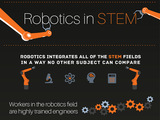
In a September 2010 speech, President Barack Obama stated that "…Leadership tomorrow depends on how we educate our students today- especially in science, technology, engineering and math." In order to showcase the importance of the increasing role that robotics can play in STEM education, KUKA Robotics has created the infographic below. The following are statistics that stand out on the infographic:
Out of high school seniors that take the ACT test, only 30 percent were cleared for college-level sciences
Only 16 percent of American high school seniors show proficiency in mathematics and are interested in a STEM career
The average income for a STEM career is $77, 800/year
This infographic also promotes KUKA KORE, a program offering high schools, tech centers, community colleges and universities the opportunity to take advantage of certified robot education on KUKA products by incorporating them into their very own STEM, Advanced Manufacturing and Mechatronics programs. This will allow students to learn basic robot programming and operation skills on exercise hardware, gaining experience of robots and control technology that is already used in a variety of industries. Educators and students have the opportunity to be trained using advanced robotic technology.
In order to promote the priority for STEM education across the United States, the committee on STEM Education, or CoSTEM, plans to facilitate a national strategy in order to reorganize STEM education programs and increase the impact of federal investments according to the United States Department of Education. This strategy involves areas including: public and youth engagement with STEM; improving the STEM experience for undergraduate students; support of groups that are underrepresented in STEM fields; and also designing graduate education programs for the future STEM workforce.
Sources
http://www.bakersfield.com/news/2015/07/10/investment-in-stem-education-adds-up.html http://www.ed.gov/stem Infographic: Robotics And The Future Of STEM
The post Infographic: Robotics And The Future Of STEM appeared first on TeachThought.
TeachThought Blog
.
Blog
.
<span class='date ' tip=''><i class='icon-time'></i> Aug 05, 2015 08:45am</span>
|
|
How Technology Can Increase Rigor In The Classroom
by Barbara R. Blackburn
Instructional rigor is a concept we can agree is important, despite the debate about the use of the word itself. Rigor is "creating an environment in which each student is expected to learn at high levels; each student is supported so he or she can learn at high levels; and each student demonstrates learning at high levels (Blackburn, 2008)." But how does technology relate to rigor? As with any instructional tool, educational technology is critical to increasing rigor in the classroom. There are five ways technology can be used to increase rigor.
Technology can promote higher-order thinking.
Technology that increases rigor promotes higher order thinking, not rote level tasks. There are times it is appropriate to do lower level tasks, but they should build to higher levels of thinking. In other words, look for technology that is more than a basic worksheet on the screen. One tool that can be effective is using real-world simulations, which require students to analyze, reflect, synthesize information, and create solutions. (You can find some sample math examples here.)
Expectations can be raised.
In a rigorous classroom, expectations are high for everyone, even though the product may look different for a student with special needs and one who is an honors student. For example, the teacher in one classroom I visited wanted to increase expectations by moving students beyond simply summarizing a text. First, some students compared two texts they read rather than one; others compared and contrasted three texts for an overall analysis of a theme or author study. In both examples, students then created analysis vlogs (or video logs) from the perspective of a book reviewer for a TV network rather than writing simple summaries. The technology perspective enhanced the expectation level of the assignment.
Consider if the teacher did not use analysis vlogs. Instead, he or she simply asked students to write a paragraph or paper comparing and contrasting the texts. Certainly comparing and contrasting is higher level than summarizing, but the technology transforms the activity. With the vlogs, students are required to put themselves in the position of a book reviewer for a TV network. This means they have to analyze the text materials, synthesize the information, and then present it in a manner pertinent to a TV audience, which typically has a short attention span. Therefore, the students must identify the most important points and back them up with evidence, rather than telling everything they know. These expectations are far more rigorous.
‘Application’ is more natural.
Third, application is the focus. Using an app like Glogster, students can apply their knowledge by creating a multimedia, interactive poster. This can be used for a variety of application-oriented projects, from creating their own math word problems with images to creating a new character in a story or book. I also like having students create an informational poster that contains three errors, and other students must discover the mistakes and correct them.
Technology-based often requires multiple steps.
According to Webb’s Depth of Knowledge, increasing rigor also requires multiple steps to accomplish the assignment rather than one single step. Instead than simply writing an essay about a famous scientist, students can create a fake Facebook page. Through their research, they must generate information to complete the profile, add friends, "like" pages, and complete status updates. This process is far more complex that a simple writing assignment, and requires multiple steps for completion.
The technology provides the structure for the multiple steps. For students to complete the Facebook page, they must first identify what information they will need, so they will have a focus for their research. Next, they must find the information. Third, they must translate the information into the Facebook format, requiring them to analyze and apply.
It can be easier to provide support for rigorous work.
Finally, technology tools that provide support for students to process their learning in different ways also support rigor. In my social studies class, my students learned better by drawing a mind map or other graphic organizer, rather than listing information. Apps like ShowMe for the IPad allow students to not only draw their information, but to record any accompanying information. This is especially helpful for primary students and for those with special needs. Mindmapping is also a great tool for students to use to demonstrate their understanding of concepts and to plan for additional assignments. (You can find some free apps for mindmapping here.)
Conclusion
Technology is a powerful tool that can help teachers increase rigor in their classrooms. As you integrate technology in your teaching, consider how its use reflects the principles we’ve discussed. I’m sure you’ll find that incorporating these five principles will help you not only best meet your students’ needs, but raise the rigor of their learning to new levels.
Barbara R. Blackburn is the author of 15 books, including Rigor in Your Classroom: A Toolkit for Teachers. She is also a national speaker and consultant, regularly presenting workshops for teachers and leaders on rigor, motivating struggling learners, and instructional strategies that improve student achievement. She can be reached through her website at www.barbarablackburnonline.com; How Technology Can Increase Rigor In The Classroom
The post How Technology Can Increase Rigor In The Classroom appeared first on TeachThought.
TeachThought Blog
.
Blog
.
<span class='date ' tip=''><i class='icon-time'></i> Aug 05, 2015 08:44am</span>
|
|
Education App Review? Share Yours With TeachThought
by TeachThought Staff
Do you have an example of learning technology you’d like to share?? An app maybe? A tablet? Something new altogether?
As a publisher focused on broader issues of learning and culture, we rarely review individual things. However, if you’ve got something you’d like to submit you think we should take a look at, feel free to send the following information and we may choose to share the details you send in a post.
Ideally, this would be written by users-educators of some sort in a perfect world. But we know that the only people that have time to sit around and write things about products are the developers that created the products themselves, or people that make a living writing ridiculously detailed reviews on Amazon. Which means most of these submissions will be from a developer rather than a teacher, which isn’t ideal, but it is what it is. We’ll mark the posts clearly at the top whether it was submitted a developer/marketer, or an educator, but if it’s a useful bit of technology, we’ll share it.
To a point, regardless of who submits it, to be published the technology has to be compelling-push education forward, untangle some teaching or learning knot, be overtly useful for teachers, allow something previously impossible, etc. This part is subjective, and our call. So. Yeah. In pursuit, any copy you send should be non-promotional. Feel free to point out features and highlight utility, but the more it reads like a commercial, the less likely we are to publish it and/or the less likely it is to be credible with our readers.
A Few Notes
You have to follow the template below exactly, or we can’t consider it.
Most of these reviews will likely be education app reviews.
This should not be considered an ambitious marketing effort. This is a share-a-quick-snapshot-of-your-tech-or-app effort. Developers, temper your hopes for glory accordingly.
Who knows if this will last. We try new content ideas from time to time, and like learning technologies themselves, sometimes they work, sometimes they don’t. We march on.
Have An App You’d Like To Share With TeachThought?
Submit the following information exactly as it appears below to submitapp@teachthought.com:
1. At least two Images, ideally screenshots that capture said compelling utility (must be rectangular in shape, e.g., 756:567 pixels)
2. App Details/Features in bulleted form
Operating system, file size, etc.
Standout features & design elements
Intended age/grade levels and content areas
Anything else that might be relevant
3. App Details/Information in paragraph form:
The big idea behind the app starting with one clear sentence, then follow up description
What challenge the app hopes to solve
What other similar apps it might be compared to
3 ideas/examples of how it might be used for learning
Education App Review? Share Yours With TeachThought
The post Education App Review? Share Yours With TeachThought appeared first on TeachThought.
TeachThought Blog
.
Blog
.
<span class='date ' tip=''><i class='icon-time'></i> Aug 05, 2015 08:44am</span>
|
|
The Benefits Of Having A College Degree
by Tricia Hussung, StrikingDistance.com.
This is a sponsored post by StrikingDistance.com
Earning a college degree is an important step, both personally and professionally. When you consider the financial, social and cultural benefits of higher education, it is easy to see how a degree can make a big difference in your life and career. For example, according to the College Board’s Education Pays report, workers who hold a bachelor’s degree are likely to be "very satisfied" with their work — 9 percent more satisfied than those with less education. In addition, completing a college education "increases the chances that adults will move up the socioeconomic ladder." And there are even more benefits of having a college degree — the following are just a few.
Higher Earning Potential
For many individuals who go back to school, the chance to earn more money is a major incentive. Postsecondary degrees of all types (associate, bachelor’s, master’s or doctoral) increase your chances of earning higher pay. According to a report by the State Higher Education Executive Officers Association, high school graduates earn an average of $30,000 per year. This number increases dramatically when you consider bachelor’s degree holders: They earn more than $50,000 per year, on average. Finally, those with advanced degrees could earn almost $70,000 a year. This is a wide wage gap that is dramatically affected by level of education. Of course, your earning potential varies by field and specific career, but these numbers represent averages.
Better Career Opportunities
You know that earning a college degree is a smart way to increase career success. Employment opportunities are narrowing for those who only hold high school diplomas. Conversely, college graduates have skills that qualify them for a wide range of careers with upward mobility. Though all career paths are different and generalizations are not true for all jobs, the act of earning any degree gives you skills you need for career success. College courses teach you to think analytically, communicate effectively and solve problems efficiently. As a student, you will also gain experience in time management, organization and self-discipline, all of which are skills employers seek.
Job Security
Another benefit of earning a college degree is that you will likely have better job security. And for some employers, the value of an educated workforce means that they will pay for employees’ tuition. This says a lot about how higher education is viewed in the workplace: It has substantial benefits for both you and your employer. In addition, data shows that college graduates are less likely to lose their jobs during an economic downturn.
Job Satisfaction
It is also true that college graduates often report higher job satisfaction, as the College Board reports. Because you have studied a topic and degree of interest to you, chances are you will enjoy what you do. And because of some of the benefits described above, such as higher income and opportunities for advancement, your job will also improve your quality of life. In fact, the same College Board report states that, of those who exercised regularly, almost 70 percent were college graduates, while the number for high school graduates was much lower at 40 percent. Furthermore, 31 percent of "adults from the mid-range family income quintile who earned college degrees moved up to the top income quintile between 2000 and 2008."
Employment Benefits
Most jobs that require postsecondary education also provide more benefits and perks. From health care and retirement investment to travel and community discounts, these benefits can make a vital difference in your life outside the office. These kinds of benefits are not usually offered for high school-level jobs. Perks like these are important for your family because they offer long-term stability. Especially when it comes to health insurance, these benefits are an economic advantage that goes beyond salary. According to Education Corner, families of college graduates are usually more economically and socially well-off. And because it’s also much more likely that the next generation will attend college, earning your degree is an investment both in your future and the future of your family.
If you’re ready to gain the benefits of a college degree, Striking Distance can help. This free, consultative service helps potential students find the online program that works for them, at a regionally accredited, not-for-profit college. Education counselors work with students like you to understand their transfer credits, financial aid options, and education and career goals, all at no cost to the student. Learn more today by visiting strikingdistance.com.
TeachThought Blog
.
Blog
.
<span class='date ' tip=''><i class='icon-time'></i> Aug 05, 2015 08:44am</span>
|