Blogs
|
Language matters. If we want to do what is best for young people and teachers we need to consider language.Consider this question for example: How do I "make" my students understand that it's okay to not know something?Or this:My daughter is falling behind in reading. How do I "force" her to read more?We have to "force" teachers to use/do [new program of the day].Well, no one likes to be "made" or "forced." Instead, show, inspire, support, encourage, discuss. Or...read a book about that which you are hoping to instill or achieve. You may be reading this and thinking that you and/or your peers/friends don't use such language, but you may be surprised. Be on the lookout for yourself and others and rethink, restate, and reconsider. You and the person you are talking to will be happy you did. What examples of you seen of these words being used? Is this something you or someone you know might need to work on?
Lisa Nielsen
.
Blog
.
<span class='date ' tip=''><i class='icon-time'></i> Aug 05, 2015 06:53am</span>
|
|
Happy New Year and welcome to #ThrowbackThursday. Today we'll look at The Innovative Educator's early coverage of One Laptop Per Child (OLPC).Written: April 4, 2008Topic: Low cost laptopsBackground: With the advent of these low-cost learning tools, teaching in a one-to-one environment will become more and more prevalent.Who might be interested: Anyone who is using low cost laptops who is interested in how they came into being.Favorite excerpt: With the advent of these low-cost learning tools, teaching in a one-to-one environment will become more and more prevalent.Reader question: How have low cost laptops changed what happens where you work?Post: Low Cost Computing Options That Will Enable More Educators to Consider 1-to-1 EnvironmentsAs most Innovative Educators will agree, the key to having a successful 21st Century classroom is equity and access to some key technology tools like a laptop and digital video camera. Unfortunately, cost has been a huge factor, until now. Many are familiar with Nicholas Negroponte, MIT’s visionary behind the $100 laptop. The dream has finally come to fruition as not only has Negroponte’s XO laptops been released, but he has also inspired the development of an entire class of low cost laptops ranging from $200 - $500. I will be personally testing out some of these new devices and watching how well they work in the classroom. Read more at http://theinnovativeeducator.blogspot.com/2008/04/testing-video-embedding.html
Lisa Nielsen
.
Blog
.
<span class='date ' tip=''><i class='icon-time'></i> Aug 05, 2015 06:53am</span>
|
|
In 2014 The Innovative Educator blog shared 166 posts with its readers. It is quite a rewarding feeling to be able to share and learn with others. I thank those who stopped by to learn with me. A special thanks to those who took the time to comment and help me and others deepen my thinking on important topics.Below are the posts that were viewed or commented on the most. Most of the popular posts focus on best practices for presenting and screentime. See if there's one of interest. If there is, take a look and if you are so inspired, leave a comment. Post Comments Page Views Date 5 Ideas to Make Lectures and Presentations Interactive 52 5262 8/31/2014 Going #BYOD ? Educators Share Ideas on Using Devices for Learning 5 5254 10/29/2014 Stop saying "balance is key" when discussing technology 98 5079 6/1/2014 6 Ways To Access @YouTube Videos Even If They're Blocked at School 4 5066 10/12/2014 One mistake presenters should never make and 8 strategies to avoid it 33 4984 12/7/2014 Social Media Guidelines for Students and Teachers by Students and Teachers 33 4681 6/4/2014 Stop Letting Good Students Do Bad Presentations 23 4414 11/19/2014 Fear is not an option when it comes to social media in schools 26 3948 9/24/2014 Don't blame social media if your students are distracted 38 3904 7/13/2014 15-Year-Old explains the key to developing a #PLN 8 3620 10/15/2014 Don't Follow the Lead of @cshirky in Banning Technology 43 2920 10/1/2014 Why innovative educators should look down upon "Look Up" by Gary Turk 20 2681 5/25/2014 When you get done looking at the top posts of this year, you might be interested in the top posts of all time. Actually, not all time, just since analytics started in 2010. You can check em out below. Post Page views Does Twitter have a minimum age requirement?Jun 13, 2013, 29746 Using Cell Phones to Support Student Engagement ...May 6, 2012, 27540 8 Real Ways Facebook Enriched Ms. Schoening’s First Grade Class...Jul 15, 2010, 26807 The Ten No Nos of Teaching with a Projector or Int...May 10, 2010, 24876 Cure ADHD without Drugs with These Resources ...Feb 5, 2011, 22397 20 Things Students Want the Nation to Know About Education...Sep 28, 2011, 19353 I hope there was a post or two that resonated with you in some way. If there was, I'd love to hear about it in the comments.
Lisa Nielsen
.
Blog
.
<span class='date ' tip=''><i class='icon-time'></i> Aug 05, 2015 06:52am</span>
|
|
In the early days of my work in helping schools integrate technology, I remember how frustrated I was when I'd walk into a school and witness how devices were used. In so many classrooms, students would take what was written on loose leaf paper and type their work into a computer. Next, they'd print it out. The teacher would mark it up, and they'd type in the new version.Ack!Not only were they only use technology as a substitution for paper, but the way they were doing this work was actually less efficient than just using paper.I'd work at the very basic level to explain that this transition back and forth between paper didn't need to happen. Students could type right onto a computer and teachers could comment right into student drafts. Even in the relatively early days of MS Word comments (even voice comments) were a little known, but effective tool available.I want more »
Lisa Nielsen
.
Blog
.
<span class='date ' tip=''><i class='icon-time'></i> Aug 05, 2015 06:52am</span>
|
|
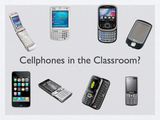
Social Media isn’t the only area in which New York City is paving the way. As announced in the NY Daily News, the New York City Department of Education will lift the ban on cell phones and other digital devices in March.Instead of banning devices, schools will have options including:Store mobile devices in backpacks or a designated location during the school day.Allow mobile devices to be used during lunch or in designated areas only.Allow mobile devices for instructional purposes in some or all classrooms.While there have been teachers, schools, and districts who have given students the freedom to bring cell phones and other technology to school, New York City is the largest. This will set the trend and help move others to open the doors for student devices in school.I want more »
Lisa Nielsen
.
Blog
.
<span class='date ' tip=''><i class='icon-time'></i> Aug 05, 2015 06:52am</span>
|
|
When schools decide they want to embrace the use of student devices for learning, it doesn't "start" with inviting devices into the classroom. It starts with inviting the use of devices into homework. While parents understand why cell phones are important to stay in touch with their children and keep them safe, they may not understand their usefulness for learning. This is no surprise. Students haven’t been given the opportunity or guidance by teachers in doing so. Rather than simply telling parents about the research and benefits of using cell phones for learning, show them!Before using cell phones in your classroom with students, begin giving students the option to use cell phones to complete their homework. This gives the teacher the opportunity to allow students to use cell phones for learning without classroom management concerns. It gives students (and their parents) experience in using cell phones for learning. Yet another benefit is that using cell phones to support learning at home enables educational leaders see firsthand how these tools can support student learning. To follow are some Ideas for enabling students to use cell phones for learning at home. I want more »
Lisa Nielsen
.
Blog
.
<span class='date ' tip=''><i class='icon-time'></i> Aug 05, 2015 06:50am</span>
|
|
While most adults understand the benefits of students having cell phones in school to stay in touch with parents for safety purposes, when it comes to classroom use, some have fears. These include concerns over data collection, privacy, being a distraction, replacing personal interaction, discipline, theft, use for bullying, and more. The concerns are real and they don't only apply to cell phone use. It's no different when doing many things at first: Crossing the street, using pointy scissors, talking to strangers, swimming, riding a bike, and more. While all of these activities have risks, because of their advantages, rather than banning them, we patiently guide children to do them with care and scrutiny. Personal devices are no different. Here are some ideas to arm educators with strategies to address common concerns that may arise when students bring their own devices to the classroom.I want more »
Lisa Nielsen
.
Blog
.
<span class='date ' tip=''><i class='icon-time'></i> Aug 05, 2015 06:49am</span>
|
|
When schools lift the ban on cell phones, they need to decide if they want to embrace the use of student devices for learning. If they do, it doesn't "start" with inviting devices into the classroom. It starts in student's homes. What better way to help parents understand the instructional value of cell phones than to use these devices to strengthen the home-school connection? Cell phones provide a terrific means for connecting with parents. Teachers can begin using phones to develop and strengthen those relationships. This can provide a foundation and help develop understanding around the benefits and value of cell phone use in general and later for use with students. Here are three ideas to get started:I want more »
Lisa Nielsen
.
Blog
.
<span class='date ' tip=''><i class='icon-time'></i> Aug 05, 2015 06:49am</span>
|
|
When I speak with educators about the power of hashtags in social media, I get four questions.1. How do I figure out which hashtag to use and set it up?2. How do I know what people are saying?3. How do I know what hashtag people are using if I want to find conversations about an area of interest?4. How do I know who is using the hashtag?There's a few great sites to help you answer these questions. They are Tagboard, Hashtagify.me, TOPSY, and Twitter. Let's take a look and how to use these platforms to most effectively answer these questions.I want more »
Lisa Nielsen
.
Blog
.
<span class='date ' tip=''><i class='icon-time'></i> Aug 05, 2015 06:49am</span>
|
|
Guest post by James Alan SturtevantTeachers are often lectured, "Get to know your students!" That’s not easy to do! A lot of kids can be pretty closed down. And, if you try to get to know them before they’re ready…it can be counter productive.Bonding with students is fundamental to the learning process. John Hattie, in his landmark book "Visible Learning", created a list of 138 influences on student learning. He placed student-teacher relationships in 11th place, far ahead of many things one might think more important. State departments of education, like in Ohio where I live, are requiring resident educators to demonstrate that positive relationships are being fostered in classrooms.I want more »
Lisa Nielsen
.
Blog
.
<span class='date ' tip=''><i class='icon-time'></i> Aug 05, 2015 06:48am</span>
|