Blogs
|
At a recent NYC Mayor’s Office event on tech, innovation, leadership, and diversity, a student audience member shared that she was the only girl in her school to take computer programming classes. A panelist made a commonly-heard suggestion.... Make computer programming a requirement. The idea is that if opting out is not an option, then we will have more diversity AND students will learn a subject that everyone should know these days. Finis! Job done. Of course artists might make the same case for visual literacy; musicians could make that case for learning to read music, we could make foreign language mandatory, and on and on and on and on.Educator, mathematician, and computer scientist Seymour Papert reminds us that we’re only able to teach in schools about one-billionth of one percent of all there is to know, yet we argue endlessly over what that should be. Creating new class requirements is the easy way out. It doesn’t look at why a more diverse population isn’t attracted to the class in the first place. It doesn’t put any responsibility on the teachers and curriculum designers to look at what they’re offering and change it so that it is indeed more appealing to a diverse audience. Another problem is that requirements can backfire. Rather than help students find an undiscovered passion, they can turn a student off from a subject forever. When we require all kids to take the same one-size-fits-all classes, we are not looking at our audience. Learning should be by choice, not force.I want more »
Lisa Nielsen
.
Blog
.
<span class='date ' tip=''><i class='icon-time'></i> Aug 05, 2015 06:48am</span>
|
|
Teens today.Always on their phones. Lightening fast thumbs sharing content on Snapchat, Vine, Instagram, Twitter and more. While teens, teachers, and parents are familiar with cell phone's use as a social tool, more and more are discovering they are a great learning resource as well. There's even evidence and research to prove it. This is useful for the texting teen trying to convince school staff or a parent that they really do use their devices for learning. It is also useful for innovative educators who are trying to convince administration and explain to parents why they want to empower students by letting them use the devices they own and love.Want to see the evidence showing how students can use mobile devices for learning?I want more »
Lisa Nielsen
.
Blog
.
<span class='date ' tip=''><i class='icon-time'></i> Aug 05, 2015 06:48am</span>
|
|
While it’s not uncommon to hear students say "I hate school," some are really suffering and desperately want out.I can relate. I became an educator not because I loved school, but because I was bored and miserable in school. I wanted to figure out how to change that for others. I started this blog to share ideas about how to do that. Like my own experience, many students today are bored and disengaged for many hours each day, despite the best efforts of their teachers and parents to try to help them make the most of school. Many are depressed. They feel a complete lack of control over their lives, and have a bleak view of the future.Some of these kids, having Googled "I hate school," find their way to School-Survival.net, a support site for kids who can't stand school.I want more »
Lisa Nielsen
.
Blog
.
<span class='date ' tip=''><i class='icon-time'></i> Aug 05, 2015 06:47am</span>
|
|
I had the opportunity to be interviewed by Rae Pica at BAM Radio about how much technology is too much when it comes to technology in the classroom. Joining me in the conversation were Sonny Magaña an award-winning teacher who has been studying the impact of technology on teaching and learning and author of "Art and Science of Teaching with Technology" as well as Andy Marcinek, Director of Technology, Grafton Public Schools, and author of article, "Technology and Teaching: Finding a Balance". In the conversation I shared my belief that you can never have too much technology, just like you can never have too many books, if it is used well. In fact, we need to get rid of the idea that balance is key when we come to using technology. I also share a great tool to find teachers can use to find the right technology for student learning goals. If this topic is of interest to you, take a listen at any of the links below.Show link: http://www.bamradionetwork.com/educators-channel/2239-how-much-technology-in-the-classroom-is-too-much Play episode: http://www.jackstreet.com/jackstreet/WTEA.Integratingtechnology.cfm Subscribe on iTunes: http://itunes.apple.com/us/podcast/rae-pica/id368754208 If you do tune in, let me know what you thought in the comments.
Lisa Nielsen
.
Blog
.
<span class='date ' tip=''><i class='icon-time'></i> Aug 05, 2015 06:47am</span>
|
|
Today's #ThrowbackThursday brings us to a post I wrote when I was frustrated with a project I was working on with a vendor that didn't understand the value of free translation tools. Instead they were trying to figure out how to translate everything via a human translator making the project an impossible undertaking in terms of man power and money. Fast forward several years and many of these tools, such as Google Translate, have become common place. I also touched on some less commonly known tools like Odiogo which makes text talk. Written: November 9, 2008I want more »
Lisa Nielsen
.
Blog
.
<span class='date ' tip=''><i class='icon-time'></i> Aug 05, 2015 06:47am</span>
|
|
I am a power user of social media. My main spaces for work are Google Communities, Facebook, Twitter, and my blog. I have maintained a blog since 2008 and moderate more than a dozen online communities. The question I’m consistently asked is "How do you have time for it all?" While for some social media has the unfortunate reputation of being a time waster, it can be used as a tool to increase efficiency and support learning for self and others. So, when I’m asked the question, the answer is easy.I have time for it all because for me, social media saves me time.Here’s how.I want more »
Lisa Nielsen
.
Blog
.
<span class='date ' tip=''><i class='icon-time'></i> Aug 05, 2015 06:46am</span>
|
|
I'm a student voice advocate. Fortunately, my employer supports this and as such, we have been incorporating the voice of students in the guidelines around social media (You can see the teen guidelines at schools.nyc.gov/socialmedia). Most recently I had the opportunity to speak with hundreds of elementary students about social media and which platforms they are using. Admittedly, I'm not much of a user of social media platforms for the under 13 set, so I knew I had a lot to learn. Interestingly, across the board, one platform rose to the top and I had never heard of it before. The platform is called MovieStar Planet and it promises players "Fame, Fortune, and Friends." Interestingly, though not surprisingly, the first reaction from many of the adults about this game was negative. Online gaming? Social media? Fame, fortune, friends = narcissism. Blech. When I suggested this would be a great game to be reviewed on an education site, I was told, the site only reviews games that were educational. For some it seems if kids like it and it plays to their need for attention, it has to be bad. Not so.Here is how MovieStar Planet describes their site:"MovieStarPlanet is a social website where children and teenagers work together with their friends to create cartoons. MovieStarPlanet is a blend of Facebook and YouTube with a learning dimension added." Here's how it works:In MovieStarPlanet you get a personal virtual MovieStar which is used in movies, chat rooms and games.In the Movies and chat rooms a microphone can be used to record speechlines and voice chat - please see the "How to record sound" instruction movie for details about how to record sound.Your MovieStar earns fame points and StarCoins (the virtual money in MovieStarPlanet) when you participate in the MovieStarPlanet virtual world.StarCoins are earned when other users watch your published movies, when you watch and rate other movies, and when you play games in the chat rooms.Fame points are earned when other users watch your published movies.Your MovieStar starts at level 0, and when you earn fame points you rise in levels. New levels give access to new animations and access to chat rooms reserved for MovieStars at higher levels. So you might be reading this and be a bit freaked out that young people are being social online. What if someone says something mean? What if someone is not who they say they are? Real concerns indeed which is why it is important for adults to be in the online worlds of young people. That said, when I talked to the students, they could have given a class on the topic. They definitely knew how to handle it.-Tell the person nicely that you don't like what they are saying.-If they continue block and report them.That usually did the trick. If not, they say they'd get a parent or teacher that wouldn't "freak out and ban it" involved. And, that's a real concern for kids. Too often one negative thing happens and the response from adults is to ban and block (like this school did) rather than empower and prepare our youth who are growing up in a world where being savvy on social media in crucial. Think about it this way. What better way for children to develop literacy skills then to chat with each and create movies for a real audience. And, bonus. The children have the opportunity to connect with others from around the world. Now check out who is behind the creation of MovieStar Planet:The Danish Ministry of Science Technology and Innovation in cooperation with The Danish University of Education, and a number of elementary school teachers.In 2009-11 the development of MovieStarPlanet is part of the research and development project about the use of games in education called Serious Games on a Global Market PlaceHere are the education objectives: The cartoons in MovieStarPlanet are small and very simple, focusing on using English in new and motivating ways. The cartoon medium is used to practice the written English skills of the children allowing them to:· read and write screenplays· watch their own and other children’s Movies so that they practice listening to and understanding/interpreting the English languageFor the children, MovieStarPlanet is ideal for:· participating in "language games" and role-plays· using digital media to create simple or more advanced texts· communicating with children in other grades and schools· understanding and performing simple or more advance language actions· using digital media for creative expressionReady to get started? · Teachers: Head on over to the teacher's center. · Students: www.moviestarplanet.com is freely available on the internet and can be freely used in education or privately by anyone.· Parents: Read http://info.moviestarplanet.com/parents.aspx. · Everyone: Safety first. Read this: http://info.moviestarplanet.com/safety.aspx
Lisa Nielsen
.
Blog
.
<span class='date ' tip=''><i class='icon-time'></i> Aug 05, 2015 06:46am</span>
|
|
Editor's Note: A version of this post was originally posted on career advice expert, Penelope Trunk's education blog. If you'd rather read it (and the comments) there, go here. There’s nothing the press likes better than a story that generates real panic for teachers and parents…especially when it has the stamp of science to give a the panic an extra edge.That’s exactly what happened when the media (Scientific American, Wall Street Journal,CNN, New York Times) ran a story about the American Association of Pediatrics (AAP)recommendations on children and screen time. One to two hours a day for children older than 2, they said, and no screen time at all for those younger than 2. Longer than that is dangerous to their health and their development.An educator or parent today reading this probably had one of these reactions:1. You are a failure because your students are in front of screens much more than 1 or 2 hours a day.2. You don’t let students use computers so you’re good.OR 3. Seriously? What year is this? Who is doing this research?If you fit into the third reaction, you are likely someone who has seen amazing learning from screen time for your young people: building, creating, coding, reading, writing, and more.Why would adults want to limit that?We wouldn’t.So why would the AAP make such out-of-touch recommendations?I want more »
Lisa Nielsen
.
Blog
.
<span class='date ' tip=''><i class='icon-time'></i> Aug 05, 2015 06:46am</span>
|
|
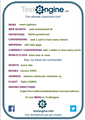
When Teaching Generation Text was published in 2011 there were numerous ways to use text-only enabled phones for learning. This was great for students and families who didn't have access to smartphones. Back then there were terrific tools like Google SMS, Cha Cha, Wiffiti, and 4info. One by one as smartphones took the front seat, texting tools like those faded away, until now. Text Engine was developed to offer cell phone users a means to search the web using their text messaging service. This is great news for educators and students in low-income and rural communities. And that's a good thing, because while smartphones are popular, there is still a great need for text-only services in low-income and rural districts. There is also a need in districts like NYC that empower students to bring their own devices to school, but don't have the means to enable students to connect to the internet. I want more »
Lisa Nielsen
.
Blog
.
<span class='date ' tip=''><i class='icon-time'></i> Aug 05, 2015 06:45am</span>
|
|
Today's #ThrowbackThursday brings us to a post I wrote about the importance of incorporating social media and student devices into learning even if it is blocked or banned in schools. What a difference a half dozen or so years make! Today, social media is embraced by districts such as New York City and this week the long-standing ban on cell phones has been lifted. Back then I was running a Ning network for The Innovative Educator blog. Since then, Ning is out and The Innovative Educator Facebook group is in and boasting several thousand members.Written: May 11, 2008I want more »
Lisa Nielsen
.
Blog
.
<span class='date ' tip=''><i class='icon-time'></i> Aug 05, 2015 06:45am</span>
|