Blogs
|
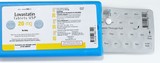
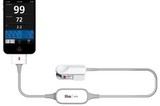
When I was in graduate school, one of my possible dissertation projects was to investigate using customer performance methods to increase diabetes patients adherence to taking their insulin shots or pills, as the case might be. Similar to my interest in prescription adherence 20 years ago, a recent article in the Wall Street Journal explored a variety of customer performance aids to help ensure patients take their medicine when they are supposed to. These include blister packs that include labeling that indicates the date when specific pills need to be taken and wireless devices that alert a patient if they have forgotten to take a pill. These are all excellent examples of how the Access:Interface and Access:Information components of the Coproduction Experience Model can enhance customer performance.
Peter Honebein
.
Blog
.
<span class='date ' tip=''><i class='icon-time'></i> Aug 04, 2015 11:33am</span>
|
|
The strongest method for influencing customer performance is Vision, which focuses on designing experiences that have clear goals and rich feedback. At the Consumer Electronics Show this year, a number of devices that offer Vision to consumers for health and fitness activities where introduced. These devices included wristbands and armbands that measure various biometrics, and an electronic fork that measures how quickly a person eats. If one is eating too fast, then the fork vibrates to indicate to the eater to slow down. And, of course, all these devices enable consumers to upload the data that these devices collect to a computer, smartphone, or cloud-based service so that you can track and display the data, set goals, and otherwise geek out with our own personal big data set about you. About 30 million of these devices have been sold in 2012, with an expectation that the number will rise to 160 million by 2017. See also the WSJ article Marching to a Vibrant Drummer (1/15/13) for an article about related feedback devices.
Peter Honebein
.
Blog
.
<span class='date ' tip=''><i class='icon-time'></i> Aug 04, 2015 11:33am</span>
|
|
Many monthly bills, such as from your utility, credit card provider, phone service, and so on, have for a long time been complex and confusing. New regulations and laws have started to address this problem, with the aim of enhancing customer performance - specifically in terms of having the information to make good decisions (Access:Information). Read more about what's being done to enhance credit card bills here.
Peter Honebein
.
Blog
.
<span class='date ' tip=''><i class='icon-time'></i> Aug 04, 2015 11:33am</span>
|
|
The wave of smart technologies is upon us, from smart meters and devices that help use better manage our energy use to a trash can that takes pictures of what we throw away to determine well our households are aligning with "green living." From a customer performance standpoint, these technologies fall into the Access component of the coproduction experience model, but deliver most of their benefits through the Vision component, namely through the principles of goals and feedback. The other elements of the model are represented as well. Take the trash camera. The goal is green living. The analysis of the trash is the feedback. Points are awarded if you are doing good (Incentive), and remedial instruction is offered if you are not (Expertise). And there we have it, a complete coproduction experience.The debate, however, is whether the devices are "good smart" or "bad smart". Good smart devices let the customer stay in control. An example is the HAPIfork, which assesses your eating speed. Lights indicate when you are eating too fast, but it is up to you to make the decision to slow down (no, the fork does not retract its tongs, but it would be really cool if it did, to make you take smaller bites).Bad smart devices don't give you complete control. An example of bad is a breathalyzer in a car. Blow a blood alcohol level of 0.8, and the car won't start. Socially, this is good, at least we think so. But the question is how far this idea can be taken. Several years ago, in the electric utility industry (where I do a lot of work), California regulators considered making programmable, controllable thermostats for commercial businesses mandatory, as well as the mandatory participation in electric demand response events which require customers to reduce their energy usage for a few hours on hot summer days. Needless to say, this didn't go over very well and the proposal was shelved.In our own research, it is clear that for customer performance to emerge, customers feel that they are in control of the situations and performances in which they engage. We need to help them in most cases, and only take over in the fewest of cases. It will be interesting to see how this facet of customer performance balances out. See WSJ 2/23/13, C1 for more insights on this.
Peter Honebein
.
Blog
.
<span class='date ' tip=''><i class='icon-time'></i> Aug 04, 2015 11:33am</span>
|
|
Given the revolt of many people (including me) against bottled water, carrying one's own water bottle is slowing becoming a social norm. The trend has been noticed by drinking fountain manufacturers, who now offer water fountains that fill bottles, easily, without having to juggle the valve of a drinking fountain.When I first encounter one of these bottle-filling fountains, I couldn't figure out how it worked. That's because I have years and years of conditioning that drinking fountains have buttons, and when you push a button, water is dispensed. So my bottle just sat on the platform while I searched for a button. Finally, someone took pity on me and showed me how it worked. You raise the bottle toward the fountain, and an electric eye detects the presence of the bottle and the water flows. Take the bottle away, and the water stops.Why this design? Why not button? The story is that to avoid germ fears, designers needed to make the fountain touchless. But like me, other users were baffled about how to fill their bottles. So the designers added graphics to illustrate what to do. I think there were graphics on the one I first used, but I was so into button-pushing mode that my mind completely ignored them.But what is really cool (once you learn how to use these things) is that some models have a digital readout showing how many bottles have been filled (nice feedback for social norming. See WSJ, March 25, B1 for more.
Peter Honebein
.
Blog
.
<span class='date ' tip=''><i class='icon-time'></i> Aug 04, 2015 11:33am</span>
|
|
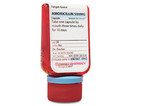
Simplicity is a key foundation for customer performance, especially within the Access domains of tools, interfaces, and information. A recent WSJ review of the book Simplicity examines the need for enhancing the simplicity of pill bottles (and instructions), end-user license agreements, processes (such as a hospital experience) and even the number of choices a customer is offered at a grocery store. The key principles of simplicity are empathy, distillation, and clarification.
Peter Honebein
.
Blog
.
<span class='date ' tip=''><i class='icon-time'></i> Aug 04, 2015 11:32am</span>
|
|
As reported in this blog, the past couple of years have seen a significant rise in devices, gadgets, and apps that fit the Vision component of the coproduction experience model, specifically around goals and feedback. Well, someone has coined a term for these solutions - Big Mother (WSJ 4/23/13, A1). If you are slouching, driving like a jerk, or haven't brushed your teeth, these solutions will remind you, nag you, nudge you, to change your behavior. Data about your various performances can be uploaded and tracked in the cloud, and if you so desired, beamed to your friends, even your mother, for that extra bit of social support that you need to achieve your goals.The Beam Brush, for example, tracks the brushing of your teeth and publishes reports to your smartphone. The smartphone app praises you when you've met your goals (it even offers prizes), and marks your calendar with "missed brushings" when you haven't been so diligent.
Peter Honebein
.
Blog
.
<span class='date ' tip=''><i class='icon-time'></i> Aug 04, 2015 11:32am</span>
|
|
It seems that the word "smart" is appearing everywhere these days - and it is no stranger to many posts in this blog. The Economists' recent article in its The World in 2013 report (pg. 85) talk about how cities are mining urban data, and using that data to facilitate the performance of its citizens and visitors. For example, transportation information (buses, subways, and so on) is being analyzed and published to on-street digital displays and smartphones so citizens can plan trips, estimate arrival times, and so on to achieve their performance goals. The article suggests that Londoners are modifying their travel behaviors based upon the advice "big data" analytics offer them. The value of smart cities is clear: efficiency and productivity, which not only makes citizens feel good, but also enhances the economic opportunity in that city.
Peter Honebein
.
Blog
.
<span class='date ' tip=''><i class='icon-time'></i> Aug 04, 2015 11:32am</span>
|
|
There has been a rise in news stories about new innovations in encouraging customers to stick to taking their prescriptions as directed. The motivation? It seems that Medicare is providing financial rewards to insurers and pharmacies for improving patient compliance. The latest story (WSJ, 5/21/13, p. B7) introduces a whole host of customer performance tactics, such as:Big data analytics (scan patient claims and clinical data to identify people with high non-compliance risk)Earn points and prizes for taking medicines as directedIncluding sensors in pills themselves that report to a mobile device when a pill was ingested (with reports delivered to doctors and family members)Including sensors in pill bottles to assess remaining medicineDesigning a pill bottle that develops "banana" spots to indicate expiration
Peter Honebein
.
Blog
.
<span class='date ' tip=''><i class='icon-time'></i> Aug 04, 2015 11:32am</span>
|
|
I was intrigued by a story on NPR this morning titled A Surprising Barrier to Clean Water: Human Nature. The story was about Innovations for Poverty Actions' efforts in Kenya to encourage people to purify their water. Most water comes from springs or wells, and it is contaminated. The co-creation of value story here encouraging Kenyans to add a few drops of chlorine to their water containers. The first design was to sell chlorine cheap at stores ($0.30 per month) with a social marketing and communication campaign. Adoption was very limited. The next design was to place chlorine dispensers next to the well or spring. 61% of water in Kenyan's homes tested positive for chlorine treatment, compared to 8% for a treatment group. A good trend.From a customer performance perspective, the designers were primarily manipulating the Access component of the coproduction experience model by providing the tool (chlorine and its dispensers) and manipulating the interface (how and where it is dispensed). They also manipulated Incentive (making chlorine free). I assume that there is some customer education in the mix as well (it is not discussed in the project details I found), and the Vision, well, is self-evident: better health for kids and fewer deaths. You would think that would be enough for 99.9% adoption.
Peter Honebein
.
Blog
.
<span class='date ' tip=''><i class='icon-time'></i> Aug 04, 2015 11:32am</span>
|