Blogs
|
I came across this TED talk as I was doing some research for my class to help students better understand the Vision and Access aspects of our Coproduction Experience Model. In the talk, Thomas Goetz talk about the re-conceptualization of medical information provided to patients. The core of his talk is the feedback loop, and around the fringes he alludes to the concept of goals, especially with the speed sign + radar feedback example. But more of what I find interesting about his talk is the connection between the feedback part of our Vision model and the information/nuance part of our Access model. You'll see this in the redesign of medical lab reports. http://www.ted.com/talks/thomas_goetz_it_s_time_to_redesign_medical_data.html
Peter Honebein
.
Blog
.
<span class='date ' tip=''><i class='icon-time'></i> Aug 04, 2015 11:34am</span>
|
|
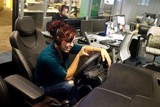
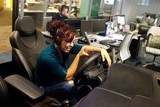
All of the cars in my family are 1998-2001 models. And they are wonderful because they all lack one key feature: the crazy array of dashboard electronics now found in today's cars.According to an article in the Wall Street Journal, car owners are so baffled by "proliferating dashboard electronics" that automakers like GM have had to beef up call centers to support customers. Call centers have even gone so far as to install a dashboard simulator in the call center to customer service reps can sit in a simulated car while they are talking with the customer so they can better explain how to use certain features. The photograph below illustrates this. Over the past 15 years we've suggested (and developed) similar kinds of resources and simulators. One was for a scientific instrument that analyzed DNA. We provided call center representatives a simulator of the user interface so they could navigate the product along with the customer. Same thing with our utility clients, strongly suggesting that functioning simulators of in-home energy displays were available in the call center so that reps could provide better customer support. So, while one can applaud GM on providing great resources to their call center representatives so they can better help customers perform, it still doesn't get around the interface issues that are the root cause of the customer performance problem in the first place.While our family might not have the nicest looking cars on the block, we certainly aren't baffled by them.
Peter Honebein
.
Blog
.
<span class='date ' tip=''><i class='icon-time'></i> Aug 04, 2015 11:34am</span>
|
|
Your customers have to post a video online that explains how to complete a task with your product. One of my students turned me on to this. http://screencast.com/t/g4jyZMOPTZwg. Enjoy!
Peter Honebein
.
Blog
.
<span class='date ' tip=''><i class='icon-time'></i> Aug 04, 2015 11:34am</span>
|
|
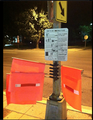
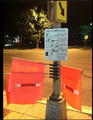
One of my students posted this image to our online discussion about the Vision and Access components of the Coproduction Experience Model. It was taken on a street in Chevy Chase, Maryland. It appears that if you want to more safely cross the street, you grab a flag, start walking and waving it like crazy, and then place it in the flag hanger on the other side of the street. Not sure of its effectiveness, but it sure has a lot of customer performance elements.Okay, can't resist. I can easily see pranksters turning this flag thing into something like Monty Python's "The Semaphore Version of Wuthering Heights."
Peter Honebein
.
Blog
.
<span class='date ' tip=''><i class='icon-time'></i> Aug 04, 2015 11:34am</span>
|
|
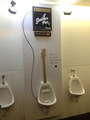
Several years ago I posted a blog article regarding the urinals at the Amsterdam airport in which they silk-screened an image of a fly. The purpose was to enhance the co-creation of value - to eliminate the mess men made when they had bad aim. It worked - guys aimed for the fly and no more mess.Now, it has gone one step further. Guitar Pee is a urinal that plays, records, and posts online the music you make when you pee. Appears to be first installed in Brazil. Visit www.guitarpee.com to see a video of how it all works.
Peter Honebein
.
Blog
.
<span class='date ' tip=''><i class='icon-time'></i> Aug 04, 2015 11:34am</span>
|
|
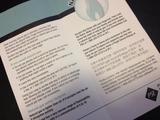
Puget Sound Energy has a very creative campaign called "Stinky Bill". The aim of this campaign is to raise safety awareness of natural gas by teaching customers to recognize the smell of gas. A brochure that includes a scratch-and-sniff circle is included in the customer's monthly bill. This campaign nicely illustrates the coproduction experience elements of Expertise and Access:Nuance (using the sense of smell to develop customer performance).
Peter Honebein
.
Blog
.
<span class='date ' tip=''><i class='icon-time'></i> Aug 04, 2015 11:33am</span>
|
|
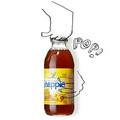
Buried deep in our coproduction experience model, at the top of the Access pyramid, is an element called Nuance. Nuance is the model's link to the emotional side of customer experiences, specifically in the five senses of sight, sound, smell, taste, and touch. I was excited when I came across the WSJ article on Sweet Sounds that Sell (10/24/12, D1), which examined the various ways sounds are integrated into coproduction experiences. The scritch of a Sharpie pen as it writes. The click of a cosmetic container. The music a dishwasher plays when finished.From an emotional standpoint, sounds enhance the esthetics of a coproduction experience. But there is also a rational angle to sounds. Sounds provide feedback that help customers recognize when they are performing well (for example, the click a container makes when it is closed, to signify that it is closed properly and won't spill the contents, or the pop of a container to signify that it is open (and that it is sealed and fresh, as well - Snapple uses this technique).
Peter Honebein
.
Blog
.
<span class='date ' tip=''><i class='icon-time'></i> Aug 04, 2015 11:33am</span>
|
|
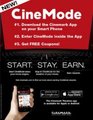
My wife and I went to the movies last night, something we rarely do. After all, with a big-screen TV and Netflix, one's home is a movie theater.Before the movie started, the screen displayed an ad for a new service called CineMode. CineMode is an app for your smart phone that, when activated, puts your phone in a sleep mode. But here's the customer performance kicker. If your smartphone remains in CineMode for the entire length of the film, then you'll earn a reward. - a digital coupon for treats, movie discounts, and so on.The whole aim of CineMode is to influence customer performance, specifically that of deviants who text and do other things with their phones that impact the quality of the customer experience for other movie goers. Obviously, setting customer expectations didn't work. So some stronger medicine was needed. However, after displaying the CineMode ad, the theater then displayed a stronger message: if you use your phone in the theater during the movie you will be asked to leave. Which incentive do you think will be more effective? The CineMode reward or the threat of removal from the theater?In my customer experience class, my students conducted fieldwork several years ago that explored this kind of deviant behavior. They set up situations in which a confederate's cell phone rang in three situations: a public area, a quiet room in the library, and at a diner that has large signs prohibiting cell phone use. The "customer norming" in the first situation was none; in the second, it was non-verbal expressions and glances shunning the behavior; and in the third it was both verbal and non-verbal actions by both other customers and staff to shun the behavior. But the classic theater behavior modification is John Water's short that informs people about smoking policies in theaters. You can see it at http://www.youtube.com/watch?v=YnpofBtijF8.
Peter Honebein
.
Blog
.
<span class='date ' tip=''><i class='icon-time'></i> Aug 04, 2015 11:33am</span>
|
|
Automobile manufacturers are integrating a variety of sensing devices into vehicles that monitor a driver's performance, with the intention of increasing driver safety. These includes sensors that measure brain waves, sweat, heart rate, sleepiness, heart rate, glucose levels, breathing, alcohol level, and so on on. Based on what these sensors detect, a vehicle could respond to enhance safety, such as turning off a radio, blocking a cell phone call, or some other actions.
Peter Honebein
.
Blog
.
<span class='date ' tip=''><i class='icon-time'></i> Aug 04, 2015 11:33am</span>
|
|
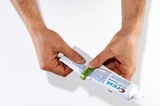
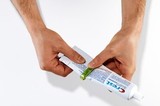
Are you one of those people who always want to get the last drop out of a container? I know I am, whether it is the toothpaste tube, dish soap bottle, or jelly jar. To meet this customer requirement, manufacturers are modifying their packaging to enable customers to get the last drop, and other companies are providing tools that enable customers to get the last drop out of packages, such as the Squeeze Ease sold at the Container Store. See the Wall Street Journal article for more details.
Peter Honebein
.
Blog
.
<span class='date ' tip=''><i class='icon-time'></i> Aug 04, 2015 11:33am</span>
|