Blogs
|
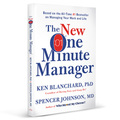
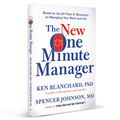
On May 5, HarperCollins will release The New One Minute Manager. I’m already getting a lot of questions about how the One Minute Manager has changed since the original book was published in 1982.
The workplace has evolved dramatically over the last 30 years. In the early 1980s command and control leadership was a way of life. In those days, the One Minute Manager was the one who set goals—he decided who to praise and who to reprimand. The New One Minute Manager realizes that today the old top-down management style doesn’t work, because people want to find meaning in their work and be recognized for their contributions. Now side-by-side leadership—being a partner with your people—is much more effective.
To address these changes, my coauthor Spencer Johnson and I have updated and adapted the Three Secrets used by the New One Minute Manager—One Minute Goals, One Minute Praisings, and One Minute Re-Directs. Now the Secrets are more relevant than ever.
Readers will discover that goal setting is no longer a task managed by the leader and handed off to the employee as a list of directives. Setting One Minute Goals is now a collaborative activity that the leader and direct report work on together. The focus is on setting clear expectations and providing examples of what a good performance looks like. People are encouraged to review their goals daily so they can stay on track by focusing on their most important projects.
The Second Secret, One Minute Praisings, remains one of the most powerful tools a leader can use to encourage and motivate people. The New One Minute Manager knows the importance of catching people doing things right and praising them right away. In time, people learn to praise themselves and become self-leaders.
The Third Secret is where we’ve made the biggest change: One Minute Reprimands have been changed to One Minute Re-Directs. We did this because the pace of work is so fast today that people are in constant learning mode. Even if you’re an expert today, tomorrow your area of expertise may be outmoded. It’s not helpful to reprimand or punish a learner. Today it’s more effective to coach and support people with One Minute Re-Directs.
I’m excited about the practical tips we’ve incorporated into this book for a new generation. Now more than ever, the Three Secrets provide powerful tools to help you build relationships and achieve personal and professional goals. And the heart and soul of the new book remains the same: one minute really can make a difference. In fact, I believe the best minute of the day is the one you invest in your people.
To learn more about The New One Minute Manager and download the first chapter, visit The New One Minute Manager pre-release website.
Ken Blanchard
.
Blog
.
<span class='date ' tip=''><i class='icon-time'></i> Aug 04, 2015 02:08pm</span>
|
|
All good performance starts with clear goals. That’s why Spencer Johnson and I made sure that the First Secret of The New One Minute Manager® is One Minute Goals. This is illustrated perfectly in the children’s story Alice’s Adventures in Wonderland when Alice asks the Cheshire Cat which path she should take. The Cheshire Cat responds, "That depends on where you want to go." When Alice says she doesn’t know, the smiling cat says, "Then it doesn’t matter." The same is true in the work environment. If people don’t have a clear understanding of where they are going and what they need to focus on, they can’t perform at their highest level.
The secret of setting One Minute Goals is for the leader to work side by side with each direct report to write goal statements that include performance standards, so that both people agree on what needs to be done by what date. In other words, they work together to determine exactly what good performance looks like. I think the best practice is to have each goal on a separate page. Keep the goal statement short so that every day it will take less than a minute for the person to review it to make sure they are staying on track.
Yes—I’m suggesting that everyone look at their goals every day. Why? Because too often, goals are written and filed away in a drawer, not to be referenced again until it’s time for a performance review. Creating goals and hiding them from sight for a year is a surefire way to ensure that people won’t work on the most important projects in an organized way. What kind of message would it send if goals were set and never reviewed? Reading over goals every day ensures that people’s behaviors are matching their goals, allows them to adjust their behaviors if their goals are not being met, and reminds them how their work contributes to larger department or organization initiatives. This method actually lets people manage their own performance—which in turn helps them enjoy their work more and be more productive.
So where are you and your people going? When was the last time you checked? Start working with your direct reports today to write clear One Minute Goals, and encourage them to spend one minute each day to read them. I’m sure you’ll start seeing higher levels of goal achievement—along with higher morale.
To learn more about The New One Minute Manager, visit the book homepage where you can download the first chapter.
Ken Blanchard
.
Blog
.
<span class='date ' tip=''><i class='icon-time'></i> Aug 04, 2015 02:08pm</span>
|
|
I ask people all the time, "How many of you are sick and tired of all the praisings you get at work?" I always get the same response—laughter. It’s sad how many managers spend their time pointing out things that are wrong with performance instead of catching people doing things right. That’s why Spencer Johnson and I encourage you to focus on the Second Secret of The New One Minute Manager®, One Minute Praisings.
After you have set clear goals with someone, it’s important to spend a good amount of time with that person to make sure they are set up for success. In fact, let people know you’re going to give them lots of feedback on their performance because you believe in their talent and you want them to be high performers. If they aren’t used to receiving much feedback it might seem confusing, but soon they’ll realize what a valuable tool it can be.
When you praise performance, remember to do it promptly and be specific about the behavior. Let the person know how you feel about their achievement and encourage them to keep up the good work. This is especially true when someone is working on a new skill or task, because praising will help build confidence. As people become more proficient, they will actually learn to praise themselves for a job well done.
Something to keep in mind: a One Minute Praising is not the same as flattery. It’s a statement that builds trust and improves communication because it’s based on facts and data. Saying "nice job" isn’t specific enough to build rapport. But if you say, "Sally, thank you for getting your monthly report to me on time. It provided accurate information and allowed me to meet my deadlines. Keep up the great work," it clearly states your appreciation and will boost Sally’s morale. It will also help her realize she is an important member of the team and improve her productivity overall.
So spend a few minutes every day catching your people doing something right. It doesn’t take much time. Remember: the best minute of the day is the one you invest in your people.
To learn more about The New One Minute Manager, visit the book homepage where you can download the first chapter.
Ken Blanchard
.
Blog
.
<span class='date ' tip=''><i class='icon-time'></i> Aug 04, 2015 02:07pm</span>
|
|
Ken Blanchard
.
Blog
.
<span class='date ' tip=''><i class='icon-time'></i> Aug 04, 2015 02:07pm</span>
|
|
In The New One Minute Manager, Spencer Johnson and I share that setting One Minute Goals begins with the belief that everyone is a potential winner. They just need to understand what they are being asked to do and what good performance looks like.
When setting goals, managers work side by side with each direct report to write a goal statement for each of their areas of responsibility, including the standards that will be used to evaluate their performance. This provides clear direction on what the direct report needs to accomplish and how they will know they have done a good job.
Ensuring that direct reports have a way to monitor their own performance and measure progress is an important component of motivation. To explain the motivating nature of creating clear goals, in the book we share a story we heard from Scott Meyers, a longtime consultant in the field of motivation.
One night when Scott was bowling, he saw some people from an organization he previously had worked with. Everyone in this group had been described as disinterested and unmotivated. Meyers watched as one of the men who had been identified as unmotivated approached the line and rolled the bowling ball. Soon he started to clap and jump around with delight. Meyers had never seen the man so animated. Why do you think he was so happy? Because he got a strike and he knew he had performed well.
Meyers contends that the reason people in organizations are not clapping and jumping around at work is, in part, because they aren’t always clear about what is expected of them. In bowling, this would be like rolling the ball down an empty lane without any pins at the end. With no pins to knock down, there is no goal and no performance to measure. That wouldn’t be much of a game, would it?
Yet, every day in the working world, people are bowling without pins. As a result, they can’t tell their manager how they’re doing. When managers assume wrongly that the people on their team know what the goals are, no one is set up for success.
Never assume anything when it comes to goal setting. Set your people up for success by working with them to write clear One Minute Goals. Then check in occasionally and see how they are scoring. Keeping goals top of mind will help people focus on the important work and achieve higher levels of performance.
Ken Blanchard
.
Blog
.
<span class='date ' tip=''><i class='icon-time'></i> Aug 04, 2015 02:06pm</span>
|
|
The main idea of The New One Minute Manager is to help people reach their full potential. In the book, Spencer Johnson and I describe the Three Secrets: One Minute Goals, One Minute Praisings, and One Minute Re-Directs. I believe the most powerful of the three is One Minute Praisings.
For a One Minute Praising to be effective, you must praise the person as soon as you can and tell them in specific terms what they did right. Let them know how good you feel about what they did and encourage them to do more of the same.
As a manager, the most important thing you can do is to catch people doing something right. And when someone is just beginning to learn a task, it’s important to catch them doing something approximately right so you can help them move to the desired result.
One of my favorite examples of this is a parent teaching a child to speak. Suppose you want to teach your toddler son how to ask for a drink of water. Of course his first attempt isn’t going to be a full sentence. If you waited for him to say "Give me a glass of water, please" before you gave him a drink, that wouldn’t turn out too well. So you start by pointing to a glass of water and saying, "water, water." After several weeks or months, all of a sudden one day your son says, "waller." You are so excited you hug and kiss him, give him a drink of water, and get Grandma on the phone so the child can say, "waller, waller." It wasn’t the exact way to say water—but it was close, so you praised his progress. Eventually, you only accept the word water and then you start working on please. By setting up achievable targets along the way and praising progress, you help the learner move toward the end goal.
In the workplace, unfortunately, many managers wait until people do something exactly right before praising them. The problem with this is that some people never become high performers because their managers concentrate on catching them doing things wrong, keeping an eye only on the desired performance instead of praising progress along the way.
This happens with new employees all the time. Their manager welcomes them aboard, takes them around to meet everybody, and then leaves them alone. Not only does the manager not catch the new person doing something approximately right, they periodically zap them just to keep them moving. I call this the leave-alone-zap management style. You leave a person alone, expecting good performance from them. When you don’t get it, you zap them. What do you think that does to a person’s performance and engagement?
If you set clear goals and catch your people doing things right, you’ll create a work environment where people are engaged and fully committed to doing a good job. It only takes a few minutes to praise someone for a job well done. It will be the most important minute of your day.
Ken Blanchard
.
Blog
.
<span class='date ' tip=''><i class='icon-time'></i> Aug 04, 2015 02:05pm</span>
|
|
As a manager—or a parent, coach, or any other kind of leader—you want to get rid of bad behavior but keep the good person. To do this, you must give feedback frequently—this goes for catching people doing things right as well as noticing mistakes or poor performance. It makes no sense for a manager to store up observations of poor behavior and present them all at once at the end of a project or during a performance review. Not only would this be frustrating for the manager, it would also put the person receiving the feedback on the defensive.
Re-directing behavior as soon as possible allows the manager to deal with one behavior at a time. It also allows the other person to focus on constructive feedback and how to correct the problem, instead of being overwhelmed with information about numerous mistakes or misbehaviors that happened long ago.
For the manager, the most important part of the re-direct is remembering to build people up, not tear them down. Confirm the facts, review the goal, and explain specifically how the behavior didn’t support the goal. End the re-direct with a praising: this lets the person know they are better than their mistake. A re-direct should never be perceived as a personal attack. You want the person to be aware of and concerned about what they did, not feel mistreated.
Like all of the Three Secrets Spencer Johnson and I share in our book, The New One Minute Manager, the One Minute Re-Direct takes about a minute and can be a great learning moment for both the manager and the direct report. It allows them to refocus on the goal and work together to strategize how to align performance with the desired outcome. Working collaboratively also improves the relationship by building trust and improving communication.
One Minute Re-Directs are the perfect way to provide feedback and coach people to peak performance. Remember, the best minute of the day is the one you invest in your people.
Ken Blanchard
.
Blog
.
<span class='date ' tip=''><i class='icon-time'></i> Aug 04, 2015 02:04pm</span>
|
|
Much has been written about work-life balance. Some say it is impossible to find in our fast-paced world. Others say it is achievable—but you have to work at it.
Summertime is usually the time of year when people try to concentrate a little more on work-life balance. However, I don’t see balance as just a summer project. In fact, for some people, summers can be more hectic than the rest of the year with children out of school, extended visits from family and friends, and pressure to take vacation—even as project deadlines pile up at work. This kind of schedule can turn a balanced summer into a stressful summer. But there is a way to manage all the day-to-day demands of a busy life, no matter what time of year.
Reaching balance in life is all about decreasing stress by focusing on things that create a sense of contentment. Several years ago my lovely wife, Margie, came up with PACT—an easy to remember model whose elements can help people relieve stress in their lives by achieving Perspective, Autonomy, Connectedness, and Tone.
Perspective is about seeing the big picture of life. If we know our purpose and direction in life, chances are we have a good perspective and daily stressors don’t get blown out of proportion. To illustrate the concept of perspective, I think about when our kids were young and we would take them to the zoo. Most parents get a little crazy chasing their kids around the zoo, but we loved it because our top priority was to have fun with the kids. We were able to overlook certain things and just enjoy the day—it was all part of our perspective. I called it zoo mentality. Honestly, it still seems strange to me that parents take their kids to the zoo then spend the whole time yelling at them. Everyone would have more fun if they embraced the perspective of zoo mentality.
Autonomy relates to our ability to make choices that allow us to be in control of our lives. If you have a high sense of autonomy, you are not totally controlled by your job, your spouse, your children, or anyone or anything. Of course no one can always be in complete control of every aspect of their life, but as long as your daily activities support your personal and professional goals you will have a greater sense of balance.
Connectedness is all about having strong positive relationships at home, at work, and in the community. Mutually supportive relationships can enhance a feeling of overall well-being and balance. Creating trusted connections at work helps improve morale and performance, while spending quality time with family and friends leads to a feeling of satisfaction of belonging to a community or being part of something bigger than yourself.
Tone covers how you feel about yourself physically. It includes the way you look, your health and energy level, and your level of fitness. People with high tone generally have a high energy level, maintain a proper weight, have sound nutrition, and feel good about their physical appearance.
Margie and I have taught the PACT model for many years, and I still use it to monitor the balance in my own life. It’s a great tool that will help you not only pinpoint what’s wrong when life gets stressful, but also check off what you’re doing right when you are feeling great.
When your life is in balance, stress naturally loses its grip. Start using the PACT model this summer and keep it up all year long. You’ll live life at a higher level.
Ken Blanchard
.
Blog
.
<span class='date ' tip=''><i class='icon-time'></i> Aug 04, 2015 02:04pm</span>
|
|
This post is adapted from "Your First Leadership: How Catalyst Leaders Bring Out the Best in Others," by Tacy M. Byham and Richard S. Wellins, Wiley, 2015. Byham and Wellins are CEO and SVP, respectively, of Development Dimensions International.
If you enjoy this article, join SmartBrief’s e-mail list for our daily newsletter on being a better, smarter leader.
We absolutely believe that as a leader you are a powerful, creative, and indispensable force for good in society. But you’re not a mind reader, nor are you a psychiatrist (most likely). You may discover that the employees you’ll be coaching have personal issues beyond your scope that make it necessary to enlist your HR contact for help. But by approaching the entire situation with empathy and planning — and considering the personal and practical needs of all involved — you’ll be better able to help your team consistently work well together. The following tips can help.
Start with a Comprehensive Hiring Process
Choose team members in ways that lead to top employee performance and engagement.
For now, let’s say it this way: The right hiring decisions today will save you considerable headaches in the future.
Ensure Expectations for Performance Are Always Crystal Clear
"How can you possibly tell me I missed my goals?" ranted Malu. "You never gave me any!" Yes, this happens more often that we would like. Use your company’s performance management system to set expectations each year. Include both the "whats" (quantitative goals) and the "hows" (behaviors/competencies). And, review them with employees regularly. Clear expectations equal fewer surprises!
Pinpoint the Situation
Study personalities and scenarios — with some familiar characters — you may encounter and prepare for each one. Use it as a starting point to plan your conversations. Handling an employee who has tuned out is often much different than dealing with an employee who offends others by being a constant know-it-all.
An Ounce of Planning Is Worth a Pound of Cure
Plan your approach and conversation in advance. If the situation is serious or is likely to involve formal consequences like probation or termination, seek guidance from your HR specialists. One thing you can count on — employees are likely to ask for specifics: "What did I do wrong?" Make sure you seek and use real data.
All-Around Coaching
Coaching is one of your most important leadership roles. When you coach proactively, by helping your team members do things right from the start, it not only builds their confidence, but it also helps to prevent problems from occurring in the first place — a far better place to be. Better to learn from success than failure. But when you must react to a team member gone astray, coach for improvement sooner rather than later.
Keep Notes
Don’t rely on your memory. Discussions with problem employees should be documented for three reasons. First, documentation helps you and them keep track of your agreements over time. Second, it keeps you on track for your next (of many) coaching conversation. And third, it ensures that there will be no misinterpretation later about what you discussed. ("I never said that," "I didn’t agree to that," "I never knew it was a serious problem.") If problems become severe enough to lead to disciplinary action or even termination, documentation will become even more crucial. It might very well be used as part of a legal proceeding in some countries, should the employee accuse you of wrongful treatment.
Be Prepared for Multiple Conversations
It might take several coaching and feedback sessions to reverse the negative trend. If you take two steps forward and one step back, that’s OK—it’s still progress. Always schedule follow-up meetings to review where things stand and to clarify the process. Positive feedback is also critical. If (when) things begin to turn for the better, let the person know with sincere, positive feedback. One supervisor told us she had five different meetings with one of her team members over a period of two months. It was worth it! The person has become one of her top performers.
Don’t Get Hooked Emotionally
Your commitment to good leadership is admirable. And it’s not a bad sign that you care about the employee, or that you’re nervous about giving feedback. But others’ problems can quickly become your problems. And to make matters worse, some employees may attack you personally — "It’s all your fault." Many leaders stay awake all night blaming themselves for an employee’s or team’s poor behavior. But, that doesn’t mean it’s your fault! Besides feeling sorry for yourself, you might also feel like you and you alone are on the hook for solving the mess.
Take a breath. Your role is to help the employee understand that something needs to change. Then your job is to help him come up with solutions. And, in most cases, it should be the employee’s solution, not yours. Your goal is to provide support without removing the person’s responsibility and accountability for addressing the issues.
Related Posts:
Boost employee engagement by encouraging collaboration
Why performance appraisals fail: A root-cause analysis and alternative
How do you efficiently onboard new employees?
What employee engagement data can tell you about change management
New leaders, build strong relationships
8 tips for first-time leaders to get results from the team originally published by SmartBlogs
Julie Winkle Giulioni
.
Blog
.
<span class='date ' tip=''><i class='icon-time'></i> Aug 04, 2015 01:39pm</span>
|
|
Certified public accountants face a range of risks that can lead to professional liability claims. Aon Affinity Executive Vice President Ken Mackunis and Senior Vice President Dave Sukert discuss how firms can mitigate their potential for liability. (Aon Affinity is the administrator of personal and business insurance benefits for members of the American Institute of Certified Public Accountants.)
Have technology and cybersecurity-related issues raised the risk of professional liability claims?
Mackunis: In the course of delivering professional services to clients, CPAs are ultimately responsible for the tools and technology necessary to complete their engagements, so if they lose or misplace their laptop or tablet, there is potential for claims from both clients and third parties. Additionally, accounting professionals have a duty to protect personally identifiable information, in compliance with HIPAA privacy laws, among others. A failure to maintain and protect private information, in contravention of laws or regulations, could result in greater risks of claims being brought against a practitioner.
It is paramount that CPAs engage with a risk professional at an early stage to understand what risks their professional liability policy covers and to ensure they have the right coverage in place to minimize their risk.
Does an accounting firm’s exposure to liability claims increase when it reports an error?
Sukert: No — in fact, the earlier a CPA reports an error, the quicker and easier it is for the CPA to control the issue. Sometimes the right "early intervention" can help resolve an issue and preclude an actual claim. There are more pre-claim assistance options available to the CPA if the error is reported immediately.
Are there particular areas where firms should ensure they are adequately testing controls, etc. to avoid liability claims?
Mackunis: There are many areas firms should focus on testing controls to avoid liability claims. Properly responding to comfort letter requests and ensuring that engagements are properly documented are two of the top areas on which the AICPA Professional Liability Insurance Program focuses on providing its advice and counsel. Other items on which the program regularly provides guidance and risk-control advice to CPAs include client acceptance and termination considerations, controlling your risk in accounts receivable/billing/collection practices, and what to do if fraud or employee dishonesty is identified.
What are some key steps that firms can take to reduce professional liability?
Mackunis:
Issue an annual, signed engagement letter for all services, regardless of the type, and be sure to clarify the limitations of service.
Follow up on red flags or items that appear incorrect, inconsistent or otherwise unsatisfactory.
Clearly document work performed to support delivery of services, as described in the engagement letter.
Monitor and manage "scope creep." Ensure the scope of work to be performed is clear and understood by all team members and the client.
Are there any aspects of business where firms commonly underestimate the potential for professional liability?
Sukert: Managing longtime clients, lack of expertise and engagement letters are just three of the many aspects where firms tend to underestimate the potential for liability.
Longtime clients may be friends or even family members. A good question to ask is, "Did the CPA get an updated engagement letter?" As the scope of services broadens through the years, the risk broadens as well. CPAs shouldn’t be afraid to ask a client for an updated engagement letter. It not only manages risk, but it also helps set expectations both by and for the client.
Manage your practice from the perspective of "expect the unexpected." CPAs should apply professional skepticism to all aspects of an engagement. Having another partner review the work — one who may have a different sensitivity to red flags — may help limit a firm’s liability.
CPAs should recognize when they don’t have the expertise in a particular line of service. They should bring in a colleague that does have the right experience and be transparent with the client, in letting them know they are bringing in another colleague to handle the engagement and why. Historical claims data strongly suggests that CPA firms which rarely perform a service in a specialized area are more likely to experience a claim in that area of practice.
Firms underestimate the value of good documentation. Engagement-letter documentation is the first line of defense for CPA firms if a claim is filed. We cannot stress enough the importance of documenting every conversation, interaction, etc. a CPA has with a client.
Related Posts:
Increase in demand for CPAs equals job openings nationwide
Financial sector working to improve speed of cyberthreat info-sharing, experts say
How to recruit and organize cybersecurity talent
SmartBrief Cybersecurity Forum
Experts: Cybersecurity collaboration between government, industry making progress
Q&A: Engagement letters, proactive measures reduce CPAs’ professional-liability risk originally published by SmartBlogs
Julie Winkle Giulioni
.
Blog
.
<span class='date ' tip=''><i class='icon-time'></i> Aug 04, 2015 01:38pm</span>
|