Blogs
|
I was talking with some friends at a recent morning men’s group. Our focus was on the importance of being connected to other people and what it means. We came up with five things we think help you really get connected to others—at work, and in all aspects of life. How would you rate yourself in these five areas?
Listen more than you speak. We talked about listening a lot. If God wanted you to speak more than listen, he would have given you two mouths!
Praise other people’s efforts. This one has always been so important to me. Catch people doing things right. That really helps you get connected with people.
Show interest in others. It’s not all about you. Find out about people and their families and learn about what’s happening in their lives.
Be willing to share about yourself. In our book Lead with LUV, my coauthor and former Southwest Airlines president Colleen Barrett said that people admire your skills but they really love your vulnerability. Are you willing to share about yourself? I think being vulnerable with people is really important.
Ask for input from others—ask people to help you. People really feel connected if they can be of help to you.
As a leader, there are many skills you need to develop but building relationships is the most important thing. What can you do this week to listen more, praise other people’s efforts more, show interest in others, share about yourself and ask for input? Give it a try. You’ll be surprised at the difference it makes in your ability to connect with others!
Ken Blanchard
.
Blog
.
<span class='date ' tip=''><i class='icon-time'></i> Aug 04, 2015 02:34pm</span>
|
|
One of the books I’m working on this summer is a customer service book with Kathy Cuff and Vicki Halsey tentatively titled I Care—Do You?: The Essentials of Delivering Legendary Service. A recent experience I had at my vacation home in upstate New York beautifully illustrates what we are trying to capture with this new book.
I was driving the car we use up here when the light came on and said I needed an oil change and the air pressure in the tire was down. So I took it over to a local service station about fifteen minutes from our cottage for an oil change and to have the tire checked. Bob, who owns the place, is a fabulous guy.
While my car is being looked at I asked, "How’s business going?" and Bob replied, "Amazingly well—but some of the other folks I talk to, it’s not so good." And I said, "The reason, Bob, is because you are such a fabulous guy with your customers. You really care and so do your people."
He said, "We really try. Our main goal is to do what the customers need and take care of them." Then his mechanic came to me and said, "I just checked the car. The alert system didn’t take into consideration that the car was sitting around all winter. You don’t really need an oil change for another 4000 miles. I checked the oil and it looks fine, but you do need a New York State inspection, so I’ll just give you that." I was out of there in about twenty minutes.
I went over to Bob as I was leaving and said, "Here’s a perfect example of what I was telling you. You could have gone ahead and changed the oil—it would have been a lot better financially for you—but your guy said, "No, I don’t really need it."
Bob said, "We find that when we take care of the customers it might cost us money in the short run, but it comes back in the long run."
That’s another great example of how a small business - or any business - thrives when its people have an "I care—do you?" mindset around customers.
So make sure you take care of your customers. And remember, we don’t have just external customers; we have internal customers, too. Who are the people that use your services? How can you be most helpful to them?
Ken Blanchard
.
Blog
.
<span class='date ' tip=''><i class='icon-time'></i> Aug 04, 2015 02:33pm</span>
|
|
A client recently asked me to speak to their company about "the new normal." It reminded me of an interview I conducted with Sir Richard Branson on the same topic a couple of years ago. As you know, Sir Richard is an expert on operating in the new normal. His international investment group, the Virgin Group, is one of the world’s most recognized and respected brands and runs successful businesses in several different sectors.
During our interview, I asked Sir Richard how he chooses the different sectors he invests in.
His reply was that he looks for sectors where the current competitors are not as customer focused as they could be. If they are not taking care of their customers, he’ll go into that industry.
But that was just the beginning. In addition to being customer focused, he shared that you have to be fast and flexible, you have to be cost effective, and you have to be continuously improving.
I couldn’t agree more. Customer service and a focus on meeting customer needs are a given in today’s competitive work environment. First, you’ve got to have Raving Fan customers—people who find their experience so exceptional that they brag about you to others. Second, you have to be fast and flexible. That means you’ve got to empower the people closest to the customer by providing skill training and giving them the authority to do their jobs well. Third, you have to do it in a cost-effective manner. Put it all together and you have a plan for success that I often depict as a sturdy three-legged stool with customers, employees, and financial success as the three legs—and the seat that holds it all together is continuous improvement.
So how do you succeed in the new normal?
If your organization is like most, you have many different areas of focus. In a situation like that it’s easy for people to become stressed, unclear about priorities, or even drag their feet. Don’t let that happen. Keep moving forward—because if you don’t move forward and adjust, your organization risks becoming obsolete.
As you look at the challenges and changes of the new normal, the advice I’ve been giving for years applies more than ever: Keep your eye on the customer. Create a motivating environment for your people and empower them to meet customer needs. And remember, never stop learning. Adopting a culture of continuous improvement will keep your company moving forward and help it adjust to whatever the business environment brings.
Ken Blanchard
.
Blog
.
<span class='date ' tip=''><i class='icon-time'></i> Aug 04, 2015 02:32pm</span>
|
|
People often ask me how they can be more effective as a manager. One approach I recommend is to meet one-on-one with each of your direct reports for 15 to 30 minutes at least once every two weeks.
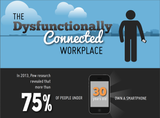
Having one-on-one meetings is a simple strategy and just plain common sense—but it’s not common practice, according to polling we conducted together with Training magazine earlier this year. When we asked people what they wanted out of their one-on-ones with their immediate supervisor, we discovered managers aren’t making time to meet with their direct reports on a regular basis—and when they do meet, they aren’t using the time effectively. (See infographic.)
Ready to get started?
Before you start ramping up your one-on-one meeting schedule, make sure you’ve established a firm foundation, which begins with clear goals and objectives. All good performance begins with clear goals.
Goal setting has two parts:
Identify what the responsibility is.
Identify what good behavior looks like.
When it comes to goal setting, strive for focus. Less is more. We often see people with eight, ten, or twelve goals—that’s too many. We’ve found that having three to five observable and measurable goals works best. Remember this 80/20 rule: Eighty percent of your most significant results will come from twenty percent of your goals—your key areas of responsibility.
Direct reports set the agenda
One important distinction that separates a true one-on-one meeting from other manager/direct report meetings is that the manager sets the time but the direct report sets the agenda. A manager’s role is to listen, ask clarifying questions, and look for ways they can help. One-on-ones are a wonderful way for managers to learn how to best coach people. As people discuss how they are doing in relation to their goals, they will share with their manager what they need and what might be holding them back.
Make time to meet
Managing is about your people—because when people accomplish their goals, the organization wins. Set some time aside to meet with each of your people today. You’ll be surprised at the impact even 15 to 30 minutes every other week can make!
Ken Blanchard
.
Blog
.
<span class='date ' tip=''><i class='icon-time'></i> Aug 04, 2015 02:31pm</span>
|
|
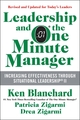
HarperCollins just released our revised edition of Leadership and the One Minute Manager. Much has changed since the original book was published nearly 30 years ago—workforces are more diverse, workplaces are less centralized, and technology has revolutionized business communications. Surprisingly, much has remained the same, especially when it comes to managing people. Today more than ever leaders have to do three important things. First, they have to help people set clear goals. Second, they have to diagnose people’s development level on each task. Third, they have to match their leadership style to the development level of the person they’re leading, to provide that person with what they need to succeed.
Notice I said "diagnose people’s development level on each task." Even among experienced managers, it’s easy to fall into a trap of seeing people as beginners, or moderately competent, or highly experienced. When we paint people with a broad brush—for example, assuming that because a person is an expert in one aspect of their job, they’re an expert in all aspects of their job—our assumptions often lead to misunderstandings and poor performance.
If you’re anything like me, there are parts of your job you’re good at, but there are also aspects of your job where you’re still learning—especially in today’s constantly changing business environment. Mastering a new technology is the one example most people can relate to. Just about all of us know what it feels like to be a beginner when confronted with a new technological advance.
For any particular task, people can be at one of four development levels, depending on their experience and commitment. Your job as a leader is to identify and understand those different levels and adjust your level of direction and support accordingly. Here’s a brief overview:
Development Level One - Enthusiastic Beginner. Appropriate Leadership Style: Directing
An enthusiastic beginner is eager to get started on a task, even though they do not have any demonstrated expertise. For this task, regardless of the overall tenure of the employee, the leader needs to provide specific direction about goals, show and tell how, and closely monitor the individual’s performance in order to provide frequent feedback on results.
Development Level Two - Disillusioned Learner. Appropriate Leadership Style: Coaching
This development level usually sets in after an employee has been unsuccessful on a new task. The leader needs to direct goal or task accomplishment but also explain why, solicit suggestions, and begin to encourage involvement in decision making.
Development Level Three - Capable But Cautious Performer. Appropriate Leadership Style: Supporting
Once a person has demonstrated skill with a task, the leader and the individual make decisions together. The role of the leader is to facilitate, listen, draw out, encourage, and support.
Development Level Four - Self Reliant Achiever. Appropriate Leadership Style: Delegating
Once an individual becomes an expert at a task, the leader allows the individual to make most of the decisions about what, how, and when. The role of the leader is to value the individual’s contributions and support his or her growth.
It’s easy for us to stereotype people as beginners, moderates, or seasoned veterans in all of their tasks, despite knowing from our own experience that we’re often at very different levels of competence and commitment on our own tasks. Even seasoned managers can fall into this broad brush approach. Take an extra minute with your people to diagnose their development level on each of their goal-related tasks. A little extra time up front will pay dividends and save time down the road.
Ken Blanchard
.
Blog
.
<span class='date ' tip=''><i class='icon-time'></i> Aug 04, 2015 02:31pm</span>
|
|
Why don’t New Year’s resolutions work? When I ask people how many have made a New Year’s resolution they haven’t kept, everyone raises their hand.
The reason for this is, after you announce your New Year’s resolution, everyone who is important in your life laughs, says, "We’ll believe it when we see it," and goes to a delegating leadership style where they leave you alone to accomplish your goal.
But if you could handle a delegating leadership style, it wouldn’t be a New Year’s resolution—you would just do it. Therefore, it’s the wrong leadership style.
A Situational Approach
For years, I had been up and down on my fitness regime. I was frustrated about not keeping my commitment to my commitment. Then one day it dawned on me. Why wasn’t I using what I knew from Situational Leadership® II (SLII®)—the well-known leadership concept we teach to thousands of leaders each year through our company? SLII® asserts there’s no such thing as one best leadership style. The style used must be based on a person’s development level on a particular task or goal. With SLII®, you first determine your development level in a particular area and then determine the specific leadership style you need. So it’s not only about "different strokes for different folks," it’s about different strokes for the same folks on different tasks or goals.
The goal in SLII® is to move people gradually from the dependence of a D1—Enthusiastic Beginner, through the stages of D2—Disillusioned Learner and D3—Capable but Cautious Performer, all the way to independence as a D4—Self-Reliant Achiever. The respective leadership styles for these four development levels progress from directing, to supporting, to coaching, and finally to delegating.
My Personal Experience
Armed with this insight, I went to my friend Tim Kearin, a fitness expert, and told him I was ready to get myself fit and healthy once and for all. Using SLII®, we analyzed my development level in six areas of fitness:
Aerobics
Strength training
Balance
Flexibility
Weight control/Nutrition
Sleep/rest
The only aspect of fitness where I was a D4 was rest and sleep—I can sleep anywhere! So that wasn’t an issue for me.
When it came to strength training and balance, I was a D1—Enthusiastic Beginner. I was excited about the idea of getting stronger, and I had never realized the importance of balance until I learned it was a major issue for people in my age group—poor balance can lead to falls. Because I had never done any work on either of these areas, I needed a directing leadership style.
In terms of aerobics, flexibility, and nutrition/weight control, Tim and I determined I was a D2—Disillusioned Learner. I had started programs in these areas at various times over the previous thirty years but hadn’t kept up with them, so I was frustrated. According to SLII®, I needed a coaching leadership style—which means I needed direction and also caring support.
So after Tim and I determined what kind of leadership style I needed in each of the six fitness areas, we started the journey—and together wrote about my experience—in a brand new book just out this month, entitled Fit At Last.
I’m excited about Fit at Last because it’s not an ordinary fitness book. It doesn’t promote a particular diet or exercise program. It’s all about managing your journey to health and fitness—and committing to your commitment—with a little help from others depending on where you are in each area of fitness you are working on.
You can learn more about my journey and the book in general at the Fit At Last book page.
I think this book is really going to help people stay committed to their commitment—whatever it may be. My friend Art Turock taught me the difference between being committed to something and just being interested in it. For example, if you’re interested in exercising and it’s raining in the morning, you say, "I think I’ll exercise tomorrow." But if you’re committed to exercising and it’s raining, you say, "I think I’ll exercise inside today."
So the big question is: Can you keep your commitment to your commitment, once and for all?
With Fit at Last and Situational Leadership® II, you can.
To learn more about my fitness journey with trainer Tim Kearin visit his blog Fit At Last By Design .
Ken Blanchard
.
Blog
.
<span class='date ' tip=''><i class='icon-time'></i> Aug 04, 2015 02:30pm</span>
|
|
I was on the phone with my friend Phil Hodges the other day talking about contentment. Phil believes that contentment can only happen in the present, and I think he is right. Contentment doesn’t happen in the past by remembering the good old days. Having nice memories is pleasant but doesn’t necessarily offer contentment in the present. Also, contentment is not in the future because we don’t know what that will bring.
Real contentment, enjoyment, satisfaction, and happiness happen when we are fully present and living in the now. If you have a positive feeling that you are exactly where you are supposed to be, doing what you are supposed to be doing, then you experience true happiness.
Spencer Johnson, my coauthor of The One Minute Manager, also discusses this in his brilliant parable The Precious Present. In this story, an older man’s wisdom launches a young boy on a lifelong search for the precious present. Eventually the young man discovers what the old man was trying to teach him all along: what you have and what you do in the present is a gift. Living in the past can be destructive or demotivating and can hinder your journey to happiness. Likewise, planning for the future is good but it is impossible to live there. And if you focus only on the future, you miss opportunities right in front of you.
Living in the present allows you to focus on the important and to cherish the moment. I encourage you to consider moments when you were at your best. I’ll bet you’ll recall that you were right there in the moment, fully committed and fully present. If you dwell on what was—the past—or what will be—the future—you’ll miss the power of contentment, happiness, and success in the present.
Ken Blanchard
.
Blog
.
<span class='date ' tip=''><i class='icon-time'></i> Aug 04, 2015 02:28pm</span>
|
|
Think of a time when you experienced really excellent service. Now compare that to a time when the service you received was just acceptable—okay, but nothing special. Which organization do you want to do business with again? I’ll bet it’s the one where someone made you feel valued and cared for—someone who understood the true importance of Legendary Service.
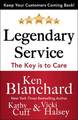
That’s the central message of my latest book, Legendary Service: The Key Is to Care. It’s a story that I think will change the way people look at service. I wrote it with my colleagues Kathy Cuff and Vicki Halsey, two experts on customer service. As coauthors of our Legendary Service customer service training program, Kathy and Vicki have spent years teaching the concepts of Legendary Service to clients in every industry.
What we know from working with companies of all sizes is that most organizations recognize the necessity of offering great customer service, but few really get it right. They zero in on specific tactics or trendy catchphrases, or they provide training to just a small number of people in customer service roles. They don’t understand that the best companies work to create a true service culture—where taking care of customers is everyone’s responsibility, not just the job of the people in the customer service department. These companies look at service from three equally important perspectives:
Frontline service providers, who play a critical role because they are the ones who have direct contact with the customer.
Managers, who not only empower their frontline people to provide exemplary service, but also act as role models for both internal and external service excellence.
Senior leaders, who fully embrace the service initiative and communicate desired behaviors to the entire organization. Their goal is to create an environment where associates feel that they are valued internal customers of the organization so that they, in turn, want to take care of external customers and make them feel valued.
Legendary Service is really an inside-out issue—in two ways. At an organizational level, creating loyal external customers begins by taking care of your internal customers—your people. At a personal level, providing great service begins when you realize that, as an individual, you have control over the service experience each of your customers receives. You can create a loyal customer by the service you provide.
To get at this dual focus, we use a model we call ICARE. We believe that there are five steps to becoming a Legendary Service provider:
Ideal Service: Meet the customer’s needs on a day-to-day basis by acting on the belief that service is important
Culture of Service: Foster an environment that focuses on serving the customer
Attentiveness: Know your customers and their preferences
Responsiveness: Demonstrate a genuine willingness to serve others as you fulfill their individual needs
Empowerment: Take the initiative to implement the service vision
We’ve found that the lessons of this simple model, when applied, will have a profound impact on the service experience your customers—both internal and external—will receive.
You can find out more by joining my coauthor Kathy Cuff on April 16 for a free webinar called Creating A Customer Focused Organization, where she will be sharing some of the book’s key concepts. We have also created a special web page where you can take an online quiz about your company’s service mentality and read an excerpt from the book. I hope you’ll check out both of these resources and discover the value of creating a Legendary Service culture in your organization.
Ken Blanchard
.
Blog
.
<span class='date ' tip=''><i class='icon-time'></i> Aug 04, 2015 02:28pm</span>
|
|
On May 6, I turned 75 years old. In today’s society, most people would be retired at 75—or at least thinking about it.
But did you know that the very practice of retirement was designed for the industrial world? During that era, people were physically tired by the time they reached 65 and needed to rest.
Things are different now—we have more options. My goal in life is to be a loving teacher of simple truths. I’ve always searched for methods to improve the skills of leaders and to communicate those methods in a way that makes it easy for people to understand and practice. That doesn’t make me tired—it refuels me. So, I’m adopting a different approach. I’m focusing on an attitude of refirement instead of retirement.
I first heard this word from Zig Ziglar, the great American author and motivator. When he would run into friends who hadn’t seen him for a while, they would ask if he had retired. He always answered this question the same way. "There’s no mention of retirement in the Bible. Except for Jesus, Mary and Joseph, David, and a few others, nobody under 80 made an impact. I’m not retiring, I’m refiring! I’m not gonna ease up, let up, shut up or give up until I’m taken up. As a matter of fact, I’m just getting warmed up!" Zig lived his life that way until his death in the fall of 2012.
Norman Vincent Peale was another of my mentors who helped shape this idea. When I first met Norman, he was eighty-six years old. What most amazed me about him was that he was excited about every single day. Why? He couldn’t wait to find out what he might learn. He often said, "When I stop learning, I might as well lie down because I will be dead." He was learning right up until he passed away at age ninety-five.
Learning is more important today than it’s ever been. In the past, if people were loyal to their company and worked hard, their job was secure. Today, the skills you bring to the party constitute the only available form of job security. People who are continually learning and upgrading their skills increase their value—not only in their organization, but also in the overall job market.
So don’t count the days until you retire. Start refiring now and look for new ways to rekindle, reinvigorate, and recharge your relationship with others. I guarantee you’ll have plenty to celebrate each and every day.
Ken Blanchard
.
Blog
.
<span class='date ' tip=''><i class='icon-time'></i> Aug 04, 2015 02:27pm</span>
|
|
Sometimes when I’m leading a session for a big group of managers, I’ll ask, "How many of you think of yourself as a leader?" Usually only about one-third of them raise their hands. Somehow they think the word leader is reserved for high-level positions like President or CEO.
But each of us has the ability to influence someone else, whether it be a coworker, a child at home, a spouse, or a friend. Anytime you are trying to influence the thinking, beliefs, or development of another person, you are engaging in leadership. Of course there are traditional organizational leadership responsibilities that involve goals and objectives, but if you think beyond those confines, you’ll realize that everyone is a leader—you are a leader—unless you’re stranded on an island by yourself!
I’m always reminded of this when I ask people to tell me about someone who has influenced them and had a positive impact on their life. They very seldom mention traditional leaders at work. They usually talk about parents, grandparents, aunts, uncles, coaches, or teachers. The one characteristic common among all of these influencers? Their interest in helping another person develop.
The truth is that we are all trying to influence people, whether it is in the office, at home, or with friends. But we need to pay attention to how we do it. Are we there to serve or to be served? The most effective leaders know that true leadership is about serving and impacting people in a positive way. It’s about letting people know that you want to help them be the best they can be and that you truly care about them.
Even if you don’t have a traditional leadership role right now, chances are you are playing a significant role in the life of another person. Identify it, claim it, and recognize the impact you can have in someone else’s life.
Ken Blanchard
.
Blog
.
<span class='date ' tip=''><i class='icon-time'></i> Aug 04, 2015 02:27pm</span>
|