Blogs
|
(This is the eighth installment in my twelve-part blog series A Leadership Vision for America.)
Our leaders need to create a clear, compelling vision for America. They also need to start treating Americans as true business partners. Now let’s look at the third secret for helping to fix Washington:
The Third Secret: Involve Every Sector of Society
Assumption: No problem can withstand the assault of sustained collective thinking and action.
When I talk about sustained collective action, I’m talking about every sector of society being involved. The strategy to do this is an outgrowth of the thinking that went into Sam Williams’ and Eric Swanson’s book To Transform a City. (I’m currently working with Sam and a colleague of his, Mike Carlisle, on an initiative called Vision San Diego, with the goal of making San Diego truly "America’s Finest Region.")
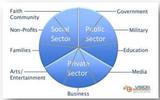
In their book, Williams and Swanson established that there are three primary sectors in our society, each having three domains. They are:
The Public Sector - government, military, and education
The Private Sector - business, arts/entertainment, and media
The Social Sector - faith community, nonprofit organizations, and families
In the past, when it has come to finding solutions for city, state, or national problems, the focus has tended to be on only two of these nine domains—government and business. The self-serving mess we have in Washington is a perfect example. When people start believing that our problems can be solved only by government or by business, it dooms problem solving to failure because the other seven domains are on the outside looking in—and some of them have become our country’s most critical judges.
Take the media, for example. I’ll never forget when I participated in a Young Presidents’ Organization University program in Singapore in 1984. Prime Minister Lee Kuan Yew, the leader who transformed that country, spoke to us. He was prophetic when he said: "I love the United States, but I’m worried about you. I don’t think you are going to get strong leaders in the future because your press does not understand the difference between freedom of speech and national integrity." That was almost thirty years ago.
I think if the media were invited in to be part of America’s problem-solving team, they wouldn’t feel the need to set themselves up as judge and jury for our leaders and everything the government is doing. The reality is that all nine domains of society need to be involved for real problem solving to take place.
Next time I’ll explain the difference between Bounded Set and Centered Set decision-making philosophies.
Ken Blanchard
.
Blog
.
<span class='date ' tip=''><i class='icon-time'></i> Aug 04, 2015 02:41pm</span>
|
|
(This is the ninth installment in my twelve-part blog series A Leadership Vision for America.)
In my last post I stated that business and government can’t solve all of America’s problems by themselves. Ideally, our leaders in Washington would involve every sector of society in problem solving. The three sectors encompass nine different domains:
The Public Sector, represented by government, military, and education
The Private Sector, represented by business, arts/entertainment, and media
The Social Sector, represented by the faith community, nonprofit organizations, and families
When Eric Swanson and Sam Williams were working on their book To Transform a City, they come across a very interesting philosophy about problem-solving relationships. Paul Hiebert from Fuller Seminary discovered in the 1970s that when people come together to solve a problem, they often have a "closed circle" philosophy, or what he called a Bounded Set. A bounded-set thinker asks the question, "Do you believe like I believe?" This becomes a divisive question because it separates those who are in from those who are out, limiting people who are allowed to work on the problem to those who sign off on an agreed-upon belief. Whether it’s political, religious, or some other type of personal conviction—unless you believe what we believe, you can’t work on the problem. This philosophy doesn’t work because it is exclusive, not inclusive. The weeding-out process continues, the circle keeps getting smaller, and the problem doesn’t get solved.
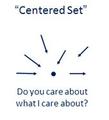
A more productive way to look at problem-solving relationships is an open philosophy Hiebert referred to as a Centered Set. A centered set has no boundary that defines who is in and who is out. The question that determines if you are part of the problem-solving group is, simply, "Do you care about what I care about?" This philosophy works because it is inclusive of all belief systems and focuses on the matter at hand: Are you concerned about the problem we want to focus on?
How would this work in Washington? It would be the job of the president and the legislature to first identify the key problem areas that need to be focused on to help keep America prosperous and safe. Next, they would select key people from each of the nine domains, whether inside or outside their own ranks, who care about each of the areas selected. Each of these groups would work with other American citizens to develop strategies to solve each of the key problems or concern issues going forward.
The people working together could have all different kinds of personal convictions about things as long as they were all passionate about the key problem area they were working together on—whether it be the economy, homeland security, unemployment, affordable housing, balancing the budget, improving the educational system, or another important issue.
Identifying leaders from each of the domains to work on each problem highlights the fact that no one segment of the population can solve all of America’s problems. In fact, one of my favorite sayings is, "None of us is as smart as all of us."
A perfect example of someone who lived and breathed this philosophy was William Wilberforce, who helped stop slavery in England. It took twenty years. He traveled the country on horseback and got to know key leaders from all of the different domains. He didn’t care what they believed politically, religiously, or economically—all he asked the leaders was whether they agreed with him that slavery was wrong. If they agreed, he would help them determine how they could influence important people within different segments of society and get them on the "stop slavery" bandwagon. This led to a number of people from diverse backgrounds coming together to put an end to slave trading and ultimately abolish slavery in their country altogether.
This is the type of process our government leaders need to put into action to deal with today’s pressing issues. Right now, Washington seems to be dominated by the bounded-set philosophy, where "you have to believe what I believe" to even begin to work together on a problem, let alone agree on a solution. So you have one big bounded-set group, the Democrats, at odds with another big bounded-set group, the Republicans.
The only way to get anywhere is through compromise. What makes this third secret for fixing Washington so powerful is that it focuses on sustained collective action by all segments of society.
Next time I’ll bring it all together with the fourth secret for fixing Washington, which involves a practice that’s near and dear to my heart: servant leadership.
Ken Blanchard
.
Blog
.
<span class='date ' tip=''><i class='icon-time'></i> Aug 04, 2015 02:40pm</span>
|
|
My last few blogs have focused on aspects of Artificial Intelligence (AI) that are often neglected or misused. Topics like reactive behaviors, situation awareness, and transparency. But all of these topics sit against a backdrop of AI that has persisted since its earliest years. The great mathematician and computer scientist, Alan Turing, envisioned machines that […]
Anna Griffith
.
Blog
.
<span class='date ' tip=''><i class='icon-time'></i> Aug 04, 2015 02:40pm</span>
|
|
(This is the tenth installment in my twelve-part blog series A Leadership Vision for America.)
Now let’s look at the fourth and final secret for fixing Washington. This secret will encompass and bring to life the first three secrets.
The Fourth Secret: Elect Servant Leaders
Assumption: The more that our leaders are in Washington to serve and not be served, the better chance we have to mend what’s wrong with our country.
The world is in desperate need of a different leadership role model. Everyone has seen the negative effects of self-serving leaders in every segment of our society. In fact, to a great extent, the whole economic downturn has been the result of self-serving leaders through the years who thought all the money, recognition, power, and status should move up the hierarchy in their direction, and everyone else be damned.
Yet, when I mention servant leadership to people, they often think it means the inmates are running the prison, or trying to please everybody, or even some type of religious movement. They think you can’t lead and serve at the same time. Yet you can, if you understand that there are two parts to servant leadership:
A visionary, or strategic, role—the leadership aspect of servant leadership
An implementation, or operational, role—the servant aspect of servant leadership
The first secret for fixing Washington—having a compelling vision—was focused on the visionary/strategic, or leadership, aspect of servant leadership. Once an organization has a compelling vision, they can set goals and define strategic initiatives that suggest what people should be focusing on right now. With a compelling vision, these goals and strategic initiatives take on more meaning and therefore are not seen as a threat, but as part of the bigger picture.
The traditional hierarchical pyramid is effective for the leadership aspect of servant leadership. People look to their organizational leaders for direction, as Americans look to Washington. While leaders should involve experienced people in shaping vision/direction, goals, and strategic imperatives, the ultimate responsibility remains with the leaders themselves and cannot be delegated to others.
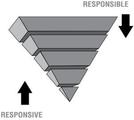
Implementation/operational leadership, or the servant aspect of servant leadership—living according to the vision and direction—is where most leaders and organizations get into trouble. With self-serving leaders at the helm, the traditional hierarchical pyramid is kept alive and well, leaving the customers uncared for at the bottom of the hierarchy. All the energy in the organization moves up the hierarchy as people try to please and be responsive to their bosses, leaving the customer contact people to be "ducks," "quacking" and saying things like, "It’s our policy," "I just work here," "I didn’t make the rules," or "Do you want to talk to my supervisor?"
Servant leaders, on the other hand, feel that their role is to help people achieve their goals. They intuitively know that effective implementation requires turning the hierarchical pyramid upside down so the customer contact people are at the top of the organization and can be responsible—able to respond and soar like eagles—while leaders serve and are responsive to the needs of their people, helping them to accomplish goals and live according to the vision/direction, goals, and strategic imperatives of the organization.
Since the customer contact people are "in the know," they see themselves as your responsible business partners and, therefore, are committed to not only serving customers but to solving problems. This is what the second and third secrets of fixing Washington are all about: We must treat our citizens as our business partners and involve all segments of society to solve our problems.
To wrap up my Leadership Vision for America series, I’ll have some final thoughts for you next time and then a special message on November 3. Let me know what you think!
Ken Blanchard
.
Blog
.
<span class='date ' tip=''><i class='icon-time'></i> Aug 04, 2015 02:39pm</span>
|
|
Most who follow Artificial Intelligence (AI) have heard of the Turing Test. This test was first postulated by Alan Turing, the brilliant British mathematician, as a test for machine intelligence. His simple test has human judges using a terminal to communicate to either another human sitting at a terminal[1] or an intelligent computer. If the […]
Anna Griffith
.
Blog
.
<span class='date ' tip=''><i class='icon-time'></i> Aug 04, 2015 02:39pm</span>
|
|
As an AI company, Discovery Machine employees are often confronted with the question: "Where’s the AI?" I suspect this question could only arise from those not following our blog. The question, however, is really about some preconceived idea of AI, which unfortunately could be one of many. It can therefore leave its recipient stupefied and […]
Anna Griffith
.
Blog
.
<span class='date ' tip=''><i class='icon-time'></i> Aug 04, 2015 02:39pm</span>
|
|
I made a trip to Washington, D.C. a few weeks ago. It was a really interesting time to be there—just before a presidential election. I heard a lot of negative statements and a lot of worry about the economy and the election and the state our country is in. So I want to show you a quote someone sent to me:
"The national budget must be balanced. The public debt must be reduced; the arrogance of the authorities must be moderated and controlled. Payments to foreign governments must be reduced, if the nation doesn’t want to go bankrupt. People must once again learn to work, instead of living on public assistance."
Do you know who gets credit for that statement? Cicero, who supposedly said it in 55 B.C.! I’m strangely comforted by the fact that the world has had some of these same problems for centuries. So I made a choice to come away from Washington, D.C. feeling positive about the future. I think we’re going to pull through this. We’ve got a great country—we can pull out of this debt and solve these problems—particularly if we all hang in there together.
I was so impressed by New Jersey Governor Chris Christie when he stated publicly this past week that Barack Obama was "outstanding to deal with" in the aftermath of Hurricane Sandy. Even though Governor Christie is a Republican and a staunch supporter of Mitt Romney, he didn’t play politics; he praised Obama because he felt praise was due. I thought it was refreshing and I think the American people would love to see more examples of this kind of non-partisan collaboration among our leaders. If our national leaders all had this kind of cooperative mentality, we could pull together and overcome any obstacle in our path. We shouldn’t need something like a hurricane to bring American leaders together as problem-solving partners.
My friend Hyrum Smith recently reissued his 2004 book with the title Pain is Inevitable; Misery is Optional. That’s tied in with what I believe about our country’s difficulties. Let’s realize that pain is inevitable—problems are inevitable—but misery is optional. We don’t have to play the blame game. We can choose to be compassionate and loving and caring. When people want you to join in a pity party about how bad everything is in the country, you can choose not to engage. You can say, "Okay, what can we do to try and make a positive difference in our own community?" and encourage others to be part of the solution.
So, choose to be positive and to do something about it - and right now, doing something means we all have to get out and vote. Vote any way you want—just vote. Decide who you think can really make a difference and help us turn the country around. And don’t forget about the local elections and issues—those are just as important as what’s happening nationally.
We can each make a difference where we are. We can be leaders where we’re planted. Encourage others around you and choose to stay positive. And remember to vote on Tuesday!
Ken Blanchard
.
Blog
.
<span class='date ' tip=''><i class='icon-time'></i> Aug 04, 2015 02:38pm</span>
|
|
In Sondheim’s musical Sunday in the Park with George, the lead character sings "Putting it together, that’s what counts. The art of making art is, putting it together." This is true in AI as in art. My last four blogs have talked about many facets of AI, including reactions, situation awareness, communication and knowledge representation. […]
Anna Griffith
.
Blog
.
<span class='date ' tip=''><i class='icon-time'></i> Aug 04, 2015 02:38pm</span>
|
|
Over the past few weeks I have argued that AI is a holistic endeavor, that to create useful AI entities for use in simulation or for use as decision aides or coaches requires that they address communication, situational awareness, and have significant knowledge focused on specific expertise. These Communicating Artificial Situated Expert (CASE) agents, if […]
Anna Griffith
.
Blog
.
<span class='date ' tip=''><i class='icon-time'></i> Aug 04, 2015 02:38pm</span>
|
|
This week brings one of my very favorite holidays—Thanksgiving. I love it because it’s not focused on gifts and things like that. It’s about what everyone brings to the table. You pass around the turkey and the dressing and all, and it’s a chance for everyone to really express what they are thankful for. I hope you’ll be able to do that.
I’m thankful that I live in this country. I’m thankful that I had a wonderful mom and dad who always lifted me up and a great sister who encouraged me constantly. I’m grateful that I met my wife Margie and she’s been my companion and my love and my partner for over fifty years now—it’s unbelievable. I’m thankful for our son Scott and our daughter Debbie and what they’ve brought to my life, and all of our grandkids who are all really special. I’m blessed to have a sweet little dog, Joy, who is a perfect example of unconditional love. I’m thankful for a wonderful God who loves me and loves you and loves all of us. I’m grateful that I’m healthier and in better shape than I have been in years. I’m thankful for everyone in our company. I think we’ve created a wonderful place and we want to continue to build on that as we go forward. We’re all in it together and we support each other.
I like to say, "Life is a very special occasion—don’t miss it." Part of that is being thankful for the blessings you have. It doesn’t mean that there aren’t troubles along the way. But life is a very special occasion. Every day when we wake up we need to be thankful that we have another day to share and be with people and maybe make a difference.
So this week, reach out to the people you really care about and love, and tell them you care. I’m wishing you all the very best and I’m thankful that we all have an opportunity to make a difference in the world. Have a wonderful holiday. Recognize how blessed you are and reach out and tell people that you love them. Take care.
Ken Blanchard
.
Blog
.
<span class='date ' tip=''><i class='icon-time'></i> Aug 04, 2015 02:38pm</span>
|