Blogs
|
All managers, from CEOs to frontline supervisors, must delegate to accomplish their goals. Yet, even though delegation enables managers to produce results through other people, many supervisors have not yet mastered this skill. All types of work can be delegated, ranging from simple tasks to entire projects or processes, and supervisors should consider delegating any work of which employees are capable or can be trained to handle. In The Busy Manager’s Guide to Delegation, Richard A. Luecke and Perry McIntosh provide readers with a proven method for delegation, and break down the delegation process into five steps which, if followed, will enable managers to be more effective.
For a free trial of EBSCO Business Book Summaries click here.
Jerry Eonta
.
Blog
.
<span class='date ' tip=''><i class='icon-time'></i> Jul 29, 2015 11:45am</span>
|
|
It’s not easy being the new guy at work—especially during the first few months when the environment is new and the products are unfamiliar.
So how do you make the best of your integration time? Before you think about building a 90 day plan and getting to work, there are three things you should consider mastering.
To succeed in a new job, you need to be curious, open, and passionate.
Why? The way you approach a new job sets the tone for the rest of your time there. If you were excited about getting the job, then have the right mindset to keep it!
I recently spent some time with Erin and Yuri, two new employees who started at Rustici Software a couple of months ago. Erin does everything—HR, Jenafits, scheduling, accounting, and marketing. Yuri works his magic on the development and support side of one of our biggest products.
Erin and Yuri are already irreplaceable parts of our team. They’ve carved their spots by being curious, open, and passionate (not to mention, hilarious).
Why are these three qualities important? Well, here’s why Yuri and Erin have been successful:
1. Be Curious —You won’t make it unless you ask questions.
Yuri: "It’s sometimes hard to realize the vast amount of information, tools, and flavors that make up a company when you’re new. There are lot of things I don’t know yet. So I spend my time learning—a lot. Each day I go to different people and ask them how to do stuff. Other days I challenge myself to discover things on my own. At the end of each day, I’ve learned something."
2. Be open — open to suggestions, open to new challenges, open to new ways of thinking.
Erin: "I’m lucky that I have my hands in everything right now, it helps me to learn as much as I can about what we’re doing as a company and how I can be a part of that. I’m someone who really likes to multitask, so I welcome the challenge of working with new people—especially when they are willing to share feedback. In a lot of corporate cultures people don’t make the time to help each other like they do here. "
3. Be Passionate — approach your role with enthusiasm, eagerness, and an eye on the future.
Be passionate from the start. Take initiative in situations where you have something to contribute and provide assistance where you are needed, even if it’s "not your job". A team made up of passionate people is the foundation of a great place to work—isn’t that what we all want?
This all seems simple because it is. Ask questions, take feedback, be ambitious—earn your spot by having the right mindset. That’s how anybody who’s made it at Rustici Software has done it!
The post How to Succeed in a New Job appeared first on Rustici Software.
Tim Martin
.
Blog
.
<span class='date ' tip=''><i class='icon-time'></i> Jul 29, 2015 11:45am</span>
|
|
Last week I talked about the need for company leaders to respond appropriately to crisis by keeping internal and external stakeholders in the loop. While a significant part of leadership success falls to communication skills, communication alone is not enough. Leaders must instill a sense of credibility among employees and stakeholders in order to make their messages truly effective. Employees need to know that those in charge are trustworthy and base their decisions on what is best for the company and its workforce.
In this video from The Washington Post, General Petraeus outlines what it means to be a credible leader. Some of the key characteristics of credible leaders include:
1. Sharing risk with followers. Leaders need to lead by example, and employees need to see them living the values they promote to others. If leaders can create a "we’re in it together" mentality throughout the organization, workers will trust their guidance and decisions.
2. Empowering others. Leaders can encourage creative thinking and more effective delegation by learning to empower employees. Giving employees the initiative and resources needed to carry out a project will lead to a happier and more productive workforce. Giving them appropriate guidelines to work within will ensure that the project gets done the right way, but it also gives employees room to innovate and try new things.
3. Being truthful and not evading questions or responsibility: The essence of credibility lies in trust. Credible leaders must be open and honest with employees if they want to gain their trust and respect. They will admit when they have made a mistake and will use the lessons learned to shape future actions. Leaders should also make themselves available to employees in order to clear up issues and promote a sense of accessibility.
Related book summaries in the BBS library: The Credible Company, The Transparency Edge, The Leadership Challenge
Jerry Eonta
.
Blog
.
<span class='date ' tip=''><i class='icon-time'></i> Jul 29, 2015 11:44am</span>
|
|
When I started working as the Client Implementation Manager for the Watershed LRS side of Rustici Software, I would have never guessed I would be spending an hour a week collectively demonstrating proper alignment for a Warrior I stance or coaching colleagues on how to do a chaturanga push-up.
I am a self-proclaimed hippie at heart, as well as a nerd by osmosis. While much of my time is spent amongst fellow yoga teachers, I also tend to surround myself with people far more technically savvy than I. I admire the passion to acquire knowledge, strategic thinking, and the simple raw intellect my colleagues possess.
But above their sheer smarts, I most admire their willingness to participate in something new, something they may not consider a strong suit, something out of their comfort zone: yoga.
For the past three months, I’ve been teaching a weekly yoga class here at the office for anyone who would like to participate. It started as a Quell event, and by request has become a regular thing. Now we have a stack of mats, a few yoga blocks, and use the wooden patio right outside our office as our "dedicated" yoga space.
It’s. Awesome.
There are few things in life that bring me more joy than hearing someone say that their hamstrings are more flexible, their arms feel stronger, their core tighter, or they just generally feel better since starting to practice yoga.
Even if it’s just once a week, the benefits can be noticeable!
Even though our office is supportive of regular ping-pong matches, spontaneous walks around the parking lot, and biking adventures to lunch, we still spend much of our time sitting. It’s easy to neglect our posture and ignore our breathing when we are focused on problem-solving and staring at a computer screen. A weekly yoga class can serve as an awesome opportunity to get up and stretch, move, breathe, laugh, and find community with those we work with.
Many people who spend a lot of time sitting at work (like software developers!) suffer from similar things like tight hips and hamstrings, wrist, neck, shoulder and back pain, tension headaches…not to mention the common collection of past injuries from sports, or just general aches and soreness from inactivity. Many of my colleagues who have been participating regularly in our weekly class have remarked that they feel stronger, their balance is improving, they are noticing their breath more, and genuinely look forward to the time spent on their mats.
It’s not just a chance for them to work on their Crow Pose ; it’s an awesome time to create community outside of the office (something I must say Rustici Software is excellent at already). Plus, it’s an unexpected bonus when we can carry that sense of community and teamwork into a project together, so we are able to communicate more effectively!
I am so glad to work in an environment that has been not only tolerant to my personal passions as a yoga instructor, but actively supportive. We work hard. My brain often hurts by the end of the day because I am consistently being challenged and spurred on to improve and grow and solve problems. But I am grateful for the days when my arms are a little sore too, thanks to Wednesday "Nerd Yoga" as I have affectionately dubbed it.
The post Nerd Yoga appeared first on Rustici Software.
Tim Martin
.
Blog
.
<span class='date ' tip=''><i class='icon-time'></i> Jul 29, 2015 11:44am</span>
|
|
In case you haven’t thought about the value of a good intern program lately, let me assure you— it goes far beyond just checking the box.
If you want diamonds, you have to take the time to mine, sort, and polish them.
But why?
Here are four (of many) lessons that we learned this summer with our first round of Rustici interns. We’ll start with the most altruistic points and work our way down:
1. It helps develop the next generation of workers.
The value of a good internship goes well beyond financial compensation—it complements what is learned in class by doing real work. A great intern program polishes new talent to be better suited when entering the workforce, making them more desirable candidates.
2. We learn a lot by teaching others.
Sometimes teaching is a great way to develop our own capabilities and better understand the things we do. Having the opportunity to spend a summer teaching fresh minds promotes new ways of thinking while reinforcing existing skills.
3. It’s a great way to recruit and secure talent.
There are certain kinds of people who never show up on the job market—we want those people. If we can help them find their way to us by providing a great internship experience, we’ve secured proven talent who fit our culture.
4. They get stuff done!
If your intern projects are made up of peasant work, you’re doing it wrong. Whether they are interns or permanent hires, we choose excellent people who do excellent work. That’s why the interns worked on important projects all summer long. They win because they get to work on real things that matter, and we win because we get to complete projects that have been waiting in line.
It was interesting to witness our interns’ transition from newbies to fully integrated parts of our development team. It’s important to have a solid recruiting strategy, a structured development plan, and trust in new talent.
Yes, it cost us extra time and money to go to career fairs, interview countless candidates, tie up developer time (thanks, B.Miller), and coordinate "lunch and learns." But we don’t cut corners on anything else, why should the intern program be an exception? After all, these are diamonds we’re mining, and boy did we find some shiny ones.
The post Four Reasons Your Intern Program Shouldn’t Be an Afterthought appeared first on Rustici Software.
Tim Martin
.
Blog
.
<span class='date ' tip=''><i class='icon-time'></i> Jul 29, 2015 11:42am</span>
|
|
In 10 Steps to Successful Teams, Renie McClay provides advice and guidance for team leaders and team members who are charged with accomplishing tasks through collaborative workforce groups. The foundation of teamwork is based on the belief that the whole is greater than the sum of its parts and that more can be accomplished by working together than by working independently. Organizations that use teams effectively accomplish more than simply solving internal problems; they create a culture of self-motivated problem solvers.
For a free trial of EBSCO Business Book Summaries click here.
Jerry Eonta
.
Blog
.
<span class='date ' tip=''><i class='icon-time'></i> Jul 29, 2015 11:42am</span>
|
|
We have an ethos about Tin Can API (xAPI) community adoption here at Rustici Software:
"A rising tide lifts all boats."
We realize the power of the Tin Can API to revolutionize the e-learning, training, and HR industries. It’s already happening, and we want that to continue. We want to support the community in every way possible. We want to answer every Tin Can question that’s asked. We want to help LMSs, authoring tools, and organizations realize the important and impactful new things that Tin Can lets them do.
We want to help everybody use Tin Can, because as more people use it, the industry gets better.
The "tide" is Tin Can adoption, and to us, it’s the most important thing in the e-learning world.
Enter Andrew Downes (formerly known as @garemoko). Andrew has been instrumental in the early adoption of Tin Can. He has been building tools and experimenting with Tin Can since the early draft versions were published. He caught our attention then, and he’s only become more intertwined with the Tin Can community since…he even contributes directly as an author to the specification.
There’s been one drawback, though. Most of Andrew’s Tin Can work has been extracurricular (he needs a full time job to support his family, like most of us.) We wanted to change that.
We’re excited to announce that Andrew is now working as a full-time Tin Can evangelist. At Rustici Software, we’re proud to support him in evangelizing the importance and the power of the Tin Can API.
Tin Can will now be Andrew’s sole focus, and the Tin Can tide will rise faster now.
If your organization has already adopted Tin Can, expect to hear from Andrew in the near future. If you’re not sure how Tin Can affects your world (from a product standpoint, from an instructional design view, or even if you have technical questions), Andrew is ready and waiting to talk to you.
The post Announcing: Andrew Downes appeared first on Rustici Software.
Tim Martin
.
Blog
.
<span class='date ' tip=''><i class='icon-time'></i> Jul 29, 2015 11:40am</span>
|
|
Google has recently decided to relocate its China operations to Hong Kong and has since rerouted online traffic from its censored Chinese language portal (www.google.cn) to an uncensored Hong Kong site. This move has angered the Chinese government and many of its citizens, but has also been hailed by many Chinese as a positive step toward ending online censorship in the country.
Technology has connected the world in a way never seen before in history. Businesses today have to be more aware of global cultures and economies and how to carry out business across borders. While it is extremely important to understand and respect cultural differences between global business professionals, Google’s current situation also brings up the question of values.
Google’s core tenant is "Do no evil." The company recently decided that continuing to censor its search results in accordance with Chinese government guidelines did not adhere to this tenant. When conducting business globally, its imperative not to lose sight of the company’s core values. News stories surface all the time about companies moving operations to foreign countries because of more lax labor or environmental laws.
Businesses cannot afford to have integrity in their native country alone. When technology has connected the world to such a large extent, it is important for companies and their leaders to adhere to one set of values that will follow them all over the globe.
Whether or not Google’s actions in China were good or bad, they made the right decision by adhering to their values, and I give them credit for that.
Related book summaries in the BBS library: Just Good Business, The Five Literacies of Global Leadership, Leadership Beyond Reason
Jerry Eonta
.
Blog
.
<span class='date ' tip=''><i class='icon-time'></i> Jul 29, 2015 11:40am</span>
|
|
When it comes to performance development, many leaders are happy to accept work that is merely "satisfactory." But what if each employee could be developed into an exemplary performer, executing their duties at a level significantly above organizational standards? Though this is a realistic and attainable goal, many companies have looked to ineffective generalized training as the only solution to lagging performance.
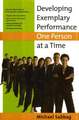
In Developing Exemplary Performance One Person at a Time, Michael Sabbag lays out the case for individualized performance development, based on the unique strengths and weaknesses of each employee. He does this through his Exemplary Performance Model, a step-by-step approach which encourages employees and leaders to seek out specific performance constraints, and leverage the powerful techniques used by exemplary performers throughout a given industry.
For a free trial of EBSCO Business Book Summaries click here.
Jerry Eonta
.
Blog
.
<span class='date ' tip=''><i class='icon-time'></i> Jul 29, 2015 11:39am</span>
|
|
Read any survey on employee satisfaction and a positive culture will rank in the top three. Money, benefits, the actual work itself; these things are important. But most people want a great place to work and culture to go with it.
When it comes to being a great place to work, Rustici Software is awesome. For the past six years, The Nashville Business Journal has recognized us as one of the Best Places to Work and last night we were awarded Company of the Year by the Nashville Tech Council.
I first heard about Rustici Software from Andy, my longtime friend. After joining the team last Spring, I still wondered if Rustici could really be that awesome. Surely it can’t all be true? No place can be that great. Can it?
Fast-forward eight months, and I can report it’s all true. 100% legit. This is the coolest place to work. Period. We really do love coming to work on Monday morning.
As a former business owner, I was curious as to how and why the culture here is so awesome. Can a company exist where people work hard and love coming in on Monday? Can a culture be fun, fulfilling, and turn a profit?
I had so many questions… What makes people want to work so hard? Why don’t they abuse the open vacation policy or the freedom to play ping-pong whenever they want? How are meetings so effective? And is ‘being awesome’ really a thing?
All of my questions came with my own presumptions. And it all clicked after a recent Welcome Breakfast.
I was reading Leaders Eat Last - Why Some Teams Pull Together And Some Don’t, by Simon Sinek. The premise of the book stems from Sinek questioning why some teams are able to stick together and pull through - even put their lives on the line for each other - while others are dysfunctional and doomed for failure. The answer lies with the Marines.
"Officers eat last."
Leaders make sacrifices for their team. They sacrifice their status and comfort in the mess hall, and go as far as sacrificing their lives on the battlefield. They sacrifice personal interests and self-serving actions to support their team.
The good of those in their care is of the utmost importance. That’s what clicked at breakfast. As a new member of our Rustici Software family, you eat first. Mike and Tim (our leaders), eat last.
When you see a leader of any group or organization making sacrifices for the good of others, it changes the way you perform. It changes the way you approach situations. It changes the way you view things, like work.
"If you have unlimited vacation why don’t you take a month off?"
"Why don’t you just play games all day?"
—We get these types of questions from our friends and families. But there’s an important reason as to why none of us at Rustici Software would actually do that.
Because Mike and Tim wouldn’t.
Leaders who ‘eat last’ change organizations. They establish a positive culture that fosters great people. You might think culture is ping-pong, free snacks, and a company happy hour. But to me it’s trust, respect, and the desire to do more for my
team. Because that’s what they’d do for me.
The post Leaders Eat Last appeared first on Rustici Software.
Tim Martin
.
Blog
.
<span class='date ' tip=''><i class='icon-time'></i> Jul 29, 2015 11:39am</span>
|