Blogs
|
12 Ways Successful People Handle Toxic People
http://www.entrepreneur.com/article/243913
"Toxic people defy logic. Some are blissfully unaware of the negative impact that they have on those around them, and others seem to derive satisfaction from creating chaos and pushing other people’s buttons. Either way, they create unnecessary complexity, strife, and worst of all stress.
Studies have long shown that stress can have a lasting, negative impact on the brain. Exposure to even a few days of stress compromises the effectiveness of neurons in the hippocampus—an important brain area responsible for reasoning and memory. Weeks of stress cause reversible damage to neuronal dendrites (the small "arms" that brain cells use to communicate with each other), and months of stress can permanently destroy neurons. Stress is a formidable threat to your success—when stress gets out of control, your brain and your performance suffer."
"While I’ve run across numerous effective strategies that successful people employ when dealing with toxic people, what follows are twelve of the best. To deal with toxic people effectively, you need an approach that enables you, across the board, to control what you can and eliminate what you can’t. The important thing to remember is that you are in control of far more than you realize."
1. They Set Limits (Especially with Complainers)
2. They Don’t Die in the Fight
3. They Rise Above
4. They Stay Aware of Their Emotions
5. They Establish Boundaries
6. They Won’t Let Anyone Limit Their Joy
7. They Don’t Focus on Problems—Only Solutions
8. They Don’t Forget
9. They Squash Negative Self-Talk
10. They Limit Their Caffeine Intake
11. They Get Some Sleep
12. They Use Their Support System
Bringing It All Together
Read the details: http://www.entrepreneur.com/article/243913
Stephen
Stephen Abram
.
Blog
.
<span class='date ' tip=''><i class='icon-time'></i> Aug 05, 2015 05:17am</span>
|
|
ALA Library Fact Sheet 1:
Number of Libraries in the United States
http://www.ala.org/tools/libfactsheets/alalibraryfactsheet01
There are an estimated 119,729 libraries of all kinds in the United States today.
No single annual survey provides statistics on all types of libraries. Figures for public, academic, and school libraries come from surveys by the National Center for Education Statistics (NCES) and the Institute of Museum and Library Services (IMLS), while the others come from Information Today’s American Library Directory.
Specifically, the public libraries numbers come from the IMLS Public Libraries in the United States Survey, from the latest report in the series, Public Libraries in the United States Survey: Fiscal Year 2012 (December 2014).
The numbers for academic and school libraries come from the NCES Library Statistics Program and the Schools and Staffing Survey surveys, respectively: Academic Libraries: 2012 First Look (2014); Characteristics of Public Elementary and Secondary School Library Media Centers in the United States: Results From the 2011-12 Schools and Staffing Survey for the number of school libraries in public schools; Characteristics of Public and Bureau of Indian Education Elementary and Secondary School Library Media Centers in the United States: Results from the 2007-08 Schools and Staffing Survey for the number of school libraries in BIA (Bureau of Indian Affairs) schools; and Table 421. Selected statistics on school libraries/media centers, by control and level of school: 1999-2000 and 2003-04 from the 2008 Digest of Education Statisticsfor the number of school libraries in private schools (more recent library media center data for private schools have not been collected because of NCES budget constraints).
Figures for special libraries, armed forces libraries, and government libraries come from the American Library DirectoryTM2014-2015, which is a two-volume set currently published by Information Today, Inc. now in its 67th edition
Numbers of Libraries in the United States
Public Libraries (administrative units)
9,082
Central Buildings*
8,895
Branch Buildings
7,641
Total Buildings
16,536
Academic Libraries
3,793
Less than four-year
1,304
Four-year and above
2,489
School Libraries
98,460
Public schools
81,200
Private schools
17,100
BIA (Bureau of Indian Affairs)
160
Special Libraries**
7,179
Armed Forces Libraries
260
Government Libraries
955
Total
119,729
* The number of central buildings is different from the number of public libraries because some public library systems have no central building and some have more than one. Public Libraries in the United States Survey: Fiscal Year 2012 (December 2014) specifically explains in a footnote to Table 3: "Of the 9,041 public libraries in the 50 States and DC, 7,321 were single-outlet libraries and 1,720 were multiple-outlet libraries. Single-outlet libraries are a central library, bookmobile, or books-by-mail-onlyoutlet. Multiple-outlet libraries have two or more direct service outlets, including some combination of one central library, branch(es), bookmobile(s), and/or books-by-mail-only outlets."
* * Special libraries include Corporate, Medical, Law, Religious, etc.
NOTE from American Library DirectoryTM 2011-2012 (page viii): "Branch records for academic and government libraries are no longer counted within these breakdowns, causing some discrepancy when comparing figures with previous editions. This does not affect the total number of libraries listed in the American Library DirectoryTM." Please contact Lauri Rimler at Information Today, Inc. with any questions regarding this. This difference was initially reported and took effect in the 2010-2011 edition.
For the purposes of ALA Library Fact Sheet 1, this counting difference actually most affected the American Library Directory‘s Total Special Libraries number; the 2009-2010 edition reported 8,906 Total Special Libraries, while the 2010-2011 edition reported 8,476 Total Special Libraries, the 2011-2012 edition reported 8,313 Total Special Libraries, the 2012-2013 edition reported 8,014 Total Special Libraries, the 2013-2014 edition reported 7,616 Total Special Libraries, and the 2014-2015 edition reported 7,179 Total Special Libraries.
NOTE: Previous versions of this fact sheet can be accessed via the Internet Archive Wayback Machine using the originalURL <http://www.ala.org/library/fact1.html>.
Additional questions about libraries in the United States might be answered on one of these fact sheets: ALA Library Fact Sheet 2 - Number Employed in Libraries, ALA Library Fact Sheet 3 - Lists of Libraries, ALA Library Fact Sheet 5 - Marketing to Libraries, ALA Library Fact Sheet 13 - The Nation’s Largest Public Libraries: Top 25 Rankings, and ALA Library Fact Sheet 22 - The Nation’s Largest Libraries. A Listing By Volumes Held.
Last updated: April 2015
For more information on this or other fact sheets, contact the ALA Library Reference Desk by telephone: 800-545-2433, extension 2153; fax: 312-280-3255; e-mail: library@ala.org; or regular mail: ALA Library, American Library Association, 50 East Huron Street, Chicago, IL 60611.
Stephen Abram
.
Blog
.
<span class='date ' tip=''><i class='icon-time'></i> Aug 05, 2015 05:17am</span>
|
|
Most of these are already here…
Library of the future: 7 technologies we would love to see
http://ebookfriendly.com/library-future-technologies/
Stephen
Stephen Abram
.
Blog
.
<span class='date ' tip=''><i class='icon-time'></i> Aug 05, 2015 05:17am</span>
|
|
Millennials and Media
http://www.publishingtechnology.com/wp-content/uploads/2014/10/US_UK-Millennial-Infographic_Site.pdf
1 page PDF
US_UK-Millennial-Infographic_Site
Stephen
Stephen Abram
.
Blog
.
<span class='date ' tip=''><i class='icon-time'></i> Aug 05, 2015 05:16am</span>
|
|
NEW STUDY FROM WASHINGTON STATE MAKES THE CASE FOR SCHOOL LIBRARIANS
http://www.ilovelibraries.org/article/new-study-washington-state-makes-case-school-librarians
"The results of that study, which was undertaken on behalf of the Washington Library Media Association, were summed up in a report, Certified Teacher-Librarians, Library Quality and Student Achievement in Washington State Public Schools (PDF). Those results showed that students attending schools with certified teacher-librarians perform better on standardized tests and are more likely to graduate. The reason, the report states, is that certified teacher-librarians "are far more likely to be directly involved in teaching curriculum-designed around Common Core standards."
They are also "more likely to use up-to-date library curriculum developed in collaboration with general education teachers." Information technology plays a huge part, since librarians "carry a heavy load of teaching responsibilities focused on information technology; skills that are necessary for success in higher education as well as virtually any profession in today’s world.""
Stephen
Stephen Abram
.
Blog
.
<span class='date ' tip=''><i class='icon-time'></i> Aug 05, 2015 05:16am</span>
|
|
A Day in the Life of Northern York Region Libraries
Stephen
Stephen Abram
.
Blog
.
<span class='date ' tip=''><i class='icon-time'></i> Aug 05, 2015 05:16am</span>
|
|
Research: Short Online Interventions Can Improve Student Achievement
http://thejournal.com/articles/2015/04/29/research-brief-online-interventions-can-improve-student-achievement.aspx
"Researchers at Stanford University and the University of Texas, Austin studied the effect of short, online interventions on high school students at risk of dropping out and found that students’ grade point averages increased after only two 45-minute sessions.
The researchers used two types of online interventions, one involving the development of a "growth mindset" and the other involving the development of a "sense of purpose."
The growth mindset is the belief that intelligence can be developed rather than being fixed at birth, and that struggling through challenging tasks is an opportunity to improve intelligence. In the study, researchers asked the students to read an article about the brain’s ability to grow intellectually through hard work and effective academic strategies.
The sense-of-purpose intervention asked students to write about how they thought the world could be a better place; to read stories about the effect of academic achievement on their ability to make a positive impact on the world; and to think about how school could help them achieve their goals."
Stephen
Stephen Abram
.
Blog
.
<span class='date ' tip=''><i class='icon-time'></i> Aug 05, 2015 05:16am</span>
|
|
68% of millennials report digital eye strain. How to soothe the ache
http://mashable.com/2015/05/05/digital-eye-strain/
Stephen
Stephen Abram
.
Blog
.
<span class='date ' tip=''><i class='icon-time'></i> Aug 05, 2015 05:16am</span>
|
|
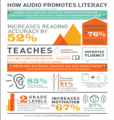
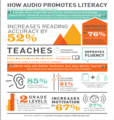
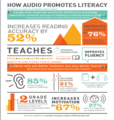
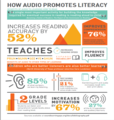
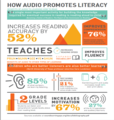
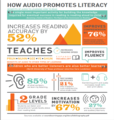
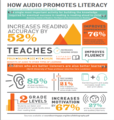
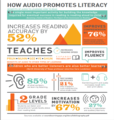
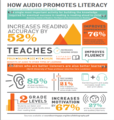
How Audio Promotes Literacy
How Audio Promotes Literacy
http://www.soundlearningapa.org/docs/infographic.pdf
Stephen
Stephen Abram
.
Blog
.
<span class='date ' tip=''><i class='icon-time'></i> Aug 05, 2015 05:15am</span>
|
|
World Happiness Report 2015
Source: Sustainable Development Solutions Network
http://fulltextreports.com/2015/05/08/world-happiness-report-2015/
"Since it was first published in 2012, the World Happiness Report demonstrated that well-being and happiness are critical indicators of a nation’s economic and social development, and should be a key aim of policy. This year’s report looks at the changes in happiness levels in 158 countries, and examines the reasons behind the statistics. The World Happiness Report 2015 also comes in advance of three high-level negotiations that will give world leaders the opportunity to reshape the global agenda and move the world towards a sustainable development agenda that includes well-being as an essential element."
Stephen
Stephen Abram
.
Blog
.
<span class='date ' tip=''><i class='icon-time'></i> Aug 05, 2015 05:15am</span>
|