Blogs
|
6 email mistakes killing your career
http://mashable.com/2015/05/05/career-damaging-email-mistakes/
"Before it’s too late. . .
Being trigger happy with "Forward": You see an important update in your inbox that you are excited to inform your boss about. It’s tempting to instantly hit forward — you might even feel a sense of accomplishment getting it off your plate and into your boss’s inbox. But think again. Forwarding an email without a note or explanation forces your boss to spend valuable time figuring out the context of the message, and gives no insight into why you thought the message was important for him or her to read.The fix: First, review and edit the subject so that it gets your boss’s attention and provides the right context. Next, write a clear and concise summary. Reference the email (or email chain) below, calling out the key takeaways. Need approval? Clearly outline the request and the positive impact you hope to achieve. Remember that bosses are always interested in outcomes. Bonus points: When possible, make an informed recommendation regarding next steps. Your boss will likely appreciate your insight.
Getting lazy with grammar:
It’s been decades since anyone expected you to diagram a sentence, but there’s still an expectation in the workplace to send well-written, grammatically correct emails.
It’s been decades since anyone expected you to diagram a sentence, but there’s still an expectation in the workplace to send well-written, grammatically correct emails. You won’t convey your intelligence and polished writing skills by sending emails full of run-on sentences, multiple exclamation marks, errant semicolons or (worst of all) emoji.The fix: Convey your message via smart language, not unnecessary symbols or poorly written sentences. If you’re excited about something, provide a succinct explanation why instead of using 12 exclamation points and a smiley face. Use short, meaningful sentences that get to the point. With email, always remember: Shorter is better.
Spewing jargon: Writing perfectly composed emails shouldn’t involve "boiling the ocean," but you will need to take this process from "soup to nuts…" Groaning yet? Even if you aren’t, your boss will be. If you’re cluttering your email with jargon that provides no real insight into the issue at hand, you’re not helping your boss do his or her job. Rather, he or she is going to roll his or her eyes every time your name pops up in the inbox. Not good.The fix: Rid your email of overused jargon. Instead of including phrases like "noodle on it" or "circle the wagons," think about what you actually want to say. Do you need time to think about a recommendation because you want to do research or speak to another team? Say so and go do it.
Srsly, don’t even: Your boss is not your BFF, and you should not be writing emails that include informal or trendy acronyms. This includes obnoxious abbreviations and, unless it’s in a social media context, hashtags.The fix: Think about how to sound approachable but informed. It’s fine to be conversational with your boss, but be sure to keep the topic and your views professional. Make your emails relevant, and help your boss relate by tying your recommendations and insights back to real-world events and anecdotes, not by making pop-culture references or using slang for the heck of it.
"Replying All" all day long: Every office has one -- a person who refuses to stop using "Reply All." Most teams use an email alias/group to communicate important updates and ask questions. These are great tools, but only when used wisely and only if relevant toevery person in the alias/group. "Replying all" in the wrong context will unnecessarily clutter your boss’s already overflowing inbox -- something he or she is sure to be annoyed by.The fix: If senior team members are included in an email group, then use it only when necessary. If you are going back and forth with team members, take the alias off the note. Once you’ve come to a point where you need senior input, then re-add the alias or engage your boss directly.
Filing and sorting: Did you know that one in six Americans say sorting through emails actually decreases their productivity? Although it is sometimes a task you feel you have to tackle to be productive, sorting your inbox may cause you to lose focus and, in turn, lose time. What’s more, keeping emails perfectly filed becomes increasingly difficult as you climb the corporate ladder, so kick this habit now.The fix: Focus on smart prioritization of tasks that you need to accomplish, and make goals with concrete deadlines. When relevant, share these with your team. Your time is far better spent crafting a to-do list based on the projects/moving pieces for the day than by letting inbox clean-up drain your attention and productivity."
Stephen
Stephen Abram
.
Blog
.
<span class='date ' tip=''><i class='icon-time'></i> Aug 05, 2015 05:15am</span>
|
|
The Hague Declaration on Knowledge Discovery In The Digital Age Launches
http://www.infodocket.com/2015/05/06/the-hague-declaration-on-knowledge-discovery-in-the-digital-age-launches/
Via Gary Price at LJ InfoDocket
"UPDATE: An organization that’s frequently mentioned on infoDOCKET, ARL (Association for Research Libraries), have posted an announcement about The Hague Declaration. See: "ARL Joins Hague Declaration for Changes to Intellectual Property Law, Equal Access to Knowledge."
UPDATE 2: Confederation of Open Access Repositories (COAR) Signs Declaration
UPDATE 3: IFLA Signs The Hague Declaration
From Today’s Launch Announcement:
Over 50 organisations have signed The Hague Declaration on Knowledge Discovery in the Digital Age, which calls for immediate changes to intellectual property (IP) law and the removal of other barriers preventing widened and more equal access to data.
Improved treatments for diseases, answers to global issues such as climate change and billions in government savings are among the potential benefits to be gained, if the principles outlined in the Declaration are adopted by governments, businesses and society.
The Declaration asserts that copyright was never designed to regulate the sharing of facts, data and ideas ‒ nor should it. The right to receive and impart information and ideas is guaranteed by the Universal Declaration of Human Rights but the modern application of IP law often limits this right, even when these most simple building blocks of knowledge are used.
"The rapidly changing digital environment, increased computing power and the sheer quantity of data being produced makes it essential for researchers and society to be able to use modern techniques and tools to help them make new discoveries. Research practices could be revolutionised and lives could literally be saved, if we can achieve better access to the knowledge contained within Big Data," said Kristiina Hormia-Poutanen, President of LIBER, the Association of European Research Libraries, which has led work to develop the Declaration.
A new approach to knowledge discovery is critical at a time when society is facing a literal data deluge. The digital universe, or the data we create and copy annually, is doubling in size every two years and is expected to reach 44 trillion gigabytes by 2020.
In addition to clarity around the scope of IP law, a skills gap and a lack of infrastructure must also be addressed if computers are to be better employed to extract and recombine data in order to identify patterns and trends. This process, known as Content Mining, is widely recognised as the only way to deal effectively with Big Data.
"Given the need to make sense of the ever-expanding literature and derive new insights, the Wellcome Trust strongly supports the right of researchers to mine content to which they already have lawful access. The Hague Declaration is an important step in demonstrating the common vision that knowledge discovery and reuse should not be constrained by existing legal frameworks and uncertainty. In particular, we are advocating for reform of copyright law at European level to permit data and text mining for all uses, both commercial and non-commercial," said Will Greenacre, Policy Officer at The Wellcome Trust.
Organisations and individuals who wish to support the Declaration can add their signature on the official website,www.thehaguedeclaration.com. In so doing, they will officially recognise the huge potential for knowledge discovery whilst also acknowledging that steps need to be taken to ensure that everyone can benefit from this potential.
Read the Declaration
Source: The Hague Declaration on Knowledge Discovery In The Digital Age Website
List of Organizations that Have Signed Declaration (as of 5/6/2015)
African Institute for Economic Development and Planning
Agro-Know
Association of Research Libraries
Bayerische Staatsbibliothek, München
CLARIN ERIC
COAR: Confederation of Open Access Repositories
Collegium Artium
Communia
Computer & Communications Industry Association
Consortium of European Research Libraries
Content Mine
CRAI Universitat de Barcelona
Creative Commons
Creative Commons Nigeria
CSC - IT Center for Science, Finland
CSUC. Libraries, information and documentation division (CBUC)
DARIAH
Durham University
EIFL (Electronic Information for Libraries)
European Bureau of Library, Information and Documentation Associations (EBLIDA)
European Molecular Biology Laboratory (EMBL)
Europeana Foundation
FESABID
Genomics and Computational Biology, Kernel Press UG (haftungsbeschränkt)
German National Library of Science and Technology
Greek Free/Open Source Software Society (GFOSS)
Inštitut za novejšo zgodovino / Institute of Contemporary History
Intellectual Property Institute IPI
International Federation of Library Associations and Institutions (IFLA)
Karlsruhe Institute of Technology
Kosson
Leiden University Libraries
LIBER Europe
Libraries and Archives Copyright Alliance
Library and Information Centre of the Hungarian Academy of Sciences (MTA)
Lithuanian Research Library Consortium
Martynas Mažvydas National Library of Lithuania
Narodna in univerzitetna knjižnica / National and University Library of Slovenia
National Library of Estonia
National Library of Finland
Open Knowledge
Open Rights Group
OpenAIRE
Public Knowledge
Recorded Future
Research Libraries UK
Spanish Network of University Libraries (REBIUN)
SPARC
SPARC Europe
Swedish Library Association/Svensk biblioteksförening
Ubiquity Press
Université catholique de Louvain
University Carlos III of Madrid
University of Bath Library
Vlaamse Vereniging voor Bibliotheek, Archief & Documentatie (VVBAD)
Wellcome Trust
World Wide Web Foundation
A list of individuals who have signed the declaration can be found at the bottom of this page."
Stephen
Stephen Abram
.
Blog
.
<span class='date ' tip=''><i class='icon-time'></i> Aug 05, 2015 05:14am</span>
|
|
Fantastic article by Steve Denning in Forbes: Do We Need Libraries?
http://www.forbes.com/sites/stevedenning/2015/04/28/do-we-need-libraries/
Stephen
Stephen Abram
.
Blog
.
<span class='date ' tip=''><i class='icon-time'></i> Aug 05, 2015 05:14am</span>
|
|
Top 10 Computer Disasters (and How to Deal with Them)
10. Your Laptop Was Lost or Stolen
9. Your Computer Catches a Virus or Other Malware
8. Your Computer Fan Won’t Shut Up
7. Your Water Cooling Leaks Inside Your PC
6. Your Display Looks Distorted
5. Windows or OS X Won’t Load Properly or Keeps Crashing
4. Your Computer Won’t Turn On
3. Your Internet Connection Suddenly Sucks or Doesn’t Work at All
2. Your Hard Drive Crashed or Isn’t Working
1. Your Computer Has Slowed to a Crawl
Stephen
Stephen Abram
.
Blog
.
<span class='date ' tip=''><i class='icon-time'></i> Aug 05, 2015 05:14am</span>
|
|
Ben Heck Answers Your 3D Printing Questions
"Ben responds to viewer’s questions about 3-D printing by delivering a full tutorial! He covers the kinds of printers available as well as the basic parts and costs of building your own printer. Ben also demonstrates how to find existing designs to print and gives examples of software for designing objects from scratch. After printing some objects, he shares tips and tricks on how to create the best prints possible."
Stephen
Stephen Abram
.
Blog
.
<span class='date ' tip=''><i class='icon-time'></i> Aug 05, 2015 05:14am</span>
|
|
5 Mistakes that Could Get Your Email in the Spam Folder
Stephen
Stephen Abram
.
Blog
.
<span class='date ' tip=''><i class='icon-time'></i> Aug 05, 2015 05:14am</span>
|
|
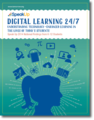
Digital Learning 24/7: Understanding Technology — Enhances Learning in the Lives of Today’s Students
Speak Up 2014 National Findings K-12 Students April 2015
http://www.tomorrow.org/speakup/SU14DigitalLearning24-7_StudentReport.html
"Digital Learning 24/7: Understanding Technology - Enhances Learning in the Lives of Today’s Students is the first in a two part series to document the key national findings from Speak Up 2014.
For the past twelve years, Project Tomorrow’s® annual Speak Up Research Project has provided schools and districts nationwide and throughout the globe with new insights into how today’s students want to leverage digital tools for learning based upon the authentic, unfiltered ideas of students themselves. Each year, education, policy, research, and business leaders leverage the Speak Up findings to understand the trends around students’ use of technology, and how schools and communities can better serve the learning needs of today’s digital learners. Speak Up reports over the past few years have focused on connecting the digital dots for learning, mapping a personalized learning journey, and moving from chalkboards to tablets as part of a digital conversion effort.
With this year’s national report on the views of 431,231 K-12 students representing over 8,000 schools and 2,600 districts in the United States and around the world, we focus our attention on the lived experiences of students immersed in daily digital learning experiences. From the Speak Up database, we extract the views and ideas of students in four specific types of learning environments to comprehend how their experiences differ from students in more traditional classroom-based education. The four learning environments examined include:
Students who are using school provided laptops, tablets, or Chromebooks to support their education
Students in blended learning environments where instruction is a mix of class time and online time
Students whose learning is 100 percent online or virtual
Students participating in STEM learning experiences such as specific STEM academies, school tech support team, or computer programming/coding clubs
Key Findings from this year’s report include:
Whether driven by parental demands for increased personalization or higher goals for student achievement, many administrators are finding that blended learning environments hold great promise. In fact, 45 percent of district administrators in this year’s Speak Up surveys indicate that the implementation of blended learning models within their district was already yielding positive results.
Students in blended environments use technology more frequently than their peers in more traditional classroom settings. In addition to use in the classroom, these students are also more likely to self-direct their learning outside of school by tapping into mobile apps, finding online videos to help with homework, emailing their teachers with questions and posting content they create online for comment.
When students have access to technology as part of their learning,especially school-provided or enabled technology, their use of the digital tools and resources is deeper and more sophisticated.
The availability of online learning continues to increase with only 27 percent of high school principals reporting that they are not yet offering any online courses for students. Interest among students continues to grow, with 24% of high school students saying they wish they could take all their classes online - a large increase from 8% in 2013.
Almost three-quarters of students with school-provided devices as well as students with limited or non-existent technology access at school agreed that every student should be able to use a mobile device during the school day for learning.
Students connect the use of technology tools within learning to the development of college, career, and citizenship skills that will empower their future capabilities.
Digital experiences for students in a 100 percent virtual environment are much different than those in traditional schools. For instance, 72 percent of high school students in virtual schools take online tests, compared with 58 percent of traditional students.
Students see the smartphone as the ideal device for communicating with teachers (46%) and classmates (72%) and for social media (64%).
A gender bias exists in STEM interest -middle school girls are 38% less likely and high school girls are 32% less likely than their male peers to say they are very interested in a STEM career."
Stephen
Stephen Abram
.
Blog
.
<span class='date ' tip=''><i class='icon-time'></i> Aug 05, 2015 05:13am</span>
|
|
Top 10 Emerging Technologies of 2015
http://nextbigfuture.com/2015/05/top-10-emerging-technologies-of-2015.html
"The World Economic Forum’s Meta-Council on Emerging Technologies, a panel of 18 experts, draws on the collective expertise of the Forum’s communities to identify the most important recent technological trends.
Here is their list
* Fuel cell vehicles [NBF -says this is wrong]
* Next-generation robotics [NBF - agrees with robotics getting more important]
* Recyclable thermoset plastics
* Precise genetic-engineering techniques [NBF - CRISPR gene editing is a big deal]
* Additive manufacturing [NBF - still several breakthroughs away from delivering on the promise]
* Emergent artificial intelligence [NBF - does not think improved Watson will be that important]
* Distributed manufacturing [NBF - craft and hobby scale but a will remain a small part of the supply chain]
* ‘Sense and avoid’ drones [NBF - drones matter but this aspect is not that interesting]
* Neuromorphic technology [NBF - there is potential and the tech is interesting but real big applications have not arrived]
* Digital genome [NBF - not that big a deal]"
Stephen
Stephen Abram
.
Blog
.
<span class='date ' tip=''><i class='icon-time'></i> Aug 05, 2015 05:13am</span>
|
|
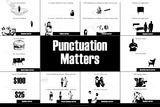
The Importance of Proper Punctuation: INFOGRAPHIC
http://www.adweek.com/galleycat/the-importance-of-proper-punctuation-infographic/103088
Stephen
Stephen Abram
.
Blog
.
<span class='date ' tip=''><i class='icon-time'></i> Aug 05, 2015 05:13am</span>
|
|
10 facts about social media that might make you think
http://www.meanlaura.com/archives/40838
"Because, numbers. Do any of these numbers change how you think about your library’s social media strategy?
Facebook:
Facebook’s monthly active user base is expected to surpass 1.43 billion in the first quarter of 2015. (Source )
Facebook still skews heavily female (Source)
Believe it or not, Facebook is still tops for teens (Source)
But…Organic Facebook reach drops to 2% for most pages (Source)
Twitter:
On Twitter, engagement-per-post has grown by 85% year-over-year. (Source )
The best number of times to tweet per day? 3. (Source)
Instagram:
Instagram is now bigger than Twitter (Source)
The more hashtags you use, the more likes and comments you’re likely to get (Source)
Quit using filters. It may actually be hurting engagement (Source)
General:
Consumers expect companies to be present on an average of 3.4 different social platforms (Source)"
Stephen
Stephen Abram
.
Blog
.
<span class='date ' tip=''><i class='icon-time'></i> Aug 05, 2015 05:12am</span>
|