Blogs
|
This strikes me as being a really fun option for teachers of the sciences (among other things).A company called ASPEX, which produces scanning electron microscopes (SEMs) and microanalysis software has kicked off a campaign called Send us your Sample, which invites anyone to send in an object of their choosing and have it scanned free of charge under one of their SEMs.You can send in anything you like - a toy bunny, a dead bug or an old toothbrush. It's pretty cool. See their image gallery here.They also have a rather fun thing called 'name that sample' where you have to guess from the 'after' picture what the object is. Could you have guessed that this was an image of Hall's cough drops? If so, you might have won yourself an Apple iPod Touch.
Karyn Romeis
.
Blog
.
<span class='date ' tip=''><i class='icon-time'></i> Aug 05, 2015 03:56am</span>
|
|
Guide to Online Schools recently published a list of their top 37 instructional design resources, aimed primarily at teachers looking to improve their skills in this area.Of course, this is not to say that those of us outside of the education system won't also find much of value in the list. For example, several of the blogs in their list are on my daily reading list. It has long been my wish to see the wall between workplace and academic learning come down, after all!
Karyn Romeis
.
Blog
.
<span class='date ' tip=''><i class='icon-time'></i> Aug 05, 2015 03:55am</span>
|
|
Sometimes we are called upon to design things that we know just shouldn't be designed. Sometimes the client simply won't take no for an answer. Sometimes you want to throw the book at them... or at least lend it to them.Increasingly, we need less design and more substance. Instead of an expensive elearning course, there are times when a free wiki containing a series of user generated screen capture videos is enough. There are times when we need a YouTube channel more than we need an LMS.All of these thoughts came thumping home to me recently, when I picked up a few packs of microwave pizzas (as you do, when you have hulking great teenage boys in the house) and saw that they have a special offer give-away thing for a knork.Now maybe you already know what that is. Heck, maybe you have a whole set of silver plated knorks in your cutlery drawer. But - pardon my ignorance - I had never heard of them before. I had heard of a spork: a hybrid of spoon and fork. I have even used one from time to time, since a few takeaway places issue them with their meals. To be honest, most of the time, I have thought a spoon would do, but the spork has been innocuous enough.But a knork...? A hybrid of knife and fork...? What the...?Let's think about this.I know that cutlery usage can be a little different in the US, but in the UK, we use a knife and a fork simultaneously. One in each hand. The fork holds the food still, while the knife is used to cut it. How do you achieve that with a knork? How do you hold the food still and then cut it when you have only one utensil?Then there is the little matter of sticking the knork into your mouth. If it has the characteristics of a knife, I presume this thing has a blade on it. In fact, if it caters to both lefties and righties, maybe it has two blades! Now I reckon Pippi Longstocking is right when she says that grownups are superstitious and think it's 'bad luck' to stick a knife into your mouth. I think it could be extremely bad luck indeed. On the other hand, if the blade isn't sharp enough to do you any harm, then I can't see it enjoying much success in the cutting stakes (or even steaks) either.And so here we have a utensil that is both impractical and potentially harmful. It looks to me as if someone designed it because it could be done, without giving any thought to whether it should be done.So, yes. We can design a whole series of 20 minute elearning tunnels and stick them into an LMS. We can make it all trackable so that, at any given moment, you can see who has used which materials. But should we?Will they really add value to your organisation's learning experience? Will they improve performance? Or will they join the list of a long line of expensive things that seemed like a good idea at the time? Could something else do the job better? Maybe an elgg space will suit your purposes just as well. Maybe the solution already exists somewhere in someone's personal job aids, and is just waiting to be shared with the rest of the team.So before you go out and spend a fortune designing and developing a knork, just check your cutlery drawer to see whether you haven't already got something that can do the trick.
Karyn Romeis
.
Blog
.
<span class='date ' tip=''><i class='icon-time'></i> Aug 05, 2015 03:55am</span>
|
|
In case you've been wondering, here is a video that explains the ins and outs, and the pros and cons...Web 3.0 from Kate Ray on Vimeo.
Karyn Romeis
.
Blog
.
<span class='date ' tip=''><i class='icon-time'></i> Aug 05, 2015 03:55am</span>
|
|
It's getting so a person dare not recommend anything anymore. Let's consider a scenario:Person A recommends product/approach XPerson B adopts that product/approach for a projectProject fails and person B slags person A off publicly for the bum steerOne of my new Twitter followers described how he was taking flak at his place of work for having recommended Ning, now that Ning has decided to start charging for its services.How did that become his fault?Based on the functionality of the space at the time, and the requirements within his place of work, no doubt it was a good fit. And while the space was free, I presume it served their purposes well, or they wouldn't have felt the wrench so keenly when Ning decided to start levying a charge.The person in question is quite a young man and this experience could well have damaged his confidence so much that next time he will be reluctant to recommend anything before researching it exhaustively to see whether it will remain stable for the (un)foreseeable future, by which time the need may well have passed. So his recommendations will be slower in coming forward until he is caught up in a cycle of analysis-paralysis... and the organisation will turn to someone else to make recommendations that are more timely (perhaps starting the whole cycle again).I sincerely hope that this approach does not start to extend to the likes of Jane Hart and her invaluable e-learning pick of the day. Any time I am faced with a challenge and need a new tool to meet it, I pay a visit to her site to see what she recommends. Sometimes the tools do the job for me, sometimes they don't. I am not about to start holding Jane liable every time it doesn't work out.I sincerely trust that, when I feature something on this site, you're not expecting it to set the world alight for you, okay? I can do without that kind of pressure. ;o)
Karyn Romeis
.
Blog
.
<span class='date ' tip=''><i class='icon-time'></i> Aug 05, 2015 03:55am</span>
|
|
TrainingZone magazine is running an interesting article by Neil Davey, looking at the rise of social media in the workplace.Of course, many organisations have a blanket ban on the use of such media... or at least, they think they do. A closer inspection will almost certainly reveal the presence of all manner of social tools in the workplace. This tells me a few things.Firstly, the understanding among senior execs (and even the IT gatekeepers) of what constitutes social media is often as full of holes as a Swiss cheese, which results in inconsistent bans and rules. So there are often workarounds to access various social media.Secondly, people are more resourceful than management gives them credit for. Where such bans are in place, many users are resorting to using their phones to access them. At a recent Twitter workshop, several attendees 'owned up' to using Twitter via their phones because of the ban at work.Thirdly, the 'threat' aspect has been identified, but the 'potential benefit' aspect has been ignored. Davey's article picks up on one significant aspect of this and cites Ann Bevitt of Morrison Foerster:"Although employers cannot control employees’ use of social networking sites outside the workplace, they can provide guidance where such use could be associated with employees’ employment. For example, if employees choose to identify themselves as employees in their personal social networking activities, they should be encouraged to make clear that any views expressed are their own and not those of their employer. Moreover, no links should be provided to employers’ websites."This harks back to a topic I have touched on many times - that grey area. Let's look at a hypothesis:Kate is a designer at ColourCoded, a clothing manufacturer whose lines are aimed at women who have been colour-coded and had their ideal palettes identified. In her spare time, she likes to go hiking.When Kate engages in social media spaces about the various trails she has hiked, she is on safe territory. She can even develop a global reputation as the go-to person on the difficulty grading of the various hiking trails. No problem.Kate's employer may have noted her skill with words and they may choose to include social media engagement among her official duties. Part of her job may be to look after ColourCoded's social media presence. This is also relatively safe territory, because the ground rules can be laid down. The dos and don'ts identified.Where the ground gets shaky is when Kate starts to engage in her personal capacity in social media spaces on the topic of clothing: what styles to wear, what fabrics work for whom, what colours people should wear, etc. It is very tough to lay down the guidelines for her presence in this space, without encroaching on Kate's right to freedom of expression.This is an area Davey has addressed in his article:"Organisations - particularly those at the larger end of the spectrum - are faced with an enormous task when it comes to identifying and responding to all of the conversations, questions and posts taking place online about their brand. Businesses need the extra eyes that their employees provide. But by giving their staff carte blanche to respond to any and every post they find, they run a very serious risk of damaging the brand reputation, rather than improving. Any message by an employee that isn’t in line with the company message, or that is offensive or unprofessional, will reflect badly on the brand. The business either media trains every person on its payroll, or risks unleashing a firm’s load of loose cannons onto the web."I'm not sure that the idea of training every person on the payroll has legs, and, as you know by now, I have an enormous fondness for loose cannons (being one myself). But most organisations have clauses in their employment contracts about damage to the organisation's reputation. Mouthing off down the pub has never really been looked upon with favour, and we're more or less in the same sort of waters, here, albeit with the potential for exponentially increased impact.I would suggest that guidelines should be set in place - every organisation must consider its reputation, after all. I would further suggest that the organisation should have some form of online induction process, with a link to a range of tools that can provide guidance on company policy on a range of issues (including social media usage). Staff members should be able to access the organisation's policy documents on any subject at any point... and these should be easy to find (it's remarkable that I have any hair left, considering the experiences I have had trying to find policy documents in the past) and easy to read. Policy documents should also be reviewed and revised every now and again, and staff members should be involved in this process.Staff members should be expected to consider the organisation's reputation, too, and be held to account when their actions are considered to have done damage.However, the 'training every staff member' thing smacks to me just a little of the sort of butt-covering box-ticking compliance that makes me shudder. It runs the risk of, "Right, we mentioned once during your training course 2 years ago that this was not permitted, so you're fired."I would like to see an approach that is more dynamic than that, and one which engages the staff members directly, rather than being handed down to them from on high.
Karyn Romeis
.
Blog
.
<span class='date ' tip=''><i class='icon-time'></i> Aug 05, 2015 03:55am</span>
|
|
Increasingly, it is beneficial to speak more than one language.Online Degree Programs recently posted an article featuring 100 different resources aimed at helping people learn languages online. These include courses through specific schools; online dictionaries; phrase-based tools; translation services; online language communities; games and quizzes; and all manner of other resources.Languages on offer range from the more common French, English and Spanish to the less widely known Kurdish, Marathi and Romanian.They also list resources for Mandarin, a language that has been earmarked by many as one to master by those who wish to benefit from the increasing global participation of mainland China in corporate ventures.
Karyn Romeis
.
Blog
.
<span class='date ' tip=''><i class='icon-time'></i> Aug 05, 2015 03:55am</span>
|
|
Organisations who choose to steer clear of social media spaces place themselves at risk of having their brand damaged by cybersquatters. Witness the example of Costa Coffee as featured in BusinessZone yesterday.The Internet is not a 'policed' space... other than by us. You. Me. So people are pretty much free to do whatever they like. As these cybersquatters have amply demonstrated.Time was once when a business could get by without a web presence. Then it became essential to have a website. We've moved on from that. Web presence needs to spread into the spaces inhabited by the 2.0 and 3.0 web users, otherwise someone might just do that for you!Armed with rudimentary skills and sufficient malice, a cybersquatter could utterly ruin a business that chooses to remain periscope down in respect of social media. And the tragedy is, as they go into administration, they may still be utterly bemused as to how their once-thriving business hit the skids.
Karyn Romeis
.
Blog
.
<span class='date ' tip=''><i class='icon-time'></i> Aug 05, 2015 03:54am</span>
|
|
I'd like to give a plug to a brand new blogger.No, she's not a learning guru. Or even a social media guru. She's not a teacher. Nor is she a techie.She's an image guru. One of those people who looks at you and knows exactly what colours you should be wearing and what styles of clothes suit you and how to accessorise and all that stuff.She's feeling very brave at having entered these scary social media waters, so ladies and gentlemen, please welcome Nancy Stevens.
Karyn Romeis
.
Blog
.
<span class='date ' tip=''><i class='icon-time'></i> Aug 05, 2015 03:54am</span>
|
|
Hey folks, I hope everyone is having a spectacular summer (or lovely winter if you are southern hemisphere-ish). There’s a lot of different things coming up in the next few months, so I thought I would mention them here:
Next week, I’m doing a keynote for the Atlanta ATD Chapter’s Annual Conference. I’m also doing on a 1-day post conference workshop. There are three spots left for the workshop. I’m looking forward to it — it will be a chance to pull out my toolbox of best instructional design tools. It’s also a bargain at $149
I’m doing an online UX Essentials class for ATD this year, and the next session is September 16th. The Essentials series are a good beginner exposure to a topic, and these are a lot of fun.
I’m really excited about the 1-day workshop on Behavior Change at DevLearn (September 29) this year — I do talks on this topic quite a bit, but this is the first time that I’ve corralled everything into one place for a workshop format. I’m really looking forward to it.
I’m also doing an Instructional Design basics workshop at the Online Learning Conference in Denver on October 5-6.
ALSO:
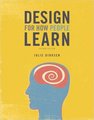
I’m working on a second edition of the book! I’m adding chapters on habit formation, social and informal learning, and evaluation, and expanding the motivation and environment chapters. Also fixing a few pesky typos:
Julie Dirksen
.
Blog
.
<span class='date ' tip=''><i class='icon-time'></i> Aug 05, 2015 03:54am</span>
|