Blogs
|
SmartPulse — our weekly nonscientific reader poll in SmartBrief on Leadership — tracks feedback from more than 190,000 business leaders. We run the poll question each week in our e-newsletter.
How effectively do content marketing efforts (blogs, white papers, etc.) drive action by your customers?
Extremely — our content marketing drives great lead generation: 6.06%
Generally — our content sometimes sparks new conversations with prospects/clients: 34.55%
Not at all — our content generates few, if any, comments, feedback or leads: 36.97%
Not the point — we only publish content because everyone else does: 4.24%
Not relevant — we have much higher priorities than content marketing: 18.18%
Increase Your Return. "That’s Marketing’s job." Sorry but if you think content marketing is only the purview of marketers, you’re missing a big opportunity. Thought leadership is your product and the leaders in your organization have plenty of it. If you’re not tapping into it, you’re missing out. First, you should be driving new ideas. Second, share those ideas with the world. Think about all the knowledge your team has to share with the outside world. Give them a platform to do so, have it link to your product/service (both in terms of the content you share as well as with relevant URLs), and be responsive to the ensuing discussion. You’ll be surprised how many leads come from sharing great ideas.
Mike Figliuolo is managing director of thoughtLEADERS, author of "Lead Inside the Box: How Smart Leaders Guide Their Teams to Exceptional Results" and "One Piece of Paper: The Simple Approach to Powerful, Personal Leadership."
Related Posts:
Where does the biggest threat to your organization come from?
How important is a SWOT analysis in your strategic planning efforts?
How well do you recognize when something will "trigger" you in a negative way?
How involved are you with "more senior" conversations?
How well do you motivate your people?
How effectively do content marketing efforts (blogs, white papers, etc.) drive action by your customers? originally published by SmartBlogs
Julie Winkle Giulioni
.
Blog
.
<span class='date ' tip=''><i class='icon-time'></i> Aug 03, 2015 12:17pm</span>
|
|
Click here to view the embedded video.
Environmental issues are a constant point of contention for activists and big business. While environmentalists want to preserve and protect nature, businesses leaders are often pressured to think more about the bottom line. Mark Tercek, CEO of The Nature Conservancy, implores both sides to look at things differently.
TNC’s mission isn’t unlike that of many other environmental nonprofits. The Arlington, Va.-based organization seeks to "conserve the lands and waters on which life depends." Where the difference lies, though, is in its approach. While Tercek acknowledges that the environmental movement has accomplished some impressive things, he says there’s a harsh reality it needs to face.
"If you think about all the things we’re trying to protect, they can be measured, and we do measure them, and they’re all in decline," Tercek says. "Think about it: rainforests, healthy fisheries, ample topsoil, healthy forests, biodiversity itself. We measure these things and, notwithstanding all of our great efforts, they’re all in decline."
That’s why Tercek and TNC are reaching across the aisle, working alongside companies with less-than-stellar environmental track records. It’s a move that has drawn criticism from other environmental groups, but it’s one that Tercek feels is necessary to move the needle on saving the environment.
"So then you say to me, ‘Well, Mark, why would you work with an organization that in the past has been a big polluter?’ And my answer would be, ‘That’s exactly why,'" Tercek says.
Tercek’s philosophy, which he outlines in "Nature’s Fortune," is simple enough: business leaders should view preserving natural resources as an investment with measurable, monetary ROI. TNC backs that up with research from its in-house team of 600 scientists.
"We’re showing them it makes business sense to be better environmental citizens," Tercek says.
That pragmatic, research-based approach seems fitting for Tercek, who left his executive director position at Goldman Sachs to head the organization in 2008. Many of his private-sector insights inform his strategy in the nonprofit world.
Credit: Recite.com
"[The Nature Conservancy] reminds me of Goldman Sachs in some ways: global, entrepreneurial, deal-oriented, focused on getting things done by bringing people together interested in innovative solutions," Tercek says.
That’s why many business world skills — financial efficiency, management, and strategic planning, to name a few — translate so well into nonprofits. In some instances, there’s an even greater need for them there.
"Business people want to think very hard in their competitive fields about planning ahead," Tercek says. "I think it’s harder in the nonprofit space. We don’t have the same metrics. It’s a bit murkier — what will work and what won’t work — but that doesn’t make it any less important. I think it makes it more important."
Tercek has learned his fair share of lessons from working in nonprofits, too, particularly in management.
"I thought I was a good manager when I worked at Goldman Sachs," Tercek says. "In hindsight, it seemed so easy — we had very clear metrics by which to measure people and we had great reward systems."
What’s different in nonprofits, he says, is that employees are largely mission-driven, forgoing salary opportunities and other incentives to work for an organization in line with their personal beliefs.
"You have to be very thoughtful as a leader or manager about deploying your resources in a way that really allows you to achieve your mission and your workforce finds fulfilling and appealing," Tercek says.
It’s something that’s easy for managers to overlook, but an important piece of the productivity puzzle nonetheless.
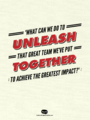
"I sometimes think we leaders get caught up in what we’re doing and the press of business, but we have to remember it’s not so much about us," Tercek says. "It’s, rather, what can we do to unleash that great team we’ve put together to achieve the greatest impact."
Alan B. Hart is co-founder and managing partner at Keen Strategy. Keen drives better, faster growth decisions with more confidence for clients. Providing strategic consulting and insights, grounded in break-through methods & software is how we do it. Learn more.
If you enjoyed this article, join SmartBrief’s e-mail list for our daily newsletter on being a better, smarter leader.
Related Posts:
Q-and-A: The Nature Conservancy’s Michelle Lapinski
The strategic CFO
Collaboration: It’s not what you think it is
Breaking down silos: How we did it in 4 steps
8 benefits to being a socially responsible brand
An unnatural partnership — big business and environmentalists? originally published by SmartBlogs
Julie Winkle Giulioni
.
Blog
.
<span class='date ' tip=''><i class='icon-time'></i> Aug 03, 2015 12:17pm</span>
|
|
Dessert with a 3D printed sugar cloche (Photo: 3D Systems)
Chefs and other foodservice professionals are just beginning to scratch the surface of what they can create with 3D printers, and the possibilities are seemingly endless. The Culinary Institute of America has teamed with 3D Systems to explore how the 3D printing company’s ChefJet Pro, the first 3Dfood printer, can be used in professional kitchens. Representatives from the CIA and 3D Systems sat on a panel at the National Restaurant Association Show Monday to talk about what the future holds for 3D printing in the food world.
"We feel strongly that 3D printing has something to offer the culinary world, and we’re motivated to make sure the technology is available to the industry. But we don’t want to be the ones to decide how those capabilities are deployed. We want to make sure culinarians are able to explore those for themselves," said Liz von Hasseln, creative director of food for 3D Systems.
The CIA established a mini 3D printing lab on its Hyde Park campus where students and faculty are experimenting with the technology. "The excitement already — within a few weeks — has been amazing … people have gravitated to printing immediately," said Thomas Vaccaro, dean of baking and pastry arts.
Kyle and Liz von Hasseln and Vaccaro at the NRA Show (Photo: Tricia Smith)
Vaccaro compared 3D printing to sous vide technology, which seemed extravagant to many chefs when it was first introduced but has since gained a huge following among restaurant chefs, even in casual eateries.
As 3D printers enter the market, it probably won’t be long before inventive chefs add the technology to their arsenal of equipment. "The digital part is not taking away from anything on the culinary side. It’s not overpowering or superseding anything … it’s an extra asset," said Kyle von Hasseln, Liz von Hasseln’s husband and co-creative director of food for 3D Systems.
Here are some of the highlights from Vaccaro and the von Hasselns’ discussion of 3D printing.
Complex tech, commonplace ingredients
The machinery involved in 3D printing uses advanced technology to build up very thin layers of wet and dry ingredients to form each three-dimensional figure, but the ingredients are things every chef already has in his kitchen. Sugar and maltodextrin are the most commonly used dry ingredients in 3D printing, although some chefs have experimented with dehydrated vegetable powders.
Applications beyond sugar
Vaccaro said he sees a future for savory products using dehydrated vegetables, and scientists and chefs at the CIA have begun working on "container forms that could be used in savory applications. For instance, as a composed salad, you might have a container that’s printed with beets, and inside of that would have a dressing and the salad surrounding it."
3D printed sugar spiral and ceramic spoon (Photo: 3D Systems)
In addition to printing edible items, 3D printing offers chefs the opportunity to design and create custom bake ware and serving ware from metal, ceramic and a variety of plastics. For a dinner honoring Spanish chef Ferran Adria, 3D Systems created an absinthe cocktail setup with a 3D printed ceramic spoon that perfectly cradled a brightly-colored sugar spiral above the cocktail glass.
If guests can dream it, chefs can do it
3D printing allows chefs to create shapes that are impossible to form by hand, and ensure consistent results when producing items on a large scale. Liz von Hasseln said the elaborate garnishes and other dish elements made possible by the technology could "enhance the pomp of serving food."
Vaccaro said the opportunities for customization offered by 3D printing will enhance the guest experience. "You could pretty much say, ‘tell me your dreams, what is it that you really want to have done, because we could probably get that done for you.'"
__________________________________________________
If you enjoyed this article, join SmartBrief’s email list for more stories about the food and beverage industry. We offer 14 newsletters covering the industry from restaurants to food manufacturing.
Related Posts:
Tea, Mediterranean cuisine, 3D sweets among top trends at NRA Show 2015
CIA President Tim Ryan elected to NRA Board of Directors
3 reasons to care about composting
NRA Show 2015 to serve up 4 days of food and beverage education
A "Moneyball" approach to restaurant real estate
3D printing offers wide range of culinary possibilities originally published by SmartBlogs
Julie Winkle Giulioni
.
Blog
.
<span class='date ' tip=''><i class='icon-time'></i> Aug 03, 2015 12:17pm</span>
|
|
Welcome to SmartBrief Education’s original content series about the unique stories of teacherpreneurs. These are the innovative individuals confronting challenges, creating solutions and bringing them to market. In this blog post, Robert Ahdoot, a high-school math teacher and founder of YayMath.org, offers tips to develop "teacherpreneur flow."
In March, I shared my interview with lifelong teacherpreneur, Bruce Powell. He spoke of the sacredness that is essential for success in both education and business.
Today, I’m going to dive into a framework for how to effectively bridge the gap between the role of teacher and that of teacherpreneur. These concepts have taken me years to develop, implement, and hone on the fly. Their usage has lead to massively positive results within my contributions as a teacherpreneur. It’s an honor to share them with you, in the hopes that your overall practice and approach are enhanced as well.
Rule #1: People only do business with people they like.
I’m not talking about the clichéd high-pressure movie scene, in which the young ambitious rookie meets several business execs for drinks at a posh country club to talk shop. I’m talking about reality — about taking incremental, tangible steps to improve your interpersonal stock so that when the chips are down and you need community support, you’ll have it.
The perfect example in the world of teaching is found with the office staff. These are the people who handle the constant stream of to-do’s pouring in from every type of person within the school scene. They are on the front lines and they pull massive strings. So ask yourself, do you know every one of your office staff members by name? If not, the time has come to do so. Be open with them about who you are, converse with them when you don’t need something and model what it means to pull your weight in respect to them. Because without fail, at some point you will need their help, and you’ll need it immediately. The business of your teaching will suffer if you forgo that vital alliance.
My friends in the office have come through for me time and again when I was in a pinch. Several times, when I was set to film a lesson, after much planning and preparation to set up the right day, my costume, props, etc., it turned out that the air conditioner wasn’t kicking in enough. The students were getting squirrely due to their discomfort, and the increasing heat was getting them closer to the point of no return. So I called the office and told them about it, and in a matter of minutes it was fixed. This happened on multiple occasions. I like to think that they prioritized that effort based on our relationship, besides the obvious fact that they do stellar work.
Why is this so important? For anyone who wishes to transcend beyond the traditional duties associated with classroom teaching and towards projects that require wider collaboration, including the inevitable bureaucratic red tape slaloming, your mission will be only possible with the aid of critically situated alliances. These are real alliances, based on human connection, not implicitly contractual alliances, based solely on "you scratch my back and I’ll scratch yours." Nothing of deep and lasting value will ever get off the ground if you live on an island, rogue-style. Offer your heart, time and vulnerability, and watch as people leap to help you reach your goals.
Rule #2: What if I don’t have an idea?
Welcome to Idea Generation 101! In this module, you’ll learn the systems by which to create solid ideas that will seamlessly merge your strengths as a teacher as well as your natural prowess as a budding entrepreneur.
To gain some perspective, let’s learn about what some up-and-coming comedians do to generate their ideas. I learned this from a podcast featuring an interview of one of my favorite comedians, Chris D’Elia. In this interview, D’Elia shared that on any given night, after he and his comic friends perform their sets, they all grab a bite at the local diner. For hours into the night and early morning, they’ll gab away about anything they find funny. One conversation spills into another, and thoughts and ideas riff around the table to keep their minds actively flowing on their craft. Quite an appealing way to brainstorm!
To my educator colleagues, if you don’t have an idea, ask yourself: How much of your time and life-energy have you invested in fleshing one out? Find like-minded teachers and simply talk about anything that matters to you relating directly or indirectly to school life. Point out the funny, the frustrating, the inspiring, the aggravating, the fun and the boring. Talk about what you’re really good at, and what you are not. Eventually, you’ll stumble onto minor pet-project ideas. Run with them. This may be a small presentation about a system that works well in your classes. Or it could be whipping up an intuitive Google Drive system for your particular department. Mark my words: It is within this space that your golden ticket ideas will be conceived, as opposed to passively going through the motions of your days without any emotional thought or connective commentary behind what you do.
Fellow teachers are not the only collaborators in our midst. The students are also the perfect partners to discuss ideas that bear potential for significant positive change. Your students will be the ones who introduce you to an app that already does what you’re suggesting, or recommend an easy-to-use video software tool or confirm or refute whether your idea resonates with members of their demographic. Plus they have a jaw-dropping capability to communicate with exponentially connected social media networks. In a mere day, you could learn from hundreds of Gen-Y members about whether a certain thought you have resonates with them. That type of instantaneous market testing at our fingertips is beyond invaluable.
Rule #3: Read, watch, write, immerse, engage, create.
Commit to always learning; it will undoubtedly elevate your craft. By reading this piece, if you’ve gained at least one idea that you can directly apply to your goals as a teacher, entrepreneur, or both, then I’ve made my point. As a lifestyle, set aside time to read articles, watch videos, journal/blog and create any form of media that will get your head and heart beyond the walls of your day-to-day teaching life. It will keep you whole, connected, thoughtful, modern and interesting.
Of course, I deeply believe in the merits of unplugging from technology at the appropriate times. We need to prioritize our health, set aside time with loved ones, time for sleep, and definitely time for ourselves. But when it’s green-light-on-tech-time, you’ll find me in constant information saturation mode. Yes, I read articles and watch inspiring talks in the bathroom, and I don’t apologize for it. I am only the product of everything I learn, so it would make sense that the more I learn, the better version of me I can create and offer.
And when you’re in that type of creation headspace, in which you contribute to conversations, comment on others’ ideas, and subsequently generate ideas of your own, you’ll be primed to take on those pivotal projects and ideas when they reach you. In truth, the concept of "teacherpreneur" is just as much a way-of-life as it is a nifty job title.
Every day, we have the chance to make a difference. Just today, I pointed out to a student that her inappropriately-timed laughter was due to what I believed to be her personal discomfort with a very real moment we were having in class. Naturally, I don’t blame her in the least, and I remember being like that myself. But I also remember having no voice for my discomfort. The moment made me think of an article I coincidentally read today as well in the New York Times, about challenging white privilege. The piece features a student project showcasing pictures of students holding up signs confessing what each one of them believes justice looks like.
So what if my students could create a similar type of photo collection of themselves, confessing the types of situations that make them uncomfortable? What if we got permission (from administrators who thankfully have my back, see rule #1) to put these pictures up in class, or around school, to raise some community awareness and empathy? The level to which my antennae are raised is the foremost reason I could sniff out an idea like that.
This is teacherpreneurism at its finest; it’s entirely about awareness, engagement and creation. Unequivocally, any teacher involved in such a photo project would passionately talk about it with friends and family, or at a job interview, or anywhere else relevant during her career. It might lead to offshoot ideas generated by students or colleagues, which could be picked up by The NY Times just like the article I read today. Then who knows? With all my heart, I recommend living in a state of thoughtful engagement, and you’ll begin to see your process as teacherpreneur flow.
Robert Ahdoot is a high-school math teacher and founder of YayMath.org, a free online collection of math video lessons filmed live in his classroom, using costumes and characters. Robert has been teaching high-school math for 10 years, has given two TEDx talks, and travels to schools promoting his message of positive learning through human connection. He is author of the upcoming book One-on-One 101, The Art of Inspired and Effective Individualized Instruction.
Related Posts:
From classroom to boardroom: How to combine your passion for education and innovation
"The journey of a thousand miles begins with a single step"
Starting the conversation on teacherpreneurship
The beginning of the new school year starts now
Transforming the narrative about teaching
How to go from "teacher" to "teacherpreneur" originally published by SmartBlogs
Julie Winkle Giulioni
.
Blog
.
<span class='date ' tip=''><i class='icon-time'></i> Aug 03, 2015 12:17pm</span>
|
|
The goal of maker education is not college and career preparation.
The goals are deeper learning and authentic engagement, with an emphasis on turning learning over to the learner.
However, making is the best college and career preparation that I have encountered, in part because it isn’t the core goal. Through making, students build their agency and find new passions.
Lighthouse Community Charter School in Oakland, Calif., where I work, serves students from low-income communities. Five years ago, if you asked seniors about their visions of themselves as adults, they would have envisioned themselves as doctors, teachers or in a vocational job — the careers they encountered in their everyday lives.
It’s hard to imagine yourself doing something when you haven’t seen or experienced it. But now students are engaged in becoming designers, artists, auto-mechanics, engineers, software developers, scientists and teachers through their involvement in making — in core classes, electives, and after school.
As they engage in these areas at school, they start to see themselves in these fields. A year after we started a robotics class in the high school, we had our first graduates interested in majoring in computer science and engineering. Through robotics, we introduced students to tech fields, and, in so doing, they started to see themselves as programmers and engineers.
A year later, we added more diversity (woodworking, sewing, physical-computing and design) to this class and opened the doors even wider. This led students to see themselves as designers, artisans and architects. Now our Creativity Lab is working with students from K-12 to build these visions of self-starting with our youngest students. Our focus has never been to fill the "STEM pipeline," but rather, to expose students to passions they didn’t know they had, and, in so doing, open up future options for them.
So, exposure to what is possible is one way in which maker education prepares students for college and career. But college and career prep is about more than knowledge of different fields.
By turning learning over to the learner, we develop student agency — their own interest and ability to learn about the work around them, and to solve the problems they encounter. What better preparation is there for a career than the ability to identify what needs to be learned and then learn it?
Two years ago, one of my students, Katia, saw a visually-impaired person almost walk in front of a car. The experience inspired her to develop a cane that would warn people of approaching objects. Over the next five months, she learned to program an Arduino, use sensors to detect distance, and create an output the user can hear. She taught herself CAD and the use of a 3D printer to design a case to hold her project. She learned all these skills in order to solve a problem she had identified herself, a mindset which will clearly serve her in college and any future career.
As one of my students, Arya, told me, in the making class "they don’t judge your ideas; they won’t laugh at them. They will ask you questions about how you will research it, your plans. You give yourself an assignment." This sounds like what I would like in a colleague — how about you?
Aaron Vanderwerff is a K-12 makerspace and science coordinator at Lighthouse Community Charter School in Oakland, Calif. Aaron also is a SmartBrief Education Educators’ Choice Content Award winner. Listen to an interview with Aaron on Education Talk Radio.
Related Posts:
All’s well that ends well?
You can’t spell "college and career" without CTE
Educator innovation: Re-Making teaching and learning
#SBSTEM Pathways: Q&A with Kimberly Tobey, NACCTEP
#SBSTEM Pathways: Q&A with Sabari Raja, CEO of Nepris
How making expands students’ visions of themselves originally published by SmartBlogs
Julie Winkle Giulioni
.
Blog
.
<span class='date ' tip=''><i class='icon-time'></i> Aug 03, 2015 12:17pm</span>
|
|
The New America Foundation today hosted a lively panel discussion on education and training from a global perspective. SmartBrief Education was onsite to learn how education, business and government stakeholders are working to prepare today’s students for the 21st-century global economy. We’ve curated social media shares from the event. Stay tuned to our Path to Workforce content channel on SmartBlog on Education for a deeper dive into lessons learned from the event.
Related Posts:
No Related Posts
The great #skillsrace originally published by SmartBlogs
Julie Winkle Giulioni
.
Blog
.
<span class='date ' tip=''><i class='icon-time'></i> Aug 03, 2015 12:17pm</span>
|
|
In my latest book. I describe Hidden Leaders as the people in companies that provide a powerful leadership presence despite the fact that their title or position provides them little to no authority. In fact. the topic I’ve received the most feedback on from the book is the importance of leading through relationships.
To the naked eye, it may seem they are simply able to get things done. Look closer, and you’ll see that they are demonstrating strong leadership and influence by dint of relationships they’ve developed. Look closer still, and you’ll see that it isn’t simply niceness or collegiality that has earned them this influence. Too many people seek to establish trusting business relationships centering on likeability. I’m not suggesting that likeability isn’t good, only that it isn’t sufficient. When I observe Hidden Leaders in action, they lead through relationships in the following ways:
They posses a technical or professional expertise. That expertise may be based on their function, like engineering, manufacturing or specific to technology. The technical expertise needn’t be technological though as it may come from a discipline like sales, or customer service, or accounting where they’ve established a track record. Whatever the source of that proficiency, it strengthens relationships and supports the connection to others in the business, because with expertise comes trust, which is the foundation of business relationships.
They are recognized as having good judgment and rational thinking. Colleagues view them as being able to understand what the business is trying to accomplish, and having the ability to think of pragmatic approaches. That doesn’t mean they are always right, though. But even when they aren’t correct, it is easy to see the reasoning and course of thinking they used. In this way, Hidden Leaders are frequently able to express their rationale for an idea to be implemented, an innovation to consider, or a process to be changed. So even when there is disagreement, the logic is clear.
They are good at making emotional connections with others. I’m always careful about using that phrase. In fact I wrote an article for Harvard Business Review on the ways leaders make emotional connections, and I’ll reiterate that I’m not talking about wild displays of emotion or what is pejoratively labeled as "being emotional." I could replace "emotional" with "human," I suppose, because the essence of these connections is that logic supports thinking and emotions support action. So using emotions as a means to connect with colleagues is powerful. That could be the energy-creating effect of enthusiasm or passion, the collaborative sense of mutual concern or frustration, and the effect of engagement on shared goals. People rarely act on information or data alone, and when we influence each other, emotion is almost always part of the equation. Hidden Leaders tap into those emotions.
The last thing I’ll note about the relationships cultivated by Hidden Leaders is that they tend to be across the entire organization, spanning divisions, geography, and even hierarchy. That is what enables them to get results, as most of the pain points in businesses occur in the cracks between organizational silos. Hidden Leaders are able to rely on relationships in spite of boundaries in the organization, to fill in those cracks.
Try identifying your Hidden Leaders. Who are they? What do they do differently? Ask yourself what kind of an impact it would have on your business if more employees behaved as they do — even 20% or 30% more? My bet is that you’ll see great power in cultivating more of them. And if you are reading this article, it is likely that is your job.
Scott Edinger has worked with leaders for almost two decades in nearly every industry sector, helping them formulate and implement growth strategies, develop leadership capacity, increase revenue and profit, drive employee engagement, and attract and retain talent. He is the author of "The Hidden Leader" and "The Inspiring Leader," is a contributing author to The American Society for Training and Development Leadership Handbook, and has written dozens of articles and white papers.
If you enjoyed this article, join SmartBrief’s e-mail list for our daily newsletter on being a better, smarter leader.
Related Posts:
7 actions that create more effective managers
He’s not ready to be promoted (but thinks he is)
9 ways to empower employees to be leaders
If not the annual performance appraisal, then what?
The new one-minute manager
Harnessing the power of your hidden leaders originally published by SmartBlogs
Julie Winkle Giulioni
.
Blog
.
<span class='date ' tip=''><i class='icon-time'></i> Aug 03, 2015 12:17pm</span>
|
|
(Photo: Flickr user U.S. Department of Agriculture)
Technology has touched almost every aspect of the food and beverage industry in the digital age, and while some companies have fallen behind the times, others have risen to the occasion, incorporating technology like e-commerce and mobile applications into their business strategies. One aspect of the food and beverage space that has benefited in the digital age is loyalty programs. And restaurants and retailers are increasingly using today’s tech tools to elevate their loyalty strategies.
For Jess Stephens, chief marketing officer at digital marketing firm SmartFocus, it is all about creating an omnichannel, personalized experience.
"It doesn’t really matter what the channel is, it’s more about making it personalized and relevant in real time," she said.
Today’s digital world allows retailers and restaurants to approach loyalty programs through different tiers, from more traditional loyalty cards, to mobile apps and location-based services, Stephens said. These different tiers help companies increase the amount of information they know about their customers and allow companies to provide customers with a more personalized shopping or dining journey.
In Stephens’ opinion, mobile apps are the most vital piece to a loyalty program that successfully reaches customers across channels.
"Without a doubt, a mobile application has to be at the heart of an omnichannel campaign," she said.
Beyond just having a mobile application, Stephens said adding layers like location-based features to retailers’ and restaurants’ mobile strategies is also important for engaging loyal customers. And when it comes to customer loyalty, retailers and restaurants must approach every customer differently, and devote the most time and resources to holding onto their most loyal groups of customers.
"Don’t try and recruit everyone for a loyalty program," she said. "Otherwise you’re wasting your energy."
Above all, Stephens said facilitating an effective omnichannel loyalty program is about creating experiences for shoppers and diners.
At Save Mart Supermarkets, a chain that operates more than 220 stores in California and Nevada, a partnership with NCR and Inmar Digital Promotions Network has helped the retailer set up an omnichannel experience for loyal customers. Through tech tools that include cloud-based, marketing, content and digital coupon solutions, Save Mart has found a way to provide shoppers with a loyalty experience that spans across online, in-store and mobile channels and gives customers the ability engage through whichever channels they choose.
"As part of our strategic goal to change the way Save Mart engages with customers, we wanted them to be able to save coupons directly into their loyalty accounts at any time via multiple channels, including mobile or online. NCR and Inmar have allowed Save Mart to improve customer experience and loyalty by implementing their flexible cloud-based solutions across our business," Save Mart’s Chief Information Officer James Sims said.
The loyalty program also allows Save Mart to make it personal for shoppers, giving the retailer the ability to target content and promotions based on the behavior and preferences of its loyal customers.
"Digital channels and promotions are a powerful way for retailers to engage with shoppers….This enables them to respond to the consumer-driven shift from paper to digital media," said David Wilkinson, NCR Retail Solutions’ vice president of sales for North America.
Omnichannel loyalty programs also present restaurants and retailers with other opportunities like drawing in additional shoppers and diners who might be regulars at other establishments, Stephens added. Location-based features of mobile apps are especially applicable in this case, she said, referencing the example of a shopping center that could use a loyalty app to find out which restaurants shoppers regularly visit and push messages out promoting other restaurants that are in a similar location in the mall or serve food the shoppers might like.
"You could preemptively drive more business than you might normally," she said. "Also what that then means is you’re delivering that full omnichannel journey."
__________________________________________________
If you enjoyed this article, join SmartBrief’s email list for more stories about the food and beverage industry. We offer 14 newsletters covering the industry from restaurants to food manufacturing.
Related Posts:
Report: Challenging and redefining consumer loyalty
Report: What do food industry operators want and how do they buy?
Prepared foods report: New consumer behaviors hone in on fresh, healthy and sustainable
Culinary incubators: Where food businesses go to grow
How the food industry is making sense of big data
Elevating loyalty programs in the digital age originally published by SmartBlogs
Julie Winkle Giulioni
.
Blog
.
<span class='date ' tip=''><i class='icon-time'></i> Aug 03, 2015 12:17pm</span>
|
|
Customer service is something that is a reflection of corporate values.
Good service is a reflection of good values. When an employee says that management makes it easy to do what’s right, it means they are teaching employees to put customers first and, most importantly, backing it up by example.
Organizations whose cultures place a premium on doing what’s right are organizations for which employees want to work and customers want to patronize.
Click here to view the embedded video.
John Baldoni is chair of leadership development at N2Growth, is an internationally recognized leadership educator and executive coach. In 2014, Trust Across America named him to its list of top 100 most trustworthy business experts. Also in 2014, Inc.com named Baldoni to its list of top 100 leadership experts, and Global Gurus ranked him No. 11 on its list of global leadership experts. Baldoni is the author of more than a dozen books, including his newest, "MOXIE: The Secret to Bold and Gutsy Leadership."
If you enjoyed this article, join SmartBrief’s e-mail list for our daily newsletter on being a better, smarter leader.
Related Posts:
The art of the sound bite
A-C-T your way to receiving feedback
Confident leaders invite dissent
Resilience: Your tool for success
Don’t waste your time — focus on your purpose
Good values spark good customer service originally published by SmartBlogs
Julie Winkle Giulioni
.
Blog
.
<span class='date ' tip=''><i class='icon-time'></i> Aug 03, 2015 12:17pm</span>
|
|
More than 2,100 exhibiting companies demonstrated their goods and services to a crowd of more than 63,000 chefs, restaurant owners and other foodservice professionals at the National Restaurant Association Show in Chicago last week. The show floor was a great place to spot new trends. Several trends from years past — such as gluten-free and spicy flavors — are still going strong. Here’s a look at three concepts that were among the most buzzed-about at this year’s show.
Time for Tea
Specialty iced tea was among the top trends named by American Culinary Federation chefs in NRA’s What’s Hot Forecast for 2015. Teas of all types were represented on the show floor this year, from artisanal loose teas to flavored iced teas that are gaining popularity as more diners seek out healthier beverage choices.
Art of Tea was one of nearly 50 companies featuring tea at the show. The 10-year-old company produces more than 140 blends and restaurants account for 80% of its business, Business Development Executive Chelsea Gutierrez said. The third-wave tea and coffee trend is pushing restaurants to stock more premium teas, she said.
Mediterranean diet fuels popularity of hummus, flatbreads
Mediterranean tacos at Kronos’ booth (Photo: Tricia Smith)
The Mediterranean diet — another trend from NRA’s What’s Hot Forecast — is still gaining popularity as more research is released about its myriad benefits including increased cognitive function and heart health. The staples of the Mediterranean diet — which include hummus, olive oil and Greek yogurt — are not new to foodservice, but Show exhibitors put these products front and center and played up their health benefits to take advantage of the diet’s trendy status.
Kronos Foods has been around since 1975, but the Illinois-based company has seen a surge in the popularity of its hummus since the Mediterranean diet craze began, Senior Vice President of Sales Bob Michaels said. The company gave classic Mediterranean ingredients a modern makeover with the Mediterranean street tacos at its booth on the show floor.
Pure Mediterranean Foods has also seen increased interest in its hummus and flatbreads, and the company recently launched Hummus Plus, a line of hummus and chicken products that capitalizes on both the Mediterranean trend and consumers’ increasing demand for protein-filled meals and snacks. The product, which comes in five varieties including roasted red pepper hummus with BBQ seasoned chicken breast and garlic hummus with chipotle chicken breast, has received a "phenomenal" response from consumers, President and CEO Peter Parthenis said.
3D printer creates high-tech treats
Candy printed on the ChefJet Pro (Photo: Tricia Smith)
3D printing for foodservice is still in its infancy, but the high-tech process captivated attendees who flocked to the Show’s 3D Printing Zone to see 3D Systems‘ ChefJet Pro in action. The company’s creative directors of food sat on a panel about the technology with Tom Vaccaro, dean of baking and pastry arts for the Culinary Institute of America, which is partnering with the 3D printing company to discover new culinary applications for the technology.
Attendees could sample rainbow-colored candies made by the printer. 3D Systems plans to have a larger presence at next year’s Show, with a more interactive exhibit following the commercial release of the ChefJet Pro, Marketing and Events Manager Sandy Villetti said.
__________________________________________________
If you enjoyed this article, join SmartBrief’s email list for more stories about the food and beverage industry. We offer 14 newsletters covering the industry from restaurants to food manufacturing.
Related Posts:
3D printing offers wide range of culinary possibilities
Datassential: Food trends to watch in 2015
Infographics: The Food Waste Reduction Alliance releases analysis of food waste by industry
Trend report: Americans are eating pizza, and a lot of it
GMA, FMI, NRA collaborate on toolkit to reduce food waste across the industry
Tea, Mediterranean cuisine, 3D sweets among top trends at NRA Show 2015 originally published by SmartBlogs
Julie Winkle Giulioni
.
Blog
.
<span class='date ' tip=''><i class='icon-time'></i> Aug 03, 2015 12:17pm</span>
|