White Papers & eBooks
|
In the current climate, we’re having to respond quickly to the challenge of operating in a fully virtual, at-distance, world of learning. This insight addresses the challenge of how to take a blended learning journey—a sustained learning experience that blends a mix of media, events and channels, over time—and cater for when face-to-face engagement is no longer an option.
L&D teams around the world are having to adapt, and to adapt quickly. Global organizations are adjusting rapidly due to the unprecedented impact of COVID-19, and there’s an increased urgency to support change and deliver effective transformation while working and learning at distance.
The impact of this transformation is likely to leave a lasting legacy beyond the immediate crisis. If organizations can embrace and deliver effective virtual learning at this time, the benefits (reducing unnecessary travel, for a start) will surely shape the future landscape of ‘business as usual’.
And while it may be relatively straight-forward to simply replace a single faceto-face component with a virtual or digital equivalent, we know that a sustained learning journey over time is the only way to engage learners and drive behavior change. This insight looks at the steps you’ll need to explore to take your virtual learning to the next level.
|
|
Running, launching, or revamping a training program is a lot of work. After deciding which topics to train on, who to train, how to deliver training, and dozens of other details, it's easy to forget to decide how to measure the success of your training program. Another reason training efforts aren't measured is because it's hard to understand what, when, and how to measure. When should I start looking at data? How soon is too soon to make adjustments? And what adjustments should we make?
It can be overwhelming to look at your whole training program and make a determination if it's successful. Instead, breaking your program down into stages can help you set and measure goals every step of the way. This can also help you adjust your efforts incrementally, instead of doing a massive overhaul.
In this infographic, you'll learn how to determine key performance indicators for each stage of your training program. You'll also learn:
-How to break your training program into stages
-What each stage should look like
-How to deliver value at every stage
|
|
Adopting remote-work opportunities is paying off for companies around the world, delivering positive changes to critical business metrics, such as reduced expenses,1 increased productivity and engagement,2 and decreased turnover and attrition.3
It’s also becoming increasingly popular among employees — 43% of people already work remotely to varying degrees,4 and 99% would like to have remote work be an option at least some of the time for the rest of their careers.5
But for all the benefits remote work can bring, it isn’t without hurdles. These challenges — barriers to effective communication, ongoing learning, and a thriving company culture — can run rampant if not proactively addressed.
|
|
Measuring the impact of learning and readiness initiatives on revenue is the billion dollar question. In today’s uncertain environment, the answer is even more important. Rapidly changing markets, disrupted supply chains, and increasingly knowledgeable customers mean that companies must upskill employees to compete. But the ability to optimize learning—and maximize productivity—takes deep insight into how employees think, learn, and perform, insight which many companies lack.
Today, there’s a new breed of platform that combines learning, communication, and collaboration tools with analytics for a holistic view of learning and development’s impact on results. Workforce readiness technology allows organizations to move beyond assessments and scores to understand how to target activities that move the needle.
|
|
Edmunds believes in the philosophy of making their sellers more effective versus enabling them to sell better. They achieved staggering results utilizing Rehearsal’s video-based practice and coaching platform. Not only does Edmunds have greater confidence that training is being delivered accurately and consistently, but those that practiced with Rehearsal doubled the revenue of those who did not.
|
|
There is a large contingent of instructional designers out there who are forced by their organizations’ lines of business to take orders and "design" eLearning courses. Stakeholders ask these well-intentioned instructional designers to become order-takers and apply learning objectives, knowledge checks and assessments to their PowerPoints and import them into a Storyline or Captivate published SCORM file.
Once it is loaded into the organization’s LMS it resides there in a deep blue abyss forever. Did I mention that these projects have a completion deadline of 2-3 weeks? Does this sound like you? It’s not your fault. Let me say it again, it’s not your fault! After all, you have a backlog of projects and only so many hours in a day to argue the merits of learner-centric and performance-focused eLearning
They were frustrated with bad eLearning that fails to live up to its promise of improving performance and creating measurable results. So they decided to come up with a set of 22 principles that reflect effective performance-focused eLearning that instructional designers should know and use. I’m a signatory and agree with every principle in the manifesto. However, it falls short of being a useful tool that instructional designers can use to evaluate their design throughout the project life cycle and make changes for the better.
There are other tools out there that evaluate the quality of instructional design based on performance-focused and learner-centric standards. Take the Quality Matters Rubric for instance. This tool is very advanced, has quality assurance standards, certification for designers, and even membership opportunities. However, it focuses primarily on academia not industry, it is very rigorous, and it can take almost as much time to evaluate your course than building the actual course. Therefore, I decided to come up with an evaluation tool for my team and I would like to share it with you. The evaluation tool is called the 7 Better Learning Principles Assessment (of course if someone comes up with a better name, I’m all ears).
|
|
In the modern era, learners have access to knowledge like never before. But as learning professionals, we need to ensure they’re developing the skills and knowledge they need to perform their jobs at a high level. That leaves a critical question: how can we design programs that help learners achieve true mastery?
Newer, more robust approaches, including continuous delivery of learning, richer content, and skill-based certifications, are delivering the outcomes that enterprises are looking for. This report discusses the need to shift from legacy learning approaches to a modern outcome and skill-based approach that we call mastery-based learning.
In this analyst report you will learn:
The key trends driving the shift to mastery-based learning
The best technologies to enable a mastery-based approach to training
Best practices for deploying mastery-based learning programs
|
|
As a program manager, so much of your time is spent creating and facilitating plans to develop other people, so your own development often falls by the wayside. After all, who is going to train the training program manager? But prioritizing your own development can actually help you create a better and more effective training program.
For example, developing your data management skills can help you find and share meaningful statistics with leadership to improve buy-in, or brushing up on your communication skills can help you have more productive needs analysis conversations.
In this ebook, you'll learn to develop skills and competencies that can help you create a strategic and successful training program.
You'll also learn:
Characteristics of top training programs
How to develop and analyze training goals and metrics
A framework for conducting a needs analysis
|
|
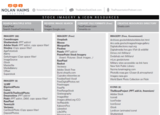
PowerPoint MVP Nolan Haims provides for TMN members the fantastic list of stock imagery and icon resources used at Nolan Haims Creative.
|
|
The learning ecosystem is rapidly evolving, and the changing technologies and growing resources available to help individuals learn is likely a bit overwhelming for your Learning and Development team. With the only guarantee being that change is inevitable, how do you build a training solution that will meet your organization’s needs 6, 12, or 24 months down the road?
Discover how open-source technology can help you create a flexible and future-proof training program for your organization.
In this White Paper, you'll learn:
The evolving role and capabilities of the Learning Management System (LMS) within the larger learning ecosystem
The leading open-source learning platforms and how to determine which is the right fit for your needs
How to maximize the interoperability of open-source to extend and future-proof your learning program
|
_(1).jpg?1596212597)