Blogs
|
Need Free Images and Clipart?
"Via Steve Arnold who called my attention to this listing: "65+ Sites to Find Awe Inspiring Public Domain Images and Clip Art for Your Blog + Social Media Posts for Free." The write up provides basic information about the image resources. Update your public domain images, gentle readers."
Stephen
Stephen Abram
.
Blog
.
<span class='date ' tip=''><i class='icon-time'></i> Aug 05, 2015 04:57am</span>
|
|
Reference: ITU Publishes "ICT Facts and Figures - The World in 2015″ (Internet, Broadband, Mobile Usage Estimates)
Via Gary Price at LJ InfoDocket
http://www.infodocket.com/2015/05/26/reference-itu-publishes-ict-facts-and-figures-the-world-in-2015-internet-and-telecommunication-forecast/
"The full text report, ICT Facts and Figures 2015 is linked below (PDF) along with the underlying data in .xls format.
From the International Telecommunications Union:
The ITU ICT Facts and Figures - The world in 2015 features end-2015 estimates for key telecommunication/ICT indicators, including on mobile-cellular subscriptions, Internet use, fixed and mobile broadband services, home ICT access, and more. 2015 is the deadline for achievements of the UN Millennium Development Goals (MDGs), which global leaders agreed upon in the year 2000, and the new data show ICT progress and highlight remaining gaps
In 2015 there are more than 7 billion mobile cellular subscriptions worldwide, up from less than 1 billion in 2000. Globally 3.2 billion people are using the Internet of which 2 billion are from developing countries.
Report Highlights
Internet user penetration increased seven-fold since 2000
Between 2000 and 2015, Internet penetration has increased almost seven-fold from 6.5 to 43 per cent of the global population.
The proportion of households with Internet access at home advanced from 18 per cent in 2005 to 46 per cent in 2015.
ITU figures also indicate that four billion people in the developing world remain offline. Off the nearly one billion people living in the Least Developing Countries (LDCs), 851 million do not use the Internet.
3G mobile-broadband coverage rapidly extending
Mobile broadband is the most dynamic market segment, with mobile-broadband penetration globally reaching 47 per cent in 2015, a value that increased 12-fold since 2007. In 2015, 69 per cent of the global population will be covered by 3G mobile broadband, up from 45 per cent in 2011.
There is also a rapid extension of 3G mobile broadband into rural areas, and ITU estimates that 29 per cent of the 3.4 billion people worldwide living in rural areas will be covered by 3G mobile broadband by the end of 2015. Among the four billion people living in urban areas, 89 per cent will have access to 3G mobile broadband.
Fixed-broadband uptake growing at a slower pace
Fixed-broadband uptake is growing at a slower pace with a seven per cent annual increase over the past three years. While the prices of fixed-broadband services dropped sharply between 2008 and 2011 in developing countries, they have been stagnating since then and even increased slightly in LDCs.
Broadband now affordable in many countries
The figures indicate that broadband is now affordable in 111 countries, with the cost of a basic (fixed or mobile) broadband plan corresponding to less than five per cent of Gross National Income (GNI) per capita, thus meeting the target set by the Broadband Commission for Digital Development. The global average cost of a basic fixed-broadband plan, as measured in PPP$ (or purchasing power parity $), is 1.7 times higher than the average cost of a comparable mobile-broadband plan.
Direct to Full Text Report (6 pages; PDF)
Direct to Dataset
End-2015 Estimates for Key ICT Indicators (Excel)
Global ICT Development (Excel)
Previous Report
ICT Facts and Figures 2014
ICT Facts and Figures 2013
ICT Facts and Figures 2011
ICT Facts and Figures 2010
ICT Facts and Figures 2009
Coverage
From the BBC
There will also be more than 7 billion mobile device subscriptions, the ITU said.
It found that 78 out of 100 people in the US and Europe already use mobile broadband, and 69% of the world has 3G coverage - but only 29% of rural areas are served.
Africa lags behind with just 17.4% mobile broadband penetration.
By the end of the year 80% of households in developed countries and 34% of those in developing countries will have internet access in some form, the report continued.
One of Several Charts from the Report"
Stephen
Stephen Abram
.
Blog
.
<span class='date ' tip=''><i class='icon-time'></i> Aug 05, 2015 04:57am</span>
|
|
"Ex Libris User Studies: How Do Users Search and Discover?
By Christine Stohn, Senior Product Manager, Discovery & Delivery, Ex Libris
Library discovery systems such as Ex Libris Primo have been around for a number of years, and are constantly being enhanced with new features and content. Today, they handle diverse types of material and an amount of information far beyond the users’ capability to sift through. Nevertheless, users in academia expect discovery systems to support them no matter what they want to accomplish.
And this is where it becomes interesting. How much do we really know about users’ needs and how they accomplish their tasks?"
Download the full white paper here: How Do Users Search and Discover
Stephen
Stephen Abram
.
Blog
.
<span class='date ' tip=''><i class='icon-time'></i> Aug 05, 2015 04:57am</span>
|
|
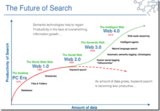
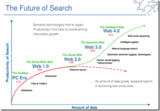
The Future of Enterprise and Web Search: Worrying about a Very Frail Goose
http://arnoldit.com/wordpress/2015/05/28/the-future-of-enterprise-and-web-search-worrying-about-a-very-frail-goose/
From Steve Arnold
"In 30 months, the Intelligent Web will arrive with these characteristics:
Web scale reasoning (Don’t we have Watson? Oh, right. I forgot.)
Intelligent agents (Why not tap Connotate? Agents ready to roll.)
Natural language search (Yep, talk to your phone How is that working out on a noisy subway train?)
Semantics. (Embrace the OWL. Now.)
Now these benchmarks will arrive in the next 30 months, which implies a gradual emergence of Web 4.0."
Stephen
Stephen Abram
.
Blog
.
<span class='date ' tip=''><i class='icon-time'></i> Aug 05, 2015 04:57am</span>
|
|
EveryLibrary Announces VoteLibraries.org
Post on June 2, 2015 by John Chrastka
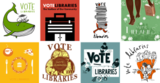
"EveryLibrary Announces VoteLibraries, an Online Collection of Campaign Resources for Libraries
Chicago (June 2, 2015) - EveryLibrary, the first national political action committee for libraries, is pleased to announce the launch of VoteLibraries, a new campaign to give libraries the resources needed to advocate for themselves in their communities. Created through a partnership with the Creative Action Network (CAN) and funded by partners including Mango Languages, this campaign will provide libraries with a new, dedicated set of advocacy and outreach tools online for campaign success.
VoteLibraries is the first and only library advocacy site focused on local library funding campaigns, whether at the ballot box or through town/city/county negotiations. It includes an extensive set of campaign and outreach tools while providing a comprehensive industry-wide call to action for funding at local, state, and national levels. The campaign’s website, www.votelibraries.org, features extensive tools for voter outreach and constituent engagement as well as new, high-quality art and design from the Creative Action Network (CAN) for free use by libraries across the country. VoteLibraries.org also provides an easy pathway for library campaigns and other local stakeholders to access support directly from EveryLibrary.
"In our work promoting libraries and their services across America, we’ve come to understand the need to empower libraries with the resources they need to advocate for themselves and their interests," says John Chrastka, Executive Director of EveryLibrary. "VoteLibraries is our solution to connect and equip libraries with the tools to do just that."
The leading provider of language-learning software in the library market, Mango Languages was an early supporter of EveryLibrary and continues to be a partner and champion of innovation in public and academic libraries. Their status as launch partner adds funding capacity to the project throughout 2015 and follows on their support for EveryLibrary’s early campaign work, including the Rapid Response Fund.
"We are so happy to support the VoteLibraries campaign and the great work EveryLibrary is doing for libraries across the nation," says Robert Thayer, Director, Public Library Division at Mango Languages. "At Mango, we’ve seen firsthand the impact that awesome library innovation has on communities. We can’t wait to help boost the profile of libraries as centers of learning in their communities."
For more information, visit http://www.votelibraries.org or connect via Facebook at facebook.com/votelibraries or on twitter @votelibraries.
About EveryLibrary
EveryLibrary is the first national political action committee for libraries. Since its founding in September 2012, EveryLibrary has successfully helped 21 library communities campaign and win stable tax revenue at elections, securing over $55.4 million in operating and building funds. EveryLibrary is donor supported by individuals, library vendors, and unions who believe as we do that "Any library ballot measure anywhere matters to every library everywhere".
About the Creative Action Network
Creative Action Network (CAN) is a global community of artists and designers, harnessing their talents for good. CAN runs crowdsourced campaigns around causes where anyone and everyone is welcome to contribute their own original, visual, meaningful work. CAN campaigns are not contests and everyone to participate. Designers are produced into , prints, apparel, and other merchandise here in the U.S.A., and sold online to support the artists. CAN has partnered with organizations like Patagonia, Bleacher Report, National Parks Conservation Association, DailyLit, and the New York Public Library, to put artists to work telling stories that matter.
About Mango Languages
Founded in 2007, Mango Languages is the leading provider of language learning resources in North American libraries. Mango is privately owned and headquartered in Farmington Hills, Mich. Guided by its core purpose to enrich lives with language and culture, Mango Languages creates lovable language-learning experiences for libraries, schools, corporations, government agencies and individuals. To learn more about the company, its innovative products and the dynamic Mangos who make it happen, visit MangoLanguages.com.
Contact: John Chrastka
Executive Director, EveryLibrary
3125740316
john.chrastka@everylibrary.org
###"
Stephen
Stephen Abram
.
Blog
.
<span class='date ' tip=''><i class='icon-time'></i> Aug 05, 2015 04:56am</span>
|
|
Title:
The Condition of Education 2015
Description:
The Condition of Education 2015 summarizes important developments and trends in education using the latest available data. The report presents 42 indicators on the status and condition of education. The indicators represent a consensus of professional judgment on the most significant national measures of the condition and progress of education for which accurate data are available. In addition, 3 spotlight indicators are featured that describe selected issues of current policy interest.
Online Availability:
Download, view and print the report as a pdf file. (18.4MB)
Browse The Condition of Education
Download, view and print the At a Glance report as a pdf file. (108KB)
Download, view and print the Highlights report as a pdf file. (635KB)
Need Help Viewing PDF files?
Cover Date:
May 2015
Web Release:
May 28, 2015
Publication #:
NCES 2015144
Center/Program:
NCES
Authors:
Grace Kena, Lauren Musu-Gillette, Jennifer Robinson: National Center for Education Statistics; Xiaolei Wang, Amy Rathbun, Jijun Zhang Sidney Wilkinson-Flicker: American Institutes for Research; Amy Barmer, Erin Dunlop Velez: RTI International
Type of Product:
Compendium
Survey/Program Areas:
Annual Reports Program (Annual)
Questions:
For questions about the content of this Compendium, please contact:
Grace Kena.
Stephen
Stephen Abram
.
Blog
.
<span class='date ' tip=''><i class='icon-time'></i> Aug 05, 2015 04:56am</span>
|
|
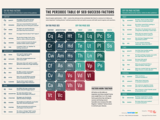
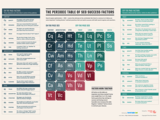
The Revised SEO Periodic Table Is Now Available
https://www.seroundtable.com/seo-periodic-table-20378.html
Stephen
Stephen Abram
.
Blog
.
<span class='date ' tip=''><i class='icon-time'></i> Aug 05, 2015 04:54am</span>
|
|
Top 25 Inventors Found in Libraries
Can you name their most famous inventions?
http://www.oclc.org/research/wtworldcat/topinventors.html
"May is National Inventors’ Month, and that got us thinking about who are the most popular inventors found in libraries. So we went to WorldCat and we built a list of the top 25 inventors found in books and movies.
The top of the list is not surprising; Franklin, Edison and Bell. These are men who’d we all probalby think of first when ask about great inventors. But as you go down the list, its becomes interesting and the names less famous. So we played a game; Can you name what these inventors are most famous for?*
Benjamin Franklin (1706-1790)
Thomas A. (Thomas Alva) Edison (1847-1931)
Alexander Graham Bell (1847-1922)
Leonardo da Vinci (1452-1519)
Nikola Tesla (1856-1943)
The Wright Brothers
Orville Wright (1871-1948)
Wilbur Wright (1867-1912)
Guglielmo Marconi (1874-1937)
Robert Fulton (1765-1815)
Samuel Finley Breese Morse (1791-1872)
Eli Whitney (1765-1825)
Philo Taylor Farnsworth (1906-1971)
R. Buckminster (Richard Buckminster) Fuller (1895-1983)
Margaret E. Knight (1838-1914)
Steve Jobs (1955-2011)
Elijah McCoy (1844-1929)
William Kamkwamba (1987-)
Henry Ford(1863-1947)
Howard Hughes (1905-1976)
John Harrison (1693-1776)
James Watt (1736-1819)
Steve Wozniak (1950-)
Lewis Howard Latimer (1848-1928)
George Washington Carver (1864-1943)
Clarence Birdseye (1886-1956)
Jan Ernst Matzeliger (1852-1889)
*We’re not going to give you the answer. That would be too easy. We suggest you research them at your local library!
But what about library inventors? Well, at OCLC, we of course, are rather taken with Melvil Dewey and his Dewey Decimal System. So we’ll give him honorable mention here.
How the list was compiled
This list was generated from WorldCat using a subset of records with the FAST heading, "Inventors." Personal names as subjects were then extracted from the records and ranked by holdings. The list order is based on the number of OCLC member libraries that hold a given title. WorldCat is the world’s largest and most comprehensive catalog of library resources from around the world, with more than 314 million bibliographic records that represent more than 2 billion items held by participating libraries, including books, movies, music, e-books, licensed databases, online periodicals, digital collections and more. Because of its scale, WorldCat can be used to represent a large part of the scholarly and cultural record."
Stephen
Stephen Abram
.
Blog
.
<span class='date ' tip=''><i class='icon-time'></i> Aug 05, 2015 04:53am</span>
|
|
3 Key Trends in Campus AV Technology
http://campustechnology.com/articles/2015/06/03/3-key-trends-in-campus-av-technology.aspx
With active learning environments on the rise, new AV systems support classroom collaboration.
1) Projectors and displays are becoming increasingly interactive, with more touch points to support multiple users at once.
2) New apps and devices allow multiple users to collaborate and share content wirelessly at the same time.
3) Web conferencing offers a more versatile option for making video connections.
Stephen
Stephen Abram
.
Blog
.
<span class='date ' tip=''><i class='icon-time'></i> Aug 05, 2015 04:53am</span>
|
|
6 Telltale Signs of Disruptive Innovation
Disruption is easy to define but hard to recognize — which is why it’s important to experiment and find ways to break free of traditional approaches to teaching and learning.
http://campustechnology.com/articles/2015/06/02/6-telltale-signs-of-disruptive-innovation.aspx
"Telltale signs worth posting on the wall of every IT leader’s office:
They target people who are nonconsumers or who are overserved by existing products.
The innovation is not as good as existing products, as judged by historical measures of performance.
They’re simpler to use, more convenient or affordable.
There is a technology enabler that can carry the new value proposition upmarket.
The technology is paired with a business model innovation that allows it to be sustainable.
Existing providers are motivated to ignore the new innovation and are not threatened at the outset."
Stephen
Stephen Abram
.
Blog
.
<span class='date ' tip=''><i class='icon-time'></i> Aug 05, 2015 04:53am</span>
|