Blogs
|
The 4 Types of Productivity Styles
http://99u.com/articles/42643/the-4-types-of-productivity-styles
"There is no one-size-fits-all approach to productivity. Instead, we need personalized approaches. This means employing work strategies that align with our own cognitive styles, and allocating efforts in a way that suits our strengths and preferences."
The Prioritizer
"A Prioritizer is that guy or gal who will always defer to logical, analytical, fact-based, critical, and realistic thinking. To increase her efficiency, she will time how long it takes to complete certain tasks in order to more accurately plan her days and weeks. She has never met a goal she did not like and applies a laser-like focus to ensure she accomplishes her goals."
The Planner
"The Planner is the team member who thrives on organized, sequential, planned, and detailed thinking. Though at first glance he may appear as a Prioritizer, the Planner will immerse themselves in the details of a project, while the Prioritizer focuses on only the details that help him complete the project quickly and accurately. The Planner has never met a calendar or project-planning tool that he did not like."
The Arranger
"An Arranger prefers supportive, expressive, and emotional thinking. She is the ultimate team player and excels at partnering with colleagues to get work done. She is a natural communicator and deftly facilitates project meetings. She hates when people lack that personal touch or rely too heavily on data or facts. Arrangers are talkers; they love stories, eye-to-eye contact, expressing concern for others, and asking questions about the way a project or task helps others. They have been known to need to institute a personal chat budget, only allowing a few minutes of chit chat during work hours, and have to avoid adding one more person to the cc: line on their email messages."
The Visualizer
"A Visualizer prefers holistic, intuitive, integrating, and synthesizing thinking. He thrives under pressure and is easily bored if he is not juggling multiple, diverse projects. A Visualizer focuses on the big-picture and broad concepts making connections. At times, he has a tendency to overlook details and tends to value the possibilities over process. His excessive spontaneity and impulsiveness can lead to breakthrough ideas, but can also derail project plans at times. A Visualizer has probably not seen the surface of their desk in years because if something is out of sight, it is out of mind. And, his emails tend to be long, filled with concepts and ideas."
Read more detail: http://99u.com/articles/42643/the-4-types-of-productivity-styles
Stephen
Stephen Abram
.
Blog
.
<span class='date ' tip=''><i class='icon-time'></i> Aug 05, 2015 04:53am</span>
|
|
What is Code?
http://www.bloomberg.com/graphics/2015-paul-ford-what-is-code/
"What is code?" Paul Ford answers the question, with a 38,000 word masterpiece in Bloomberg. This is the first article I’d tell an aspiring programmer to read, and the one that anyone working in technology should have in their permanent collection.
"Today I read perhaps the single best article I’ve ever read on programming.
Paul Ford has written the definitive guide for explaining a profession that employs 11 million people and occupies 7 million more hobbyists’ time by answering the question, "What is code?""
Review: https://poststatus.com/what-is-code/
This article takes over the full issue of this week’s BusinessWeek.
Stephen
Stephen Abram
.
Blog
.
<span class='date ' tip=''><i class='icon-time'></i> Aug 05, 2015 04:53am</span>
|
|
Academic publishers reap huge profits as libraries go broke
5 companies publish more than 50 per cent of research papers, study finds
http://www.cbc.ca/news/technology/academic-publishers-reap-huge-profits-as-libraries-go-broke-1.3111535
‘The big problem is that libraries or institutions that produce knowledge don’t have the budget anymore to pay for [access to] what they produce.’- Vincent Larivière, University of Montreal
Essentially, they’ve become an oligarchy, Larivière and co-authors Stefanie Haustein and Philippe Mongeon say in a paper published last week in the open access, non-profit journal PLOS ONE.
Read the full paper
The Oligopoly of Academic Publishers in the Digital Era
Vincent Larivière ,
Stefanie Haustein,
Philippe Mongeon
Abstract: "The consolidation of the scientific publishing industry has been the topic of much debate within and outside the scientific community, especially in relation to major publishers’ high profit margins. However, the share of scientific output published in the journals of these major publishers, as well as its evolution over time and across various disciplines, has not yet been analyzed. This paper provides such analysis, based on 45 million documents indexed in the Web of Science over the period 1973-2013. It shows that in both natural and medical sciences (NMS) and social sciences and humanities (SSH), Reed-Elsevier, Wiley-Blackwell, Springer, and Taylor & Francis increased their share of the published output, especially since the advent of the digital era (mid-1990s). Combined, the top five most prolific publishers account for more than 50% of all papers published in 2013. Disciplines of the social sciences have the highest level of concentration (70% of papers from the top five publishers), while the humanities have remained relatively independent (20% from top five publishers). NMS disciplines are in between, mainly because of the strength of their scientific societies, such as the ACS in chemistry or APS in physics. The paper also examines the migration of journals between small and big publishing houses and explores the effect of publisher change on citation impact. It concludes with a discussion on the economics of scholarly publishing."
Stephen
Stephen Abram
.
Blog
.
<span class='date ' tip=''><i class='icon-time'></i> Aug 05, 2015 04:52am</span>
|
|
This is a little project being undertaken in Canada. Watch your social media feeds for tweets and such and please share.
FAIR EBOOK PRICES
LONG OVERDUE FOR LIBRARIES
As demand grows, libraries are responding by offering more ebooks. This is what libraries have always done and will always do - ensure access to information for all. But we face challenges.
http://www.fairpricingforlibraries.org/
DID YOU KNOW?
In some cases, major multinational publishers charge libraries 3-5 times more for ebooks than they charge consumers.
There are caps and time limits on ebook use.
This means there are fewer titles and fewer copies for readers to discover.
Lots of samples on the website.
Stephen
Stephen Abram
.
Blog
.
<span class='date ' tip=''><i class='icon-time'></i> Aug 05, 2015 04:52am</span>
|
|
National Making Week Underway, White House Releases Fact Sheet on "Nation of Makers" Initiative
Via Gary Price at LJ InfoDocket
http://www.infodocket.com/2015/06/14/national-making-week-underway-white-house-releases-fact-sheet-on-nation-of-makers-initiative/
"From The White House:
The President is proclaiming a National Week of Making and the Administration is announcing important progress on the Nation of Makers initiative:
More than 150 K-12 and higher education leaders, representing more than 4 million students, are committing to an all-hands-on-deck effort to broaden participation in making, tinkering, and invention, with expanded access to the tools, design courses, mentors, and spaces that are essential;
Federal agencies, companies, non-profits, cities, and schools are collectively making commitments to create over 1,000 maker-oriented spaces in the United States, which will expand access to tools and technologies for both students and entrepreneurs; and
Federal agencies, including the Department of Veterans Affairs (VA) and the United States Agency for International Development (USAID), are launching challenges and competitions that leverage the diverse talents for creativity, problem-solving, and innovation in the growing Maker community.
The complete fact sheet runs 5500 words.
From the Fact Sheet:
Institute of Museum and Library Services will work with the Children’s Museum of Pittsburgh and other partners to create a framework for effective spaces for making and learning in museums and libraries. An e-publication highlighting the framework along with an online toolkit will be released by November 2015.
Here’s a section of the fact sheet that focuses on projects from libraries and museums.
Museums, libraries, non-profits, and companies will give more students and visitors the ability to access maker-oriented spaces, start projects, show their work, and meet Makers in their communities. For example:
Changing Expectations, which will collaborate with Code.org to create a maker-oriented space fortraditionally underserved students at an inner city library in the Austin, Texas area.
Children’s Museum of Pittsburgh, with educational support from Kickstarter, will launch a campaign to support makerspaces in schools, starting with 10 schools in the Pittsburgh region.
Museum of Science and Industry in Chicago will expand its after-school Innovation Clubs program at its Wanger Family Fab Lab, create an equipment loan program to enable schools to try out DIY technologies before they buy their own; and will double the number of 3D printing workshops it offers each year, helping the lab reach 12,000 individuals.
The New York Hall of Science is partnering with six museums and science centers to create a site, learnXdesign, dedicated to creating STEM-focused
Making projects for educators around the country. The institutions collaborating on the site include the Center of Science and Industry in Columbus, Ohio; Science Museum of Minnesota in St. Paul, Minn.; Tech Museum of Innovation in San Jose, California, Museum of Science in Boston, Massachusetts, ¡Explora! in Albuquerque, New Mexico, and Telus Spark in Calgary, Canada.
The North Carolina State University Libraries’ D.H. Hill Library, which serves more than 1.4 million users annually, will add a Makerspace to its facility this summer with tools such as 3D printers and scanners, sewing machines, and electronics equipment, along with a teaching and demonstration space.
The Science Museum of Minnesota is launching "Making Connections Saturdays," a monthly celebration of hands-on activities with local artists, crafters, fixers, and tinkerers from around the Twin Cities who are typically underrepresented in the maker movement.
The Tech Museum of Innovation in San Jose, California, will open a first-of-its-kind, interactive exhibit merging the worlds of making and biology."
Read the Complete Fact Sheet
Stephen
Stephen Abram
.
Blog
.
<span class='date ' tip=''><i class='icon-time'></i> Aug 05, 2015 04:52am</span>
|
|
The Evolution of Social Media [Infographic]
http://www.adweek.com/socialtimes/the-evolution-of-social-media-infographic/620911
Stephen
Stephen Abram
.
Blog
.
<span class='date ' tip=''><i class='icon-time'></i> Aug 05, 2015 04:52am</span>
|
|
Data Reinvents Libraries for the 21st Century
Libraries are proving that they’re more than mausoleums of old knowledge — they’re in a state of progressive reform, rethinking services and restructuring with data.
http://www.govtech.com/data/Data-Reinvents-Libraries-for-the-21st-Century.html
"Whatever the case, the truth is that today libraries are proving they’re more than mausoleums of old knowledge. They’re in a state of progressive reform, rethinking services and restructuring with data. It’s a national trend as libraries modernize, strategize and recast themselves as digital platforms. They’ve taken on the role of data curator for information coming in and citizen-generated data going out. They host civic hacker hubs. They serve as booming e-book distributors. They provide digital clinics for aspiring technophiles.
It could be called a refresh to a retro institution, a data movement that’s growing organically in spurts. According to latest 2013 statistics from the American Library Association’s Digital Inclusion Survey, 97.5 percent of libraries help visitors complete online government forms, 74.1 percent support e-government and civic engagement programs, 98 percent offer technology training, and 53.3 percent provide office space to a mobile workforce. And data is a common thread running through all of these services."
Stephen
Stephen Abram
.
Blog
.
<span class='date ' tip=''><i class='icon-time'></i> Aug 05, 2015 04:51am</span>
|
|
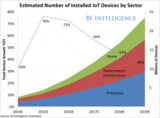
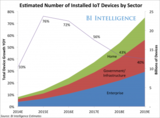
The ‘Internet of Things’ will be the world’s most massive device market and save companies billions of dollars
Read more: http://www.businessinsider.com/how-the-internet-of-things-market-will-grow-2014-10#ixzz3cZKCBvyp
"Here are a few of the key findings from the BI Intelligence report:
The Internet of Things will be the largest device market in the world. We estimate that by 2019 it will be more than double the size of the smartphone, PC, tablet, connected car, and the wearable market combined.
The IoT will result in $1.7 trillion in value added to the global economy in 2019. This includes hardware, software, installation costs, management services, and economic value added from realized IoT efficiencies.
Device shipments will reach 6.7 billion in 2019 for a five-year CAGR of 61%. Revenue from hardware sales will be only $50 billion or 8% of the total revenue from IoT-specific efforts, as software makers and infrastructure companies will earn the lion’s share.
The enterprise sector will lead the IoT, accounting for 46% of device shipments this year, but that share will decline as the government and home sectors gain momentum. By 2019, government will be the leading sector for IoT device shipments.
The main benefit of growth in the IoT will be increased efficiency and lower costs. The IoT promises increased efficiency within the home, city, and workplace by giving control to the user. However, many are hesitant to use devices as security problems are still an issue.
The IoT lacks a common set of standards and technologies that would allow for compatibility and ease-of-use. There are currently few standards (or regulations) for what is needed to run an IoT device. Consortia that group together global industrial, tech, and electronics companies are involved in an effort to standardize the IoT and solve the most pressing security concerns."
Read more: http://www.businessinsider.com/how-the-internet-of-things-market-will-grow-2014-10#ixzz3cZKKTaOI
Stephen
Stephen Abram
.
Blog
.
<span class='date ' tip=''><i class='icon-time'></i> Aug 05, 2015 04:50am</span>
|
|
15 steps to an academic library service model
http://proud2know.eu/15librarybusinessmodel_blog22/
"In last month’s blog: 10 steps to a library value proposition, I looked at part of Alexander Osterwalder’s & Yves Pigner’sBusiness Model Canvas honing in on analysing library customer segments, pains and gains for a strong library value proposition.
This month, I will further go into this strategic development and communication tool by taking you through 5 more elements to the canvas that focus on the essentials around the resources necessary to realise your plans. Link this information with solid knowledge of your customer relationships, segments, channels and your value proposition will help you acquire the bigger picture of the key elements for developing a new library service model when planning significant change. This totals 15 steps to a Library Service Business Model.
For the 1st 10 steps, see last month’s blog, and for the next 5, read below.
http://stephenslighthouse.com/2015/05/20/10-steps-to-a-value-proposition-for-your-library/
The Business Model Canvas, Strategyzer.com
Essential: collaboration first and foremost
What is important to point out here, is to use this model by exploring the following elements with as broad a team as possible including various stakeholders. You will be familiar with the 5 elements below when considering new service plans, however, exploring them, with other stakeholders external to the library may not be the usual practice. This helps engage with new partners, your communities and create the most comprehensive insights on how and whether to make something happen.
1. Key activities
Key activities will help you make your value proposition happen, reach markets, work on your customer relationships or earn revenues. What are the key things that need to be done to reduce or eliminate a pain or create a gain for your PhDs for example? These are large types of thematic activities, such as problem-solving or training. Do you have an online website or platform for your PhDs? In this case, key activities here might be PhD website management, PhD literacy, PhD network service management, or platform promotion.
2. Key partners
Key partners are those individuals, bodies or institutions who are essential in providing your business / service model. You can help provide better services by partnering with others, reduce risk or acquire resources you need to provide new plans. In the case of developing more services for PhD students, this could mean alliancing with competitors or non-competitors within or outside the university. These could include IT, Communication, Research services or other service centres focussed on writing or publishing such as University Presses.
3. Key resources
Like Key Activities, key resources are those that will help you deliver a value proposition for your client segment, develop your relationships, earn revenues, etc. : all the elements of building your library service business model. These can include financial, physical, intellectual or human resources. You can also acquire what you need from key partners. E.g. What physical resources, i.e. IT infrastructure or physical space do you need to offer optimised services to your PhDs? Intellectual resources: Would international benchmarking information on PhD services help you develop your services? Human resources: What skills do you have in house to engage, develop and disseminate new PhD services, and what not yet? Can you borrow skills or expertise from within your institution, e.g. hire someone on a project basis? Financial: Do you have an innovation budget that you can call on / create?
Scanning key resources together will raise awareness of the consequences of your plans on your assets.
4. Cost structure
As service institutions, libraries are both value-driven, i.e. focussed on value creation, and cost-driven. Austerity forces are driving libraries more to cost-driven models where the need is high to keep costs down and be efficient. This is especially the case when necessary change is not necessarily paired with an increase in budgets.
As part of your new library service business model, it is useful to note what types of costs are necessary, e.g. fixed versus variable.
Libraries generally have high fixed costs with permanent staff on the payroll for example. Variable costs have the potential to rise when buying in knowledge, software or hardware to address new activities in the areas of data management or publishing for example, which can also form part of PhD service ideas.
Exploring the costs with your stakeholders will help you weigh up together whether the costs balance out with the value to be created.
5. Revenue streams
How is the Library supported financially? Is generating additional revenue part of your strategy? Do you aim to cover real costs or aim for profit? Does the Library purely acquire central funding, or are there other streams such as faculty subsidies, project income, SLAs (Service Level Agreements), or crowdfunding? And are your streams with or without strings?
Do you provide your expertise in digitisation to others for a price? Perhaps you lend out technology for a fee, or provide access to scanners or poster printers for a price. Explore together what revenue streams you could create to fund new activities for PhDs for example.
In summary
Identifying and analysing these 5 aspects will help form a solid framework to discuss the concrete how of delivering your value proposition to key stakeholders. In this model, you will above all do this collaboratively with your team and with your stakeholders to acquire the most all-inclusive and valuable picture. Your team will above all shed light on how far your proposed library service business model demonstrates a strong balance between value and investment by using this canvas. This is essential in times of increasing new and diverse demanding opportunities in the area of library research support in a context of stretched budgets and demands for heightened efficiency.
********
If you haven’t yet tried the Business Model Canvas, why not try it out for one of your new library service / business models? If you’d like some guidance, just drop me a line at info@proud2know.eu
This work by Vanessa Proudman is licensed under a Creative Commons Attribution-NonCommercial 3.0 Unported"
Stephen
Stephen Abram
.
Blog
.
<span class='date ' tip=''><i class='icon-time'></i> Aug 05, 2015 04:50am</span>
|
|
Resume Writing Checklist for Brainy Jobseekers
http://www.essaymama.com/blog/resume-writing-checklist/
Stephen
Stephen Abram
.
Blog
.
<span class='date ' tip=''><i class='icon-time'></i> Aug 05, 2015 04:49am</span>
|