Blogs
|
THE SOCIAL DEMOGRAPHICS REPORT: A breakdown of who’s on each of the different social networks
BI Intelligence
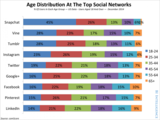
"The top trend over the last year has been the growth of image-focused social networks — particularly Pinterest, Instagram and Snapchat — among specific demographics.
In the US market, the data show that gender, income, and education level have little impact on whether or not an individual has adopted social networking as an activity. But it does have a big impact on which social networks people opt to use.
In a new report from BI Intelligence, we unpack data from over a dozen sources to understand how social media demographics and preferences are still shifting.
Access The Full Report By Signing Up For A Trial >>
Here are a few of the key takeaways from the BI Intelligence report:
Pinterest has tremendous reach among women. Among US female internet users, 42% reported being on Pinterest in Pew’s late-2014 survey, compared to only 13% of men.
Instagram has become the most important and most-used social network for US teens. 32% of US teenagers cited it as their most important social network in Piper Jaffray’s twice-annual teen survey, compared to only 14% saying that of Facebook.
Snapchat, Vine, and Tumblr had by far the most youthful user bases of the social networks we looked at. 45% of Snapchat’s adult users are between 18 and 24, followed by Vine (28%) and Tumblr (28%), according to comScore.
LinkedIn enjoys high adoption among highly educated and high-income users. LinkedIn is used by 44% of Americans with income of $75,000 or more, according to Pew.
Messaging apps also have become more broadly popular, but still skew young: 7% of all people in the US aged 12 and older use WhatsApp, according to the Edison Research and Triton Digital survey.
The aging of Facebook, Twitter, LinkedIn, and even Pinterest is more apparent than ever. That’s especially true of Facebook: Less than two-fifths of Facebook’s adult user base in the US is aged 18 to 34, according to comScore."
Read more: http://www.businessinsider.com/update-a-breakdown-of-the-demographics-for-each-of-the-different-social-networks-2015-6#ixzz3dnnubuKn
Stephen
Stephen Abram
.
Blog
.
<span class='date ' tip=''><i class='icon-time'></i> Aug 05, 2015 04:47am</span>
|
|
Infographics Are Evolving into Many Formats
http://www.coolinfographics.com/blog/2015/6/15/infographics-are-evolving-into-many-formats.html
"The internet is full of noise, and your job is to break through that wall of information with something that resonates with your target audience. When you are communicating any message, you want to ensure that your audience will understand and remember the valuable takeaways about your products or services. You want your communication to be clear and concise. This is where infographics come in."
1. Static Infographics - Kitchen Conversion Guide
2. Interactive Infographics - Daily Dose of Water
3. Video Infographics - The Fallen of WWII
4. Zooming Infographics - The History of Film
5. Animated Infographics - Flight Videos Deconstructed
"With so many new and different formats of infographics available to today’s marketers, providing your audience with a story that conveys your message has never been more exciting. Sharing the key takeaways from your product or services can be done in an expertly designed way that appeals to your audience and leaves them wanting more."
Stephen
Stephen Abram
.
Blog
.
<span class='date ' tip=''><i class='icon-time'></i> Aug 05, 2015 04:47am</span>
|
|
HBR:
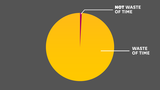
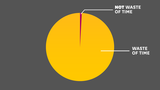
99% of Networking Is a Waste of Time
https://hbr.org/2015/01/99-of-networking-is-a-waste-of-time
"Building the right relationships — networking — is critical in business. It may be an overstatement to say that relationships are everything, but not a huge one. The people we spend time with largely determine the opportunities that are available to us. As venture capitalist and entrepreneur Rich Stromback told me in a series of interviews, "Opportunities do not float like clouds in the sky. They are attached to people.""
Stephen
Stephen Abram
.
Blog
.
<span class='date ' tip=''><i class='icon-time'></i> Aug 05, 2015 04:47am</span>
|
|
15 Surprising Benefits of Playing Video Games
http://mentalfloss.com/article/65008/15-surprising-benefits-playing-video-games
"Complex, challenging, and ambitious, video games have come a long way since the simple arcade titles of the 1970s—and evidence is mounting that the benefits of play go well beyond entertainment and improved hand-eye coordination. Here are 15 ways games are programming better people.
1. THEY’RE PRODUCING BETTER SURGEONS.
While you may think you want your surgeon reading up on the latest medical research instead of playing games, you might want to reconsider: a study of laparoscopic (small incision) specialists found that those who played for more than three hours per week made 32 percent fewer errors during practice procedures compared to their non-gaming counterparts.
2. THEY MAY HELP PEOPLE OVERCOME DYSLEXIA.
Some research points to attention difficulties as being a key component of dyslexia. One study has shown dyslexics improved their reading comprehension following sessions of games heavy on action. The reason, researchers believe, is that the games have constantly changing environments that require intense focus.
3. THEY COULD IMPROVE YOUR VISION.
"Don’t sit too close to the television" used to be a common parental refrain without a lot of science to back it up. Instead, scientists are discovering games in moderation may actually improve—not strain—your vision. In one study, 10 weeks of play was associated with a greater ability to discern between different shades of grey. Another had participants try to play games using only their "lazy" eye, with the "good" one obscured. Those players showed significant, sometimes normalized improvement in the affected eye.
4. YOU MIGHT GET A CAREER BOOST.
Because certain genres of games reward and encourage leadership traits—providing for "communities," securing their safety, etc.—researchers have noted that players can display a correlating motivation in their real-world career goals. Improvising in a game can also translate into being faster on your feet when an office crisis crops up.
5. PLAYERS CAN BECOME FASCINATED WITH HISTORY.
Many games use actual historical events to drive their stories. Those characters and places can then spark a child’s interest in discovering more about the culture they’re immersed in, according to researchers. Parents who have obtained books, maps, and other resources connected to games have reported their children are more engaged with learning, which can lead to a lifetime appreciation for history.
6. THEY MAKE KIDS PHYSICAL.
While some games promote a whole-body level of interaction, even those requiring a simple handheld controller can lead to physical activity. Sports games that involve basketball, tennis, or even skateboarding can lead to children practicing those same skills outdoors.
7. THEY MAY SLOW THE AGING PROCESS.
So-called "brain games" involving problem-solving, memory, and puzzle components have been shown to have a positive benefit on older players. In one study, just 10 hours of play led to increased cognitive functioning in participants 50 and older—improvement that lasted for several years.
8. THEY HELP EASE PAIN.
It’s common to try to distract ourselves from pain by paying attention to something else or focusing on other body mechanisms, but that’s not the only reason why games are a good post-injury prescription. Playing can actually produce an analgesic (pain-killing) response in our higher cortical systems. The more immersive, the better—which is why pending virtual reality systems may one day be as prevalent in hospitals as hand sanitizer.
9. YOU’LL MAKE NEW SOCIAL CONNECTIONS.
Gamers are sometimes stigmatized as being too insulated, but the opposite is actually true. The rise of multi-player experiences online has given way to a new form of socializing in which players work together to solve problems. But studies have shown games can also be the catalyst for friends to gather in person: roughly 70 percent of all players play with friends at least some of the time.
10. THEY MAY IMPROVE BALANCE IN MS SUFFERERS.
Since it is a disorder affecting multiple nerves, multiple sclerosis patients often have problems with their balance—and no medications have been conclusively proven to help. However, one study showed that MS patients who played games requiring physical interaction while standing on a balance board displayed improvement afterward.
11. YOU’LL MAKE FASTER DECISIONS.
We all know someone who seems to have a faster CPU than the rest of us, able to retrieve information or react in a split second. For some, that ability might be strengthened through gaming. Because new information is constantly being displayed during play, players are forced to adapt quickly. In one study, players who were immersed in fast-paced games were 25 percent faster in reacting to questions about an image they had just seen compared to non-players.
12. THEY MIGHT CURB CRAVINGS.
Players preoccupied with indulging in overeating, smoking, or drinking might be best served by reaching for a controller instead. A university study revealed a 24 percent reduction in desire for their vice of choice after playing a puzzle game.
13. THEY’LL REDUCE STRESS.
While some games are thought to induce stress—especially when you see your character struck down for the umpteenth time—the opposite can be true. A major study that tracked players over six months and measured heart rate found that certain titles reduced the adrenaline response by over 50 percent.
14. GAMERS MIGHT BE LESS LIKELY TO BULLY.
Though the stance is controversial, some researchers have asserted that action games may reduce a bully’s motivation to—well, bully. One study that had players assume the role of both the hero and villain showed that those controlling the bad guy’s behaviors displayed a greater sense of remorse over their actions.
15. THEY CAN HELP ADDRESS AUTISM.
Gamers using systems that incorporate the entire body to control onscreen movement have been shown to be more engaged in celebrating victories with their peers, which runs counter to the lack of communication people with autism sometimes present. A study also showed that sharing space with multiple players can also lead to increased social interaction for those with the disorder."
Add to that all the reading, logic, and fun involved in some games . . .
Stephen
Stephen Abram
.
Blog
.
<span class='date ' tip=''><i class='icon-time'></i> Aug 05, 2015 04:46am</span>
|
|
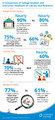
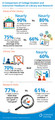
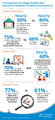
http://www.against-the-grain.com/2015/06/comparing-college-student-and-instructor-perceptions-on-libraries-and-research/
Stephen
Stephen Abram
.
Blog
.
<span class='date ' tip=''><i class='icon-time'></i> Aug 05, 2015 04:46am</span>
|
|
Providing Excellent Customer Service
by Jane Dysart
On our newest Symposium at the University of Toronto iSchool
Providing excellent customer service and delighting the customer is the top of mind for me lately. At Computers in Libraries 2015 keynote speakers emphasized delighting the customer. You can read more about their presentations & see the videos:
Steve Denning, Author, The Leader’s Guide to Radical Management
Blog Post: http://www.libconf.com/2015/04/27/continuous-innovation-and-transformation-the-opening-keynote/
Video (you can skip the promo at the beginning!):http://www.libconf.com/2015/04/27/continuous-innovation-and-transformation-the-opening-keynote/
John Palfrey, Head of School, Phillips Academy, Board President of the Digital Public Library of America (DPLA) & Author, BiblioTECH: Why Libraries Matter More Than Ever in the Age of Google
Blog Post: http://www.libconf.com/2015/04/28/creating-a-new-nostalgia-the-tuesday-keynote/
Video: http://computersinlibraries.infotoday.com/2015/Video.aspx
But why is customer service or delighting the customer so important? Customer service fosters a good relationship between customers and the organization and leads to keeping or engaging those customers. Without customers there is no business or support in the case of non-profits like libraries. Reducing a customer’s stress, giving them a pleasant customer experience, and providing information that can solve their problem is all important to keep positive customer satisfaction (the overall contentment with a customer interaction). Excellent customer service involves providing outstanding service that meets (or exceeds) the customer’s expectations — it delights the customer. Excellent customer service also includes having a great attitude and being people centered or customers focused. So in addition to knowing your customer really well, and understanding their true expectations (making no assumptions), what do you need for good customer service?
Develop the skills to be successful
Assess the current level of customer service (customer satisfaction surveys, secret shoppers for example)
Empower empl0yees to make decisions to benefit customers
Use technology & current information systems to provide excellent customer service
Continuous examination of individual & organization performance — self-awareness!
Libraries have a leg up with customer service as they are known as credible institutions, but one bad customer experience can change that perception and encourage that customer to tell others. How often have you told your network about bad customer experiences you have had? How often have you told a positive customer experience story?
I’m very excited that the University of Toronto iSchool is hosting a symposium on Customer Service For Libraries: Upping Our Game! on Thursday & Friday July 16 & 17. It will be covering the importance of customer service, how to listen to and understand the customer and their expectations, how to start customer service initiatives, the new technology that helps improve customer service, as well experiences of libraries with successful customer service programs and their impact.
Stephen
Stephen Abram
.
Blog
.
<span class='date ' tip=''><i class='icon-time'></i> Aug 05, 2015 04:46am</span>
|
|
Video: Webinar by Authors of the New Book "Library Linked Data in the Cloud"
Via Gary Price at LJ InfoDocket
http://www.infodocket.com/2015/06/20/video-webinar-by-authors-of-the-new-book-library-linked-data-in-the-cloud/
"Here’s a webinar by three members of the OCLC Research team and and the authors of a the new book, Library Linked Data in the Cloud: OCLC’s Experiments with New Models of Resource Description.
The webinar was recorded on May 21, 2015 and made available on YouTube yesterday. It runs about one hour.
About the Book (via OCLC)
Written by OCLC Research staff members Carol Jean Godby, Shenghui Wang and Jeffrey K. Mixter, the book focuses on the conceptual and technical challenges involved in publishing linked data derived from traditional library metadata. This transformation is urgent, the book maintains, because it is common knowledge that most searches for information start not in a library, or even in a Web-accessible library catalog, but elsewhere on the Internet. Modeling data in a form that the broader Web understands may help keep libraries relevant in the network environment.
In the book, the authors explain how the new Web is a growing "cloud" of interconnected resources that identify the people, places, things and concepts that people want to know about when they approach the Internet with an information need. They also explain why linked data is an appropriate architecture for the description of library resources.
"This work represents significant contributions OCLC is making with library linked data," said Lorcan Dempsey, OCLC Vice President, Research and Chief Strategist. "Our researchers are participating in the development of Web standards for machine-understandable data, contributing to the debate on how the key values of librarianship are represented in linked data techniques, and publishing some of the most widely used linked data enabled authoritative hubs in the library community."
Library Linked Data in the Cloud: OCLC’s Experiments with New Models of Resource Description
http://www.oclc.org/research/publications/2015/oclcresearch-library-linked-data-in-the-cloud.html
by Carol Jean Godby, Shenghui Wang and Jeffrey K. Mixter
"This book describes OCLC’s efforts to help increase the visibility of library collections on the Web through the creation of library linked data—moving from a web of documents to a web of data. It focuses on the conceptual and technical challenges involved in publishing linked data derived from traditional library metadata and aims to achieve a balanced treatment of theory, technical detail, and practical application."
Stephen
Stephen Abram
.
Blog
.
<span class='date ' tip=''><i class='icon-time'></i> Aug 05, 2015 04:46am</span>
|
|
The Best-Sellers Lists Explained (video)
http://the-digital-reader.com/2015/06/13/the-best-sellers-lists-explained-video/
"Did you ever wonder why certain titles got on to the various best sellers lists?
If you suspected that there was an evil cabal secretly manipulating the list then you would be correct. As Studio C explains, books are added to the list not due to merit or sales but by a committee that is acting to its own ends.
Mwahaha."
Stephen
Stephen Abram
.
Blog
.
<span class='date ' tip=''><i class='icon-time'></i> Aug 05, 2015 04:46am</span>
|
|
Global Wearable Device Market Share
http://www.businessinsider.com/heres-what-6-billion-fitbit-really-needs-to-worry-about-2015-6
Stephen
Stephen Abram
.
Blog
.
<span class='date ' tip=''><i class='icon-time'></i> Aug 05, 2015 04:46am</span>
|
|
Fortune:
9 things you can do every day to be more productive
http://fortune.com/2015/06/13/ryan-harwood-productivity-tips/
"Skip the meetings
Meetings are great for brainstorming and face-to-face interaction, except when they’re not. Go to the meetings you need to go to (and be present, don’t look at your phone). But skip the ones where a trusted colleague can easily speak or take notes on your behalf.
Take a break outside
It sounds counterintuitive when your day is jam-packed, but try to make time to get outside at least once during your workday, even if the weather is bad, or if it’s only for five minutes. It’s like hitting the "reset" button on your brain. A brisk walk around the block (sans email or texting) can instantly refresh your perspective and creativity. For instance, I schedulewalking meetings with our editor-in-chief, which have spurred some of our best ideas for the business.
Keep a tidy desktop
By this I mean both your computer’s desktop and youractual desktop. If you know where things are, you won’t waste valuable time searching for them. A tidy desk means a tidy mind, and a tidy mind is better prepared to handle the chaos of a busy day.
Start your day early
Get into work early and schedule one to two hours with zero interruptions. This gives you a set time to get through emails and complete outstanding to-dos. In return, this will open up time during the day for meetings, and other unplanned requests.
Never be a bottleneck
Your team’s productivity is reflective of your own. Always make sure you’re giving them what they need to get their work done, before focusing on your own projects.
Always over communicate
Whether you are asking if you can skip a meeting or what the highest priorityy on your to-do list should be, asking rather than assuming helps avoid wasting time that could have been spent elsewhere.
Turn your phone on silent
Oh, the horror! You will survive—I promise. I keep my phone on silent all day (except for actual phone calls in case of an emergency) and only look to answer texts and social media requests when I have free time. If you are constantly being distracted by the buzz and ping of alerts, you’re not going to get anything done.
Live and breathe by your calendar
Find a calendar app that you love and use it to schedule just about anything. This way, you’ll always know the amount of time you have throughout the day to work on projects, attend meetings, etc. One of our editors swears by the app, Sunrise because it also syncs with a bunch of other apps, like Foursquare, LinkedIn LNKD -0.44% and Facebook FB -1.32% .
Limit your direct reports
Too many direct reports, actually leads to no direct reports. Meaning, you won’t have time for any of them if you’re trying to make time for all of them. I try to limit my direct reports to five, so I have ample time to fit in one-on-ones and understand the challenges across the business."
Stephen
Stephen Abram
.
Blog
.
<span class='date ' tip=''><i class='icon-time'></i> Aug 05, 2015 04:45am</span>
|