Blogs
|
SmartPulse — our weekly nonscientific reader poll in SmartBrief on Leadership — tracks feedback from more than 190,000 business leaders. We run the poll question each week in our e-newsletter.
How do you handle someone who’s a "squeaky wheel"?
I always meet their needs and answer their questions: 7%
I ask them to generate solutions before coming to me: 90%
I direct them to go to someone else for help: 2%
I refuse to meet with them until they have something for review: 1%
Make them Self-Sufficient. "Squeaky Wheels" can consume a great deal of your time if you’re not careful. For the vast majority of you, the push toward making them self-sufficient is clear. For those who aren’t taking this approach, I encourage you to look at how you can wean them from the amount of support you provide. If you use basic self-sufficiency building approaches, you should be able to reclaim that time to invest it elsewhere.
Mike Figliuolo is managing director of thoughtLEADERS, author of "Lead Inside the Box: How Smart Leaders Guide Their Teams to Exceptional Results" and "One Piece of Paper: The Simple Approach to Powerful, Personal Leadership."
Related Posts:
How do you deal with "steamrollers" on your team?
Leadership : Which is harder: improving a slacker’s performance or getting a high-performer promoted?
How do you invest your time and energy in your team members?
How effectively do you recruit and hire outstanding talent?
How quickly does your organization make decisions?
How do you handle someone who’s a "squeaky wheel"? originally published by SmartBlogs
Julie Winkle Giulioni
.
Blog
.
<span class='date ' tip=''><i class='icon-time'></i> Aug 03, 2015 12:05pm</span>
|
|
This post is sponsored by HR Metrics and Analytics
In an increasingly competitive global market, the quality and effectiveness of your company’s workforce is more critical to business success than ever before. As a result, over the past decade, the HR metrics/analytics discipline has evolved from an efficiency enabler into a strategic powerhouse capable of driving key business objectives such as evidence-based hiring, organizational agility, global expansion and profitability.
IQPC knows the importance of HR and has researched the most prolific metrics and analytics from the top HR institutions to gather the measurements that offer the most insight for improving HR processes including increasing efficiency, maximizing employee performance & productivity, staying ahead of market competition and driving organizational effectiveness. Along with the findings, the report combines predictions from other industry experts that detail the top 15 metrics and analytics you’ll need in 2015.
The continued use of disparate HR strategies is no longer an option given the volume and variety of data available so, to help you keep track of your progress, we’ve created a Top 5 HR Analytics Goals checklist to help you assess where you are with:
Predictive HR analytics
Effective, empowered and engaged workforce
Connecting the dots from onboarding to exit
Improve employee performance with social media analytics
Talent acquisition
These strategies and solutions will be the focus of our flagship event: The 14th HR Metrics & Analytics Summit September 2-4, 2015 in Orlando. The Summit features three days of workshops, panel discussions, case studies and networking opportunities lead by industry experts from organizations including Wyndham Worldwide, Express Scripts, Wal-Mart, Amtrack, Fedex and PwC.
To learn more about this event, download our agenda.
Related Posts:
No Related Posts
Resources for Reviewing HR Metrics originally published by SmartBlogs
Julie Winkle Giulioni
.
Blog
.
<span class='date ' tip=''><i class='icon-time'></i> Aug 03, 2015 12:05pm</span>
|
|
What stories are told in your organization today? Are you aware of them? Do they reinforce your desired culture or do they inspire undesired actions?
Most leaders I speak to don’t pay attention to stories that are told in their company. They should, though, because stories are powerful. Stories direct actions, sometimes subtly, sometimes explicitly. They inspire action over inaction -which can be a good thing, if those stories inspire aligned behavior and considerate interactions.
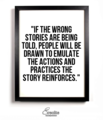
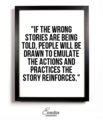
If the wrong stories are being told, people will be drawn to emulate the actions and practices the story reinforces. Here’s an example. One client had a "do whatever it takes" service culture. One day a shipment didn’t go out on time, which meant a customer commitment was at risk. The person that discovered the issue realized that if she got the package to the UPS facility at the airport by 5 p.m., overnight service would get the package to the client’s site by 10 a.m. It would be a day late but not two or three days late. Overnight shipping would cost hundreds of dollars but the package would get there quickly.
She prepared the shipment and drove rather madly to arrive at the airport just as the UPS office was closing. They took the package and the client got it the next morning. The company celebrated the employee’s service mindset and her solution by an all-company announcement and a $20 gift card.
The message that employees heard wasn’t to ensure shipments go out on time. What they heard was when you miss a shipment and engage in heroic (and expensive) recovery, you’ll be celebrated!
A different client had a very cool practice of year-end gifting. If the company exceeded profitability targets, full-time employees could gift as much as $1,000 to the charity of their choice. One employee decided to give his full allotment to a local nonprofit animal shelter where he and his wife had adopted a kitten a year before.
He went to their office one rainy afternoon and offered the check to the receptionist. She looked at the check and burst into tears! She asked him to stay for a minute while she scurried into the hallway.
Us men don’t know what to do when a woman cries. Mostly we’re tempted to run away. He was about to sneak out and head home when four women came into the lobby, all sniffling. The group grabbed him in a big hug. The executive director, who was holding the check, thanked him for his gift. She told him the shelter was having a cash-flow issue. They were meeting that very moment to figure out how to buy food for their animals — because they would have run out within two days.
The story was widely shared.
The message that employees heard was that saving money enabled local charities to do more great work for people in their communities. They worked hard and didn’t miss profitability targets for the following five years.
How can leaders learn what stories are being told? Wander around and engage with employees. They must listen more than they talk. They must ask what’s going well and what’s not - and ask for examples. These interactions will expose some of the stories that are prevalent in their workplace.
Leaders can also be proactive about stories they tell. They can discover stories of desired values and behaviors, and tell those, often.
Those powerful stories will reinforce their desired culture.
What do you think? What would a time analysis show in your current work and life responsibilities? What small changes will make the most positive impact for you and your team and family? Share your thoughts about this post/podcast in the comments section below.
Subscribe to my free weekly newsletter. Subscribers enjoy free resources including a preview of my latest book, The Culture Engine, which helps leaders grow their business, engagement, and service with an organizational constitution.
Podcast - Listen to this post now by clicking the podcast link at left. Subscribe via RSS or iTunes. The music heard on these podcasts is from one of my songs, "Heartfelt," copyright © 2005-2015 Chris Edmonds Music (ASCAP). I play all instruments on these recordings.
If you enjoyed this article, join SmartBrief’s e-mail list for our daily newsletter on being a better, smarter leader.
Related Posts:
Want front-line leaders and players to make great decisions? Clear the fog
Don’t settle for a less-than-engaging work environment
S. Chris Edmonds, on why culture matters
What is your organization’s social impact?
Be intentional about workplace inspiration
How stories can reinforce the culture you want originally published by SmartBlogs
Julie Winkle Giulioni
.
Blog
.
<span class='date ' tip=''><i class='icon-time'></i> Aug 03, 2015 12:05pm</span>
|
|
The Q2 2015 Restaurant Social Media Index rankings are in!
Last quarter, Panera Bread took No. 1 for the Top 25 National Restaurant Brands of Q1 2015. This month, the artificial-ban brand falls to No. 4, and is replaced by Chick-fil-A. Check out the Top 10 list below, where we also delve deeper into the Top 3. What caused the chicken chain to be on top? And what other players have entered the national field of top brands?
How it works
The RSMI, owned by digital agency DigitalCoCo, is a social media index with domain expertise that tracks five main elements — influence, sentiment, engagement, location-based actions and mobile — across 17 social media platforms. Currently, the Index tracks more than 188K restaurant industry keywords and more than 127M U.S. social restaurant consumers in over 430K locations. Learn more about how the Index works.
Top 10 Restaurant Brands: Q2 2015
Chick-fil-A: Chick-fil-A is one of those brands people seem to either love or hate. The chicken chain has been very vocal in the past about its conservative beliefs, but clearly, there’s been more positive brand buzz in Q2 than not considering the restaurant’s No. 1 position. Chick-fil-A also kicked off a strong Q3 with a lot of talk about its 11th Annual Cow Appreciation Day, where customers could score free food on July 14 if they dressed up like a cow.
At the end of Q1, Chick-fil-A rolled out a new Frosted Lemonade drink, a combination of fresh-squeezed lemonade and CFA’s Ice Dream soft serve (a once-secret mashup employees concocted for themselves). This new item rolled over into Q2 buzz. (A CFA store in Atlanta even filmed a rap video about it.) Other popular menu items in Q2 include Chick-fil-A’s grilled chicken nuggets, a peach milkshake and a grilled market salad. The brand has also been pushing a lot of expert-authored pieces on its Inside Chick-fil-A microsite, a digital native content platform for the brand, housing pieces like millennial leadership tips and outdoor entertaining tips.
Social Score: 449.09 | Twitter followers: 577K | Instagram followers: 227K | Facebook fans: 7.3M
Sonic Drive-In: June saw a lot of push for Sonic beverages with its "Celebrate Summer" campaign. The drive-in brand offered a deal on energy drinks before 10 a.m., half-off shakes after 8 p.m., and 79-cent slushes on June 24. At the beginning of June, NBA player Kevin Durant was featured in a commercial spot for Sonic’s new candy slushes. More mainstream media has been buzzing about Sonic, too, because it’s selling Kevin Durant’s actual slush — the one he drank out of: the candy, the straw and the liquid, all sold separately. In May, Sonic offered a corn dog deal (for 50 cents) to celebrate National End of School Day, and half-price cheeseburgers all day on April 15 for Tax Day. In Q2, the brand also rolled out mobile games for kids to entertain themselves with. The combination of celebrity, new funky flavors and tons of deals puts Sonic at No. 2.
Social Score: 446.74 | Twitter followers: 234K | Instagram followers: 26.2K | Facebook fans: 3.1M
Chipotle: In Q2, Chipotle reaffirmed its brand message by announcing the removal of all GMOs throughout its ingredient list. Chipotle became the first national restaurant company to use only non-GMO ingredients. Also in Q2, the fast-casual chain announced a scholarship program where middle school and high school students could submit an essay about a memorable food experience. Ten winners would be granted a $20K scholarship and have their essays featured on cups and bags in Chipotle restaurants. The combination of sustainable practices and healthfulness, focus on community, and direct consumer engagement and interaction make Chipotle a strong Top 3 competitor.
Social Score: 446.11 | Twitter followers: 670K | Instagram followers: 203K | Facebook fans: 2.5M
Panera Bread
Wendy’s
Taco Bell
Buffalo Wild Wings
Firehouse Subs
Shake Shack
In-N-Out Burger
Made up of four QSRs, four fast casuals and two casual dining restaurants, Q2’s Top 10 proves that, when it comes to national brands on top, there’s a little something for everyone.
View the full Top 25 National Brands on Foodable here, and submit your brand into the Index.
Jessica Bryant is the Managing Editor at Foodable WebTV Network, DigitalCoCo’s sister company.
__________________________________________________
If you enjoyed this article, join SmartBrief’s email list for more stories about the food and beverage industry. We offer 14 newsletters covering the industry from restaurants to food manufacturing.
Related Posts:
McDonald’s falls from the Top 10 in Foodable’s Most Loved Restaurant Brands
Chipotle falls out of the Top 10 RSMI Restaurant Brands for the first time in a year
2 big brands fall off RSMI Top 10 rankings, replaced by new contenders
The race is on to become the "Chipotle of pizza"
Q2 top social restaurant brands rocking mobile and location
Chick-fil-A replaces Panera Bread at No. 1 spot in Q2 top national brands originally published by SmartBlogs
Julie Winkle Giulioni
.
Blog
.
<span class='date ' tip=''><i class='icon-time'></i> Aug 03, 2015 12:05pm</span>
|
|
SmartBlog on Education will shine a light on back-to-school teaching and learning trends during July. In this blog post, Jim Dillon, director of the Center for Leadership and Bullying Prevention and a former educator and school administrator, offers 10 ways to make the distinction between "learning" and "performing" in the classroom.
It can happen innocently on the first day of kindergarten when the teacher says to the class, "Who can tell me the … ?" and then calls on one student to answer the question. Walk into most classrooms from kindergarten to college and it is likely that you will still hear the same "Who can tell me?" question uttered by the teacher. There is nothing inherently wrong with that question. The problem resides in the context in which the question is asked and what happens in the minds and hearts of those who hear it.
Let’s analyze what is going on in that typical teacher-student interaction:
The person in authority holds the answer to the question by virtue of the fact that she is the person in charge.
Some students — those with their hands up — think they know the answer that the teacher is looking for.
These students want to answer the question publicly to please the teacher and gain a public approval of what they know.
Students learn that already having the answer or quickly retrieving in their mind is preferable to taking the time to think about it.
Most tests or assessments — regardless of their intent — can be perceived by students as variations of that typical scenario triggered by the "Who can tell me?" question. Students learn that there are "real" consequences to having the right answer or not having it. Getting the right answer and the fear of not getting it is sadly too much of a hallmark of most schools.
So it might be a nice idea to tell students not to worry about mistakes or to embrace failure as part of the learning process, but it would be tantamount to telling someone performing their end of the year music recital not to worry about wrong notes — much, much easier said than done! It would also be a disservice to tell them not to worry because their goal should be to perform as flawlessly as possible to demonstrate their competence to others. Striving for excellence and high-level competence is and should be part of a positive motivation for learning.
What’s the solution to this conundrum of striving for excellence and still embracing mistakes and "failure"? It’s making the distinction between learning and performing: a distinction that is either blurred or forgotten in most schools.
Performing is about displaying competence; learning is about gaining competence. Learning and performing are part of the process of getting the "right answer," gaining competence and the good feeling that comes with achieving it. A little anxiety can boost performance when someone is already competent and has some confidence. Anxiety also hinders gaining competence, depresses learning and drains it of its intrinsic value.
Most schools, however, leave the learning part out of the equation, so the version of learning students experience is really akin to performing. Many students are asked to demonstrate competence before they are competent. The expected "right" answer seems to be dangled over their heads by those in authority. Thinking that the right answer is expected by those in authority to gain their approval is what creates students who appear to be unmotivated to learn. They are really motivated to avoid publicly failing and not gaining the approval of adults and consequently their peers.
Educators can make the distinction between learning and performing clearer and thereby lessen the tyranny of the right answer by:
Saying what you mean: Most teachers ask a question in order to get students to think. They don’t want just one student to give them the right answer. Changing a "Who can tell me?" type of phrasing into "Take some time to think about … "; or "Share your thinking" can more accurately convey clear expectations to students.
Explicitly state that the expectation is to try — not to get the right answer. Simply acknowledging the difficulty of a task and stating that trying to do it is what is most important, can lessen the likelihood that students who doubt their competence will refrain from trying.
Tell stories of when you struggled and what went on in your mind. Every learning experience is really the story of how someone went from novice to expert. Without hearing this story, students often think that gaining competence came easily for the person. They need to hear how competence emerged from struggle.
Be aware of the influence that gaining your approval has on the learning process. It is a nice feeling to gain approval but the risk of not getting it can inject fear and anxiety into the learning process for students. Help students see and understand that learning is not about pleasing you, but about gaining knowledge and skills for themselves.
Make sure learning is never a race or competition among peers. Winning may be a part of performing, but it is a scarce commodity. Learning isn’t. Learning anything should be available and achievable for all.
Build strong social support among learners. People who feel connected and supported take more risks, try harder and learn better than people who feel alone. Any time invested in strengthening connections among students pays dividends.
Do your best to minimize time as variable for success. It is very difficult to remove time as criteria for success. Be upfront with students about this, but where you can provide as much flexibility time wise for gaining competence.
Learn with your students. It is impossible to remove the greater knowledge you have about topics and life in general compared to your students. Find topics or questions that you can pursue together on a more even playing field and sharing a similar learning journey.
Make sure MVP is part of all learning. Keep all learning in the context of meaning, value and purpose. If it is not readily apparent, then talk about it and discover it together. This is the best antidote to avoid the please the teacher nature of school.
Balance a recital experience, with a karaoke experience. Just as karaoke can be a way to experience music with mistakes and goof ups being part of the fun, you can help students discover the fun of playing around with ideas, trying and starting over and sharing some laughs along the way with others as part of the learning experience. Fun and laughter is probably the best indicator that you have removed the tyranny of the right answer from the learning environment.
Jim Dillon (@dillon_jim) has been an educator for over 35 years including 20 as a school administrator. He is currently the director of the Center for Leadership and Bullying Prevention. He has written three books, Peaceful School Bus (Hazelden), No Place for Bullying (Corwin) and Reframing Bullying Prevention to Build Stronger School Communities (Corwin). He writes a blog at www.jim-dillon.com.
If you enjoyed this article, join SmartBrief’s email list for more stories about education. We offer newsletters covering educational leadership, special education and more.
Related Posts:
How our grading supports inequity, and what we can do about it
Retreat to advance
Leading with our own hearts and minds
The perfect scenario?
Need ideas for implementing Common Core? Look down
The tyranny of the "right" answer originally published by SmartBlogs
Julie Winkle Giulioni
.
Blog
.
<span class='date ' tip=''><i class='icon-time'></i> Aug 03, 2015 12:05pm</span>
|
|
"Coming together is a beginning. Keeping together is progress. Working together is success." ~ Henry Ford
One way for leaders to develop a strong bond with their people is to roll up their sleeves and get to work. Not just their own work, but the work of their direct reports, as well as their reports’ reports.
Take time to sit in various offices and seats within the organization and seek to develop new skills and make connections on different levels. Ask about existing challenges within the company and develop empathy for those who are tasked to address them regularly. Brainstorm with staff about how best to address these issues to optimize performance. By bringing yourself down to your people, you will gain their admiration as someone who really seeks to know their situations and improve them.
Of course, another significant benefit is the knowledge that you will learn more about parts of the company about which you are presently not too familiar. Your newfound perspective will add insight to decision-making processes large and small.
Another, more sustainable approach to bonding with employees is to actively connect with them on a regular basis. Hewlett-Packard founders William Hewlett and David Packard used a strategy that has become known as MBWA, or "management by wandering around." As its name implies, MBWA requires regular walking throughout the workplace. It offers many benefits to leaders and their employees, such as:
Awareness. Walking around can give you a better understanding of the functions and processes around you. This could be crucial as you begin the decision-making process and want to be able to keep all important information under consideration.
Relationship building. Your workers will start to feel that you care about what they do and who they are and will come to appreciate you for it. It will also raise workplace morale, knowing that you are committed to them and their success.
Approachability. The more that you are around, the more that people begin to view you as another person and not simply a distant boss. That, coupled with your proximity, makes it likelier that they’ll tell you what’s really going on. You may learn about issues before they become real problems.
New ideas. Oftentimes, creative thoughts occur "in the moment" and not at formal meetings. Your presence promotes casual discussions, so people will more likely feel free to come to you with their ideas.
In order to achieve this, you must use the walk through strategically. Here are some other tips can help you get the most from your strolls:
Stroll calmly. You want to get around but should not convey hurriedness. Staffers should feel that you’re happy to be there and that this was your intended destination. Project a sense of calm and relaxedness as you interact and you will get people to open up and respond naturally.
Ask for feedback and be a good listener. Let everyone know that you want to hear what they have to say in order to improve the workplace and improve performance. Hold back as much as possible from saying what you think, at least for now.
Be judicious in your observations. If you notice something positive, offer a compliment. If you see something that concerns you, bite your tongue and talk to the person later, in private.
Use your time wisely. Don’t spend a disproportionate amount of time in one particular area. Make sure to talk with different people on different levels within the organization. Everyone should feel you to be approachable and genuinely interested in them.
Though a leader’s direct involvement can really energize her team or company, she should be careful not to become too involved. This will cheapen the effect and make people feel as if you are watching them closely.
I made that mistake once at the beginning of my principal tenure. I would regularly come out to join staffers who managed the carpool line, thinking that such involvement would help the teachers and offer me another opportunity to engage with parents and students. All of that was fine, until I started taking over the process and stepping on some toes as I did. I got the hint when my associate principal told me that it was "beneath me" to be out there barking carpool instructions. That was her nice way of saying that I had gone a bit too far and had worn out my welcome.
Leaders have to walk a fine line in the workplace. On the one hand, people want them to be interested and involved. On the other hand, they can easily wear out their welcome by becoming meddlesome and "stealing" the process from those who were tasked to complete it. So long as leaders take the necessary measures to remain in others’ good graces, they will find that their time in the trenches will be time very well spent.
Naphtali Hoff (@impactfulcoach) became an executive coach and consultant following a 15 year career as an educator and school administrator. Read his blog at impactfulcoaching.com/blog.
If you enjoyed this article, join SmartBrief’s e-mail list for our daily newsletter on being a better, smarter leader.
Related Posts:
Make your feedback personal
What would your best boss do today?
Got office sharks? Here’s how to outswim them
New leaders, build strong relationships
Tough is easy
Deepening the workplace bond originally published by SmartBlogs
Julie Winkle Giulioni
.
Blog
.
<span class='date ' tip=''><i class='icon-time'></i> Aug 03, 2015 12:05pm</span>
|
|
The Young Entrepreneur Council is an invite-only organization comprised of the world’s most promising young entrepreneurs. YEC recently launched StartupCollective, a free virtual mentorship program that helps millions of entrepreneurs start and grow businesses. Read previous SmartBlogs posts by YEC.
If you enjoy this article, join SmartBrief’s e-mail list for our newsletters on small business and entrepreneurialism.
Q. What unique perk does your company offer that you think helps attract the best talent?
1. Days off for volunteering
At ZinePak, we offer all our full-time employees two or more paid days off per year to volunteer for any charity he or she chooses. It’s a great way to help our employees give back to the community and support causes they care about. — Brittany Hodak, ZinePak
2. Unlimited paid time off
We have an unlimited PTO policy because we believe in hiring talented, driven individuals and allowing them to work autonomously. We always have the expectation that people will meet their goals, and if they can do so while taking a two-week trip to Europe, then we should support them in doing so. This attracts the type of people who are intrinsically motivated and appreciate being trusted. — Kelsey Meyer, Influence & Co.
3. A mentor list
We have a list of people we call mentors who specialize in different things. We allow our team members to reach out to those mentors if they want to learn a new skill, hobby or talent. Our mentors can even teach you how to drive a manual transmission! — Adam Grant, Campus Commandos
4. Flexible workplaces and tools
Our employees can complete 99% of their individual tasks out of the office and on any device. This way when they have to take personal time, they still have the tools to continue being productive. Flexible schedules and unlimited PTO don’t mean much if employees have to worry about doing double the work just to catch up. — Ivan Matkovic, Spendgo
5. Food trucks
Every week, we have a different food truck come to the office and feed the team. Bringing in catering got everyone to the same table to make their plate, but people inevitably ended up back at their desks eating by themselves. With food trucks, everyone hangs out outside together while we order and wait for our food — plus the excitement of the food truck arriving each time is unparalleled. — Ross Resnick, Roaming Hunger
6. The opportunity to work for a certified B Corp
Many potential hires are attracted to the fact that Singlebrook is a certified B Corp. It means that we live our values through paid volunteer programs, open book management, community events, sustainability programs and more. — Elisa Miller-Out, Singlebrook
7. A work environment where people feel valued
Perks are often misunderstood as the path to a great place to work. Before perks, the first key component is building a desirable work environment where people feel valued and can do meaningful work. With that in mind we offer unlimited vacation, free snacks, phenomenal office space, new Apple gear, great speakers and more. However, none of that matters unless you get the first part squared away. — Joseph Walla, HelloSign
8. Trust and freedom
At Cyberclick, we give everyone the ability to choose their working hours along with vacation days. We don’t tally up every day you have taken off or came in late; we want you to decide your best schedule to get your work done. This trusting environment is one of the ways we are able to attract passionate people into our team who don’t need a set schedule to find the motivation to come into work. — David Tomas, Cyberclick
9. A relaxed environment
We offer a relaxed environment with our employees being able to structure their work load however they feel is best. We do not believe in micromanaging our employees. Combine that with the freedom to wear casual clothes and be comfortable, we create an environment for ideas to flow freely. — Phil Laboon, Eyeflow Internet Marketing
Related Posts:
How can leaders can assess the work readiness of new graduates?
How do you efficiently onboard new employees?
When do you let an underperforming employee go?
What resources can help entrepreneurs be better managers?
Common mistakes leaders make during periods of fast growth
What unique perk does your company offer? originally published by SmartBlogs
Julie Winkle Giulioni
.
Blog
.
<span class='date ' tip=''><i class='icon-time'></i> Aug 03, 2015 12:05pm</span>
|
|
Path to Workforce is SmartBrief Education’s vision of college and career readiness, encompassing K-12, adult learners, career changers, non-traditional students and those who forgo a traditional four-year college experience. Stay tuned for ongoing #Path2W coverage, including model programs, expert insights and reader feedback.
Nearly every single one of us at some point or another will have considered trying to learn a new language, but the reality is that most of us are stuck in our ways and rely solely on the use of our native language.
Becoming bilingual has countless benefits; most notably, it can enhance your career prospects and help bring multicultural societies closer together.
Let’s explore the importance of learning foreign languages and how you can take the initial steps to becoming bilingual.
Enhance your career prospects
It is proven that being bilingual has positive effects on your cognitive abilities. For example, studies have shown that bilingual individuals are able to multitask and process information far more effectively than monolingual individuals. You can imagine how much more effectively you’ll be able to work with enhanced abilities in such areas and this will only help to enhance you career prospects.
Studying abroad is something that many university students consider. Taking a year to live and study in a different culture can make you a well-rounded individual. Not only will it help to improve your employment prospects, but also the cognitive benefits that we mentioned previously might just be the difference in a degree grade at the of your course.
Many larger international organizations communicate with people all over the world. You may be working in marketing in London, and need to speak to a Spanish-speaking sales person. Jobs at multinational organizations are hard to come by, so being bilingual will most certainly enhance your chances of getting a job in such environments.
These are just a couple of ways that being bilingual can enhance your career prospects, here are a few more ways that learning a second language can further your career.
Become a greater part of society
Society and culture across the world is more diverse than ever. Gone are the days where countries solely inhabited by people whose families had lived there for generations, now the world is far more accessible. Consequently, there are countless multicultural communities all over the globe.
Immigration can present countless benefits to society, including economic gains, more skilled labor in needed sectors and much more.
If you live in an area that has a number of migrants, learning their language will help you to become a far greater part of society. By learning a language it will allow society to become more diverse and for every culture to be integrated in their community.
How you can learn a new language
Learning a new language takes time, but thankfully it is extremely easy to find yourself an opportunity to take a course.
There are countless schools that teach English, and you’ll also be able to learn online if you want to learn on your own time. However, most people tend to find the classroom environment more effective.
So there you have it. These benefits of learning a new language are just the tip of the iceberg. Becoming a bilingual individual can open countless doors and bring our multicultural society far closer together, so we urge you to take those next steps to broaden your horizons.
Helen Wallis works at an English school in London, working with foreign students to enhance their English-language skills. Helen has a passion for foreign languages, which has allowed her to teach the English language for over 15 years. She enjoys writing about her past experiences in teaching and showing others the many joys of learning a new language.
Related Posts:
Student success: A new definition for the U.S. Senate
5 new realities in education
CTE: Creating opportunities for students
Why we shouldn’t glorify billionaires who dropped out of school
How is the U.S. faring in the great #skillsrace?
Embrace our multicultural society by learning another language originally published by SmartBlogs
Julie Winkle Giulioni
.
Blog
.
<span class='date ' tip=''><i class='icon-time'></i> Aug 03, 2015 12:05pm</span>
|
|
What are the most important three words for any relationship between a manager and employee?
No, it’s not "I love you." Now that would be inappropriate, although not everyone would agree with that opinion. Love their jobs, yes. Love their managers or employees? Eew!
No, the most important three little words are: "I trust you."
Trust is the foundation that a positive manager-employee relationship is built on. The absence of trust leads to micromanagement, fear, risk-aversion, backstabbing, destructive rumors, a lack of innovation, mistakes, and a lack of engagement.
What does trust look like? It’s all in the eye of the beholder, but here’s a starter list from both the manager’s and employee’s perspective:
When an employee says "I trust you" to their manager, it means:
When I share good news and accomplishments with you, you will let your boss and others know.
You won’t claim credit for my accomplishments.
When I admit a weakness, you will work with me to improve myself, not hold it against me on my performance review.
I can come to you when I make a mistake. You’ll treat it as a learning opportunity, but also hold me accountable when needed.
You’ll look me in the eye and give me honest, fair, direct feedback when I need it. You won’t sugarcoat it. I’ll know where I stand with you and won’t be blindsided during my performance review.
You won’t ignore performance issues - my own, as well as the rest of my co-workers. If I see a co-worker slacking off, I’ll assume you are dealing with it. If I have to bring it to your attention, I know you’ll look into it and deal with it fairly.
You won’t "shoot the messenger" if I bring a problem to your attention.
You’ll do what you say you’re going to do. I won’t have to remind you more than once.
You’ll look out for my best interests. Yes, I know you have a business to run and have to make tough decisions, but you will do whatever you can to make sure I’m treated fairly and with respect.
You’ll tell the truth and not hold back critical information.
I can discuss my career aspirations with you and you won’t hold it against me.
When a manager says "I trust you" to their employee, it means:
When I ask you to do something, I know you’ll do it. I won’t have to follow-up, inspect, ask again, etc…
You’ll tell me when you think I’m wrong or about to make a stupid mistake.
You won’t throw me under the bus in front of my boss, or behind my back.
If you have a problem with me, you’ll come to me first to discuss it.
When I ask you to do something and you say you can’t, I’ll know you have good reasons.
When we discuss your career aspirations, you’ll be open and honest with me so that I can support you. I shouldn’t be blindsided when you give me your notice.
You won’t cover up mistakes. If you screw up, you’ll admit it, take ownership, and focus on solving the problem.
You’ll give me a heads up regarding any urgent issues or problems so that I’m appropriately informed and not surprised when I hear about it from others.
If your workload slows down, you’ll let me know, or offer to help your teammates with theirs.
When I ask you how long something will take, you’ll give me a realistic and honest estimate. No padding.
When you complement me, I’ll know it’s sincere. No sucking up.
What would you add to the list? What does "I trust you" mean to you?
Dan McCarthy is the director of Executive Development Programs at the University of New Hampshire and runs the Management & Leadership channel of About.com. He writes the award-winning leadership development blog Great Leadership and is consistently ranked as one of the top digital influencers in leadership and talent management. He’s a regular contributor to SmartBrief and a member of the SmartBrief on Workforce Advisory Board. E-mail McCarthy.
If you enjoyed this article, join SmartBrief’s e-mail list for our daily newsletter on being a better leader and communicator.
Related Posts:
Showing empathy in your leadership
Beware of your leadership strengths
How to plan a great off-site meeting
What to get your boss for a holiday gift
10 ways to take charge of your leadership development
3 little words originally published by SmartBlogs
Julie Winkle Giulioni
.
Blog
.
<span class='date ' tip=''><i class='icon-time'></i> Aug 03, 2015 12:05pm</span>
|
|
Learning management systems do not look like they did five or 10 years ago. The evolving nature of LMS has created a range of options for K-12 schools, colleges and universities and even corporations seeking to use technology in teaching and learning.
So what is the next generation LMS?
Higher education nonprofit EDUCAUSE in a recent white paper dubbed the next iteration of LMS in higher education the "next generation digital learning environment" — or NGDLE.
The authors note that it will not be a "single chuck of code;" but rather will include five core functionalities: interoperability and integration, personalization, analytics, advising, and learning assessment, collaboration, accessibility and universal design.
This gives us — and our readers — a jumping off point for the discussion. In the coming months, SmartBrief will collect ideas from K-12, higher education and beyond to help facilitate a conversation about these evolving digital learning platforms.
Join the conversation in the comments section below by telling us how you have you seen LMS change in the past five, 10 years. And if not "LMS," what are you calling it?
In the meantime, here’s a look at some of our recently curated news about LMS:
Student describes how tech has improved higher education
Technology has enhanced the college learning experience, according to Lindsey Bennett, a senior at Vanderbilt University. In this commentary, she describes how learning management systems, mobile technology and more have improved higher education.
Choosing the best LMS
Schools have more choices than ever when it comes to selecting a learning management system. This article highlights two schools and how they chose their systems. It also includes four features school leaders should look for when adopting an LMS.
Do all districts need to invest in an LMS?
A growing number of school districts are finding that the use of some form of learning management system is helping to make online access of digital resources easier for students and teachers. This article offers some tips and advice for districts that are interested in adopting their own LMS.
Report: Bring standardization to higher-ed learning management systems
Higher-education learning management systems should be based on common specifications, so different software can work together, according to a paper from the Educause Learning Initiative. Such a system, the authors contend, would allow faculty to use features from different vendors seamlessly and allow for better collaboration and flexibility.
More districts are moving to the cloud, survey shows
More school districts in the U.S. are using cloud-based services, according to a recent Consortium of School Networking survey. Findings show productivity-based tools, such as Google Apps for Education, are the most popular, followed by learning management and student information systems.
What one university learned from moving to the cloud
Montclair State University has adopted a cloud-based solution for students’ email and the school’s learning management system. In this commentary, Jeff Giacobbe, associate vice president of enterprise technology services, describes what the university has learned from the transition to the cloud.
If you enjoyed this article, join SmartBrief’s email list for more stories about education. We offer newsletters covering educational leadership, special education and more.
Related Posts:
No Related Posts
Is "LMS" in need of an extreme makeover? originally published by SmartBlogs
Julie Winkle Giulioni
.
Blog
.
<span class='date ' tip=''><i class='icon-time'></i> Aug 03, 2015 12:05pm</span>
|